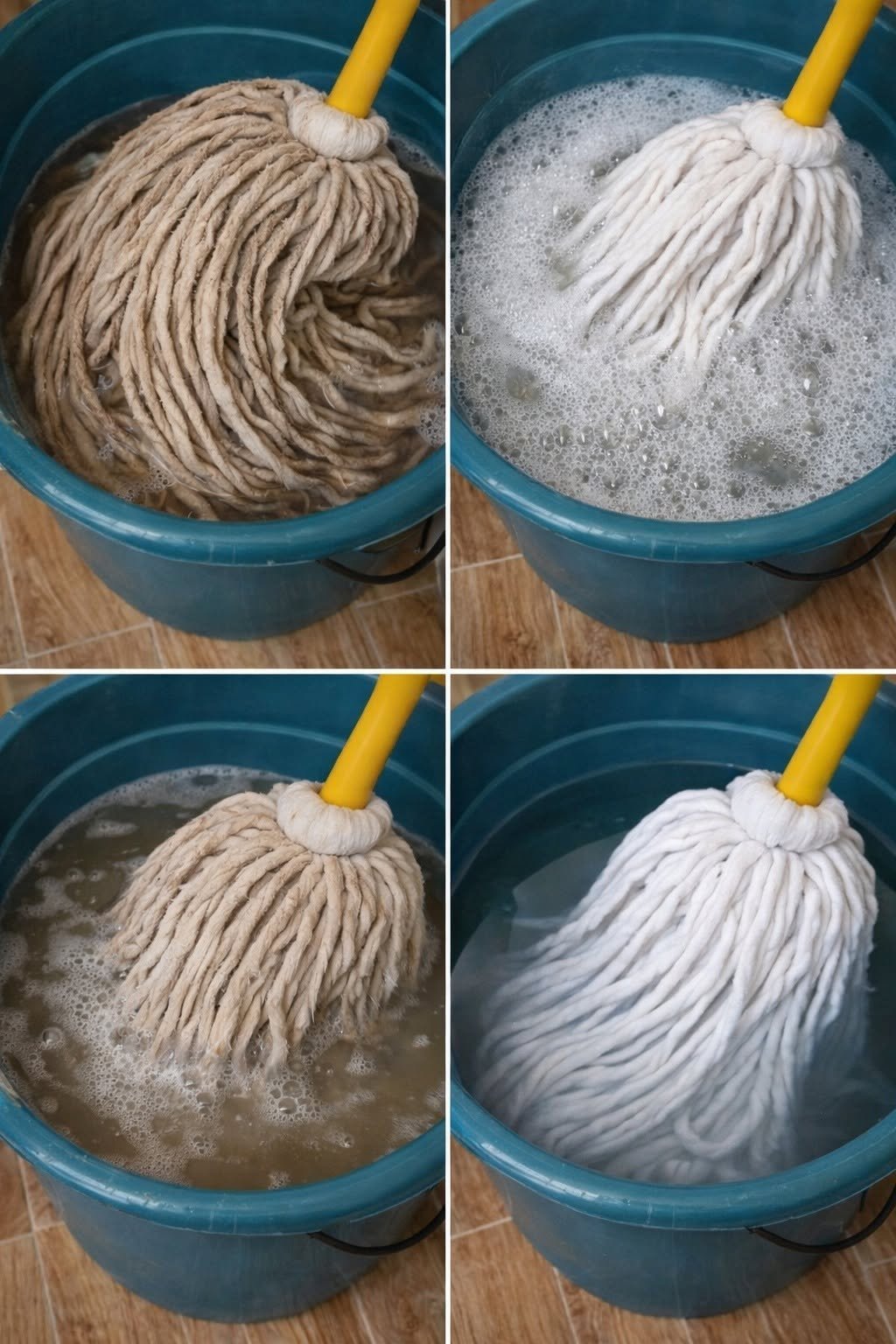
Very Dirty Mop? Don’t Throw It Away — Try This
A mop can become greasy, gray, smelly, and covered in bacteria after repeated use. Instead of buying a new one, give it a deep clean with a simple vinegar soak.
What you need
- 4 liters warm water
- ½ cup white vinegar
- 1 tablespoon dishwashing liquid
- 1 tablespoon baking soda — optional
- A bucket
- An old brush or scrubbing pad
- Clean water for rinsing
Step-by-step method
1. Remove loose dirt
Rinse the mop head thoroughly under running water. Squeeze it several times to remove as much dirt, hair, dust, and old cleaning solution as possible.
2. Prepare the cleaning solution
Fill a bucket with about 4 liters of warm water. Add ½ cup of white vinegar and 1 tablespoon of dishwashing liquid. Stir gently.
3. Soak the mop
Place the dirty mop head completely into the solution. Leave it submerged for 20–30 minutes. The vinegar helps break down mineral deposits and odors, while the dish soap helps loosen greasy residue.
4. Scrub the mop head
After soaking, use an old brush or gloved hands to work through the fibers. Pay particular attention to areas that have turned dark or have accumulated grime.
5. Optional baking-soda step
If the mop has a strong odor, sprinkle about 1 tablespoon of baking soda onto the wet mop and gently work it through the fibers. Let it sit for 5–10 minutes, then rinse thoroughly.
6. Rinse extremely well
Rinse the mop several times with clean water. Keep squeezing and rinsing until there is no visible dirt and the water coming from the mop is reasonably clear.
7. Disinfect if necessary
If you specifically need to disinfect the mop, use an appropriate disinfectant according to its labelafter thoroughly rinsing away the vinegar solution. Never mix vinegar with bleach or other disinfectants.
8. Dry completely
Wring the mop as dry as possible and hang it in direct sunlight or a well-ventilated area. Don’t leave a wet mop sitting inside the bucket—the trapped moisture is what encourages unpleasant smells and microbial growth.
⭐ For an extremely dirty mop
For a mop that hasn’t been cleaned for a long time, repeat the warm-water/vinegar-and-soap soak once more rather than using increasingly strong chemicals. If the fibers remain permanently stained, greasy, or damaged after cleaning, replacing the mop head may be more hygienic.
Important: Never mix vinegar and bleach. The combination can release dangerous chlorine gas.