This Is Why We Get Cramps at Night: Causes, Triggers, and What Actually Helps
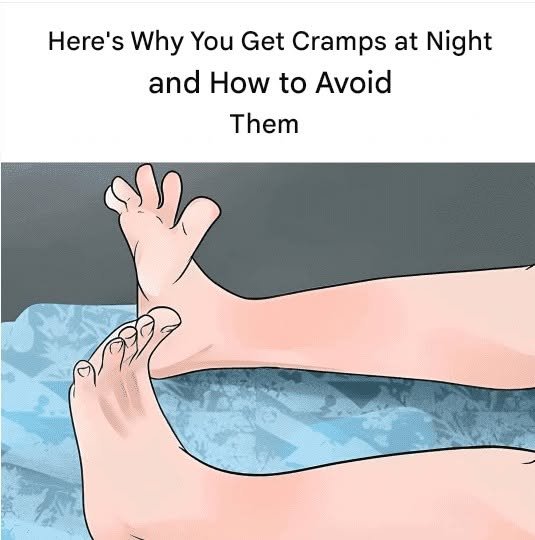
Nighttime leg cramps are sudden, involuntary muscle contractions that commonly affect the calf, foot, or thigh while you are sleeping or resting. They can be extremely painful and may last from a few seconds to several minutes. After the cramp releases, the muscle can remain sore for hours.
Despite common claims, nighttime cramps are not always caused by dehydration or a lack of minerals. There are several possible reasons, and in many people no single cause can be identified. Understanding the common triggers can help you reduce how often they occur and recognize when cramps might need medical evaluation.
1. Muscles Become More Easily Excitable at Night
One reason cramps may happen during sleep is that muscles can be positioned in a shortened state for prolonged periods.
For example, when you sleep with your toes pointed downward, your calf muscles remain somewhat shortened. In susceptible people, this position may make an involuntary contraction more likely.
When the muscle suddenly contracts, it can become extremely tight and painful. Stretching the affected muscle generally helps it relax.
This is one reason nighttime cramps are particularly common in the calf muscles.
2. Overuse or Muscle Fatigue During the Day
Another common trigger is muscle fatigue.
If you spend the day walking more than usual, exercising, standing for long periods, climbing stairs, or doing unfamiliar physical work, your muscles may become tired.
Overworked muscles can become more prone to involuntary contractions later, including during the night.
This does not mean you need to stop exercising. Regular physical activity is generally beneficial. Instead, sudden increases in exercise intensity should be approached gradually, with appropriate recovery.
3. Dehydration Can Contribute
Not drinking enough fluid can contribute to muscle cramping in some people, particularly when there has been substantial fluid loss from heavy sweating, vomiting, diarrhea, or prolonged exercise.
However, simply drinking enormous amounts of water is not a guaranteed cure for nighttime cramps.
If you have lost a significant amount of fluid and electrolytes through sweating or illness, replacing both fluids and appropriate electrolytes may be more useful than drinking plain water alone.
People with certain heart or kidney conditions may have specific fluid restrictions, so they should follow their clinician’s advice.
4. Electrolytes and Minerals May Be Involved
Muscle contraction depends on a carefully controlled balance of electrolytes, including sodium, potassium, calcium, and magnesium.
This has led to the widespread belief that nighttime cramps are simply caused by a magnesium deficiency.
The reality is more complicated.
A genuine deficiency in certain minerals can contribute to muscle problems, but routinely taking magnesium or other supplements does not necessarily prevent ordinary nighttime leg cramps in everyone.
Supplementation is more appropriate when a deficiency or another medical reason has been identified.
5. Pregnancy Can Increase the Risk
Nighttime leg cramps are particularly common during pregnancy, especially later in pregnancy.
Changes in circulation, increased physical demands on muscles, changes in body weight, and other physiological changes may contribute.
Pregnant people should not automatically begin taking mineral supplements for cramps without discussing them with their healthcare professional, because the appropriate amount depends on the individual.
6. Certain Medications Can Trigger Cramps
Some medications can make muscle cramps more likely.
Examples can include certain diuretics (“water pills”), which can affect fluid and electrolyte balance, and some cholesterol-lowering medicines, although medication-related muscle symptoms vary considerably.
If cramps started shortly after beginning a new medication or changing a dose, don’t stop the medicine yourself. Instead, discuss the symptom with the prescribing clinician.
They can determine whether the medication could be contributing and whether anything needs to be changed.
7. Poor Circulation Can Sometimes Be Involved
People sometimes assume that every nighttime cramp means they have blocked arteries. That is not correct.
However, circulation problems can contribute to leg symptoms in some circumstances.
Peripheral artery disease (PAD), for example, typically causes pain or cramping during walking or exercise that improves after resting. This is different from the classic pattern of an isolated nighttime muscle cramp.
If you have persistent leg pain, cold feet, color changes, numbness, weak pulses, or wounds that heal slowly, you should discuss these symptoms with a healthcare professional.
8. Nerve Problems Can Cause Similar Symptoms
Nerve irritation or nerve disorders can produce cramping, twitching, burning, tingling, or pain.
For example, problems involving nerves in the lower back can sometimes cause symptoms that travel down the leg.
This is another reason not to assume that every cramp is caused by dehydration or magnesium deficiency.
The location, timing, associated symptoms, and medical history all matter.
What to Do When a Cramp Happens
When a nighttime cramp strikes, the immediate goal is to gently lengthen and relax the affected muscle.
For a calf cramp:
- Straighten the affected leg.
- Gently pull your toes upward toward your face.
- Hold the stretch until the muscle begins to relax.
- Massage the muscle gently if comfortable.
- Stand and walk carefully once the cramp has released.
Do not forcefully stretch or aggressively massage a severely painful muscle. Gentle movement is generally preferable.
A warm shower or heating pad may also help the muscle relax afterward. If the area remains sore, some people find gentle stretching or comfortable warmth helpful.
How to Reduce Nighttime Cramps
A few simple habits may reduce episodes:
- Stay adequately hydrated.
- Stretch your calves gently before bed.
- Avoid suddenly increasing your exercise intensity.
- Wear comfortable footwear during the day.
- If you sit for long periods, get up and move regularly.
- Pay attention to whether a particular sleeping position triggers cramps.
- Maintain a balanced diet rather than relying on a single supplement.
A simple calf stretch before bed can be particularly useful for people who experience recurrent nighttime calf cramps.
What About Magnesium?
Magnesium is frequently promoted as the answer to nighttime cramps.
If someone is actually magnesium deficient, correcting the deficiency is important. However, for typical nighttime leg cramps in otherwise healthy adults, magnesium supplements do not consistently provide dramatic relief.
This is why it is better not to assume that cramps automatically mean you need magnesium.
Taking excessive magnesium supplements can cause diarrhea and abdominal discomfort, and people with impaired kidney function need particular caution because their bodies may not eliminate magnesium normally.
When Should You See a Doctor?
Occasional nighttime cramps are usually not dangerous. However, medical advice is appropriate if cramps are:
- Very frequent or becoming progressively worse
- Severe enough to regularly disturb your sleep
- Associated with significant swelling
- Accompanied by weakness or persistent numbness
- Associated with major changes in skin color or temperature
- Occurring with persistent daytime leg pain
- Beginning after a new medication
- Associated with muscle weakness or other unexplained symptoms
A healthcare professional can review medications, medical conditions, diet, hydration, and other possible causes.
When Leg Pain Is an Emergency
A suddenly swollen, painful, warm, or red leg, particularly when the symptoms are mainly on one side, should not simply be assumed to be a muscle cramp. It may require urgent medical assessment.
Likewise, sudden leg swelling or pain accompanied byshortness of breath, chest pain, coughing blood, or fainting requires emergency medical attention.
The Bottom Line
Nighttime cramps happen because a muscle suddenly contracts involuntarily, and several factors can make this more likely. Muscle fatigue, prolonged muscle shortening during sleep, dehydration, pregnancy, certain medications, nerve problems, and some mineral abnormalities can all play a role.
The most useful immediate treatment is usually gentle stretching of the affected muscle, followed by relaxed movement and possibly gentle massage or warmth.
And remember: nighttime cramps do not automatically mean you are dehydrated, magnesium-deficient, or suffering from blocked arteries. If they are frequent, severe, or accompanied by other symptoms, finding the underlying cause is more useful than simply taking supplements.