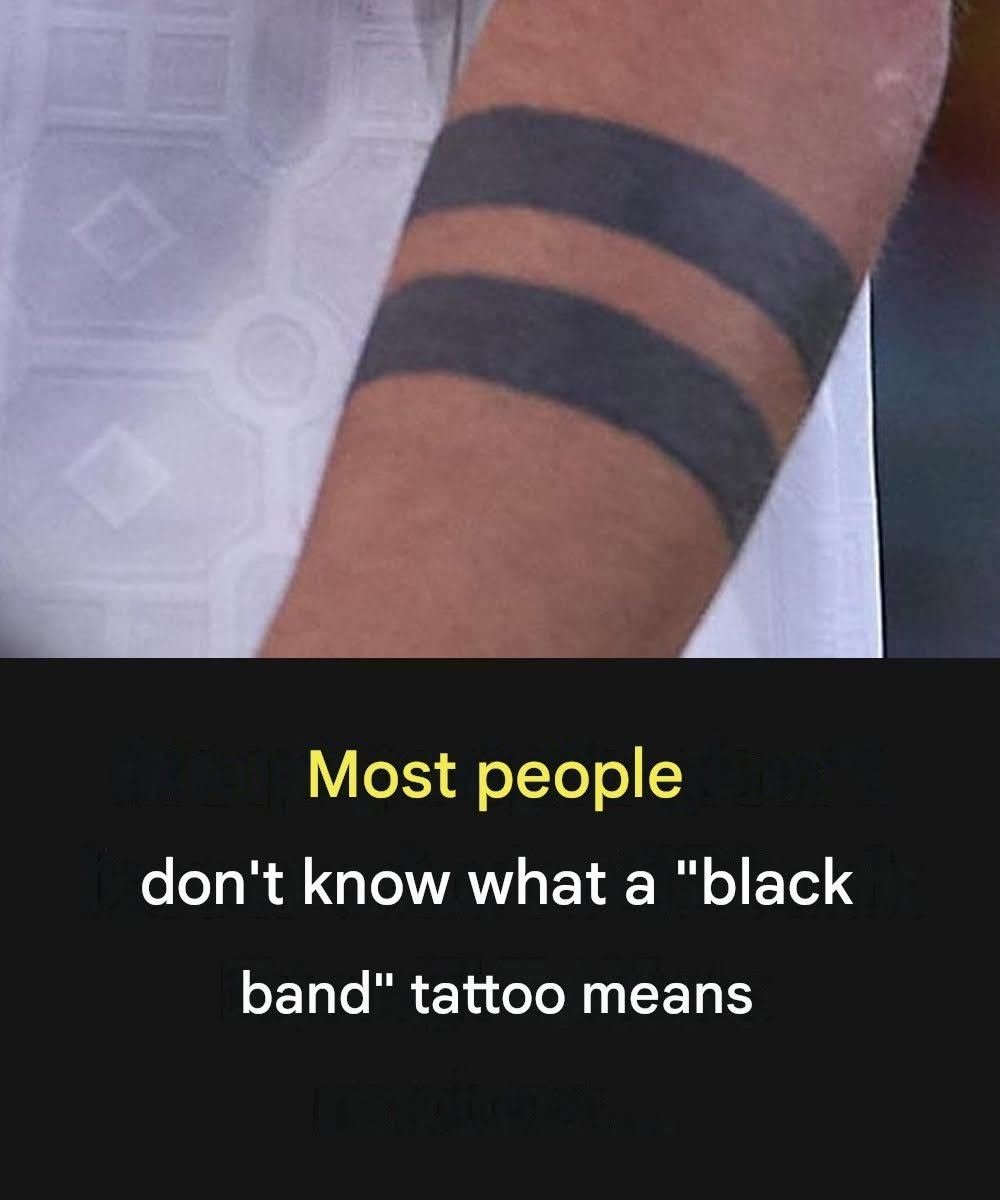
The black band tattoo doesn’t
have one universal meaning. Its symbolism depends heavily on the person, culture, and design.
Common interpretations include:
- Mourning or remembrance: A solid black band is sometimes used as a permanent memorial for someone who has died. This symbolism comes from the traditional practice of wearing a black armband while grieving.
- Strength and resilience: Some people use a black band to represent overcoming hardship, personal transformation, or endurance.
- A significant life chapter: The band can symbolize leaving something behind or marking an important transition.
- Minimalist symbolism: For some, it simply represents a bold aesthetic with no deeper meaning.
- Cultural or traditional meaning: In certain tattoo traditions, black bands can have specific meanings that aren’t shared universally.
Does the number of bands matter?
Sometimes. Multiple bands may represent different people, events, or milestones, but there is no standardized tattoo code where a particular number of black bands always means the same thing.
Likewise, the location can influence the interpretation. A band around the upper arm, wrist, ankle, or forearm may carry different personal significance.
One important misconception
A black band tattoo doesn’t automatically mean someone has experienced a death or is grieving. You can’t reliably determine its meaning simply by looking at it.
For many people, the meaning is deeply personal.
In short: a black band tattoo can symbolize remembrance, grief, strength, change, or simply personal style—but the wearer is the only person who can tell you what it truly means to them.