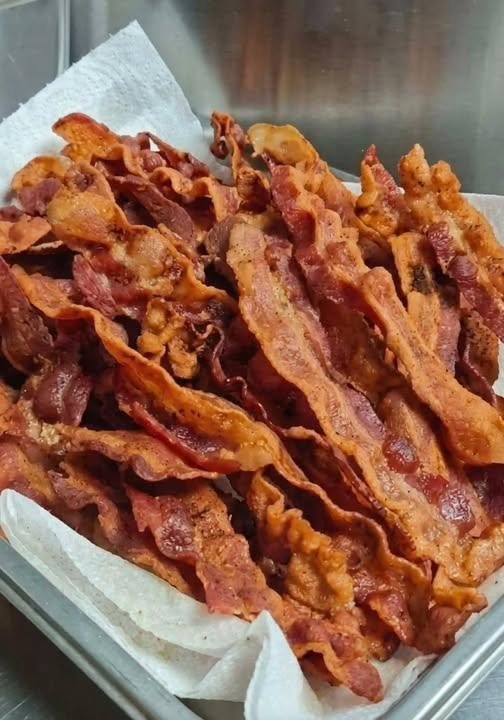
🍁 The Tastiest Bacon Ever
Ingredients
- 500 g (about 1 lb) thick-cut bacon
- 2 tbsp pure maple syrup
- 1 tbsp light brown sugar
- 1 tsp freshly ground black pepper
- ½ tsp smoked paprika
- ¼ tsp garlic powder
- 1 tsp Dijon mustard
- 1 tsp honey
- Pinch of cayenne pepper, optional
- Pinch of salt, only if needed
Equipment
- Large rimmed baking sheet
- Wire rack
- Parchment or aluminum foil
- Small bowl
- Pastry brush or spoon
- Tongs
The Secret: Start Cold
Don’t throw the bacon onto a screaming-hot pan.
Starting bacon in a cold oven gives the fat time to slowly render out. The result is bacon that’s crisp rather than burnt on the outside while still retaining a meaty, slightly chewy center.
Preheat your oven to 200°C / 400°F.
Line a rimmed baking sheet with foil or parchment for easier cleanup. Place a wire rack over the sheet and arrange the bacon in a single layer.
The pieces should not overlap. A little space between them is ideal.
Put the entire tray into the cold oven, then turn the oven on to 200°C / 400°F.
Bake for about 15–20 minutes, depending on the thickness of your bacon and how crisp you like it.
Don’t walk away during the last few minutes. Bacon can go from beautifully browned to burned surprisingly quickly.
Make the Glaze
While the bacon cooks, combine:
- 2 tbsp maple syrup
- 1 tbsp brown sugar
- 1 tsp Dijon mustard
- 1 tsp honey
- ½ tsp smoked paprika
- 1 tsp black pepper
- ¼ tsp garlic powder
- Cayenne, if using
Mix until you have a thick, glossy paste.
Taste it.
You want sweet, smoky, salty, spicy, and slightly tangy. The mustard is particularly important because it prevents the glaze from tasting like plain sugar.
The First Glaze
When the bacon is starting to brown but isn’t quite finished, carefully remove the tray from the oven.
Brush a thin layer of glaze over each slice.
Don’t drown the bacon. Too much glaze makes it difficult for the fat to crisp and can cause the sugar to burn.
Return the tray to the oven.
Bake for another 4–6 minutes.
The maple syrup and brown sugar will begin bubbling and caramelizing. You’ll see the surface become darker, shinier, and slightly sticky.
The Final Crisp
For truly outrageous bacon, turn the oven up to 220°C / 425°F for the final couple of minutes.
Watch it closely.
You’re looking for:
- Deep mahogany-brown edges
- Tiny caramelized bubbles
- Crisp edges
- A glossy surface
- A center that’s cooked through but not completely dried out
If you like extremely crispy bacon, give it another minute or two.
If you prefer bacon that’s crisp around the edges but still tender in the middle, take it out as soon as the glaze becomes deeply caramelized.
The Most Important Step
Let it rest.
Transfer the bacon to a clean wire rack or parchment-lined plate and leave it alone for 3–5 minutes.
This sounds insignificant, but it’s not.
The sugar glaze will continue to set as it cools, transforming from a runny coating into a shiny, almost candy-like crust.
The bacon will also become noticeably crispier.
Don’t stack the slices while they’re hot. Steam gets trapped between them and softens the crust you’ve worked so hard to create.
Why This Works
There are several things happening simultaneously.
First, slow rendering. Bacon contains a lot of fat. Slowly heating it allows that fat to render out rather than leaving you with a greasy exterior and under-rendered interior.
Second, caramelization. Brown sugar, maple syrup, and honey provide sugars that become intensely aromatic when heated. They create those dark, slightly bitter caramelized notes that make glazed bacon addictive.
Third, Maillard browning. The proteins in the bacon react with sugars at high temperatures, creating hundreds of flavorful compounds responsible for the deep roasted flavor.
Fourth, contrast. The best bacon isn’t simply crispy. It’s a combination of crunchy edges, caramelized glaze, and a slightly meaty center. That contrast is what makes every bite interesting.
Chef’s Trick: Black Pepper
Don’t be shy with freshly ground black pepper.
Pepper provides a subtle heat that cuts through the richness of the pork and sweetness of the glaze. Freshly cracked pepper is much better here than very finely powdered pepper because you occasionally get a tiny burst of spice.
For a more sophisticated version, use coarsely cracked black pepper.
For serious heat, add a little cayenne.
For a smoky version, increase the smoked paprika.
Even Better: Candied Bacon
If you want to take this recipe completely over the top, make candied bacon.
After applying the first glaze, sprinkle each slice very lightly with additional brown sugar.
Return it to the oven at 200°C / 400°F.
As it cooks, the sugar melts into the bacon fat and forms a brittle caramelized coating.
Keep a close eye on it because sugar burns quickly.
When finished, allow it to cool completely before eating. The coating will become crisp and candy-like.
It’s phenomenal chopped over pancakes, waffles, French toast, vanilla ice cream, or even a simple burger.
What to Serve With It
This bacon is so flavorful that it works particularly well with foods that aren’t overly sweet.
Try it with:
- Scrambled or fried eggs
- Buttermilk pancakes
- Waffles
- Avocado toast
- Burgers
- Breakfast sandwiches
- Grilled cheese
- Mac and cheese
- Baked potatoes
- Salads with a sharp vinaigrette
- Maple-glazed roasted vegetables
One of my favorite combinations is crispy glazed bacon + fried egg + sharp cheddar + toasted brioche.
The runny egg yolk becomes a sauce for the bacon, while the cheese provides saltiness and richness. It’s ridiculously good.
The Ultimate Bacon Sandwich
Toast two thick slices of brioche.
Spread one side with mayonnaise and the other with Dijon mustard.
Add several pieces of the caramelized bacon.
Top with a fried egg, sharp cheddar, and a handful of peppery arugula.
Finish with freshly cracked black pepper.
Press the sandwich together and eat it immediately.
The combination of crunchy bacon, creamy yolk, melted cheese, sweet caramelization, mustard, and slightly bitter greens is about as close as breakfast gets to perfection.
Final Formula
If you remember only one thing, remember this:
Thick bacon + cold start + slow rendering + maple/Dijon glaze + very high-heat finish + short rest = spectacular bacon.
And make more than you think you’ll need. Nobody has ever complained that there was too much bacon.