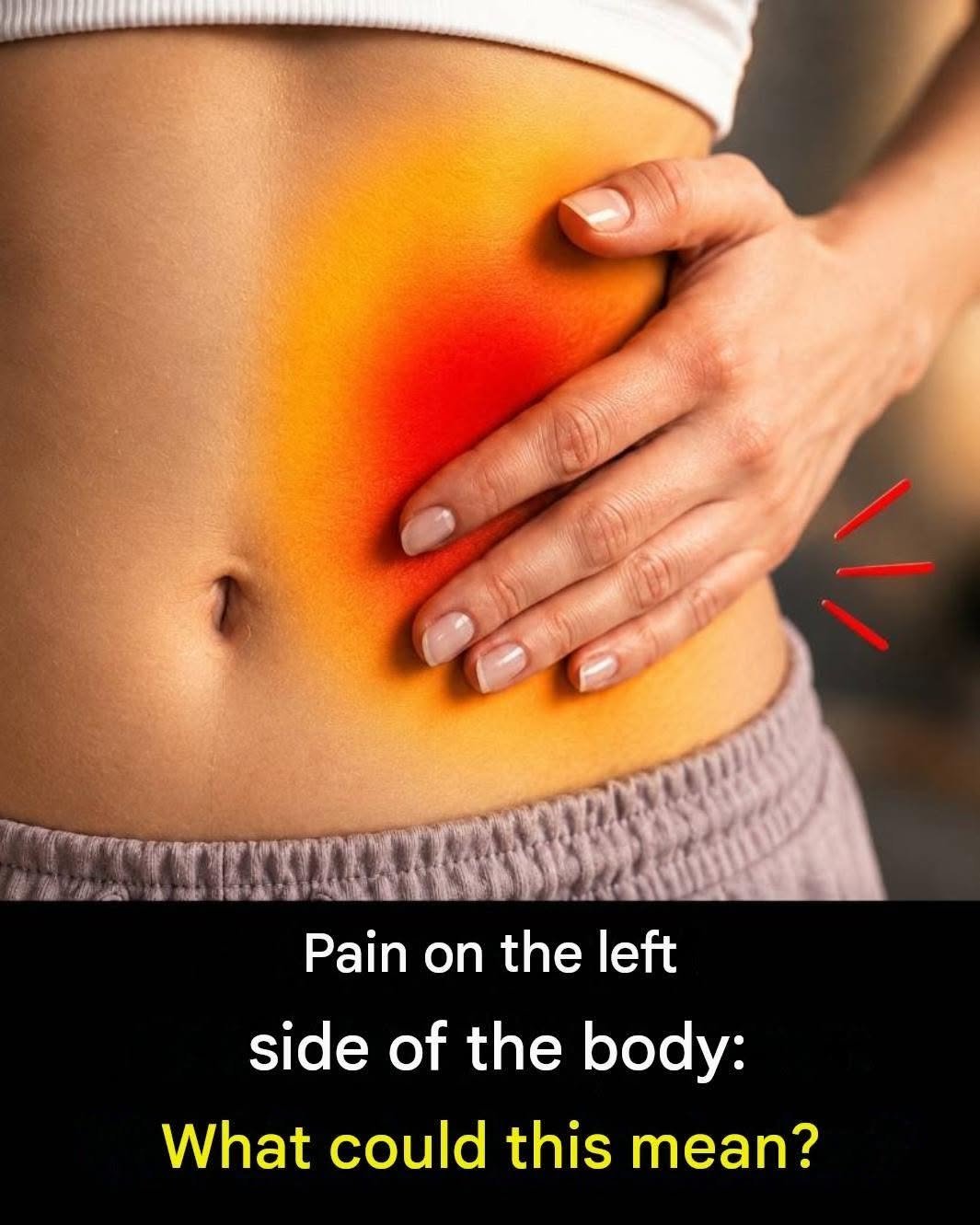
Pain on the Left Side of the Body: What Could It Mean and When Should You Pay Attention?
Pain on the left side can come from many different parts of the body. It may be something relatively minor, such as a strained muscle or gas, but left-sided pain can occasionally signal a medical emergency, especially when it involves the chest.
The location, severity, duration, and accompanying symptoms are important.
1. Left-Sided Chest Pain
Chest pain is the symptom that deserves the most caution.
Pain or pressure in the chest—particularly if it feels like squeezing, heaviness, tightness, or pressure—can be associated with a heart attack.
It may spread to the:
- Left or both arms
- Shoulder
- Back
- Neck
- Jaw
Other warning symptoms can include shortness of breath, sweating, nausea, dizziness, or unusual weakness.
🚨 Seek emergency medical help immediately
If new or unexplained chest pain is severe, persistent, or accompanied by these symptoms, don’t wait to see whether it goes away. Call your local emergency service.
Not all heart attacks cause dramatic chest pain. Some people—particularly older adults and people with diabetes—may experience less typical symptoms.
2. Pain Under the Left Ribs
The upper-left abdomen contains or lies near several structures, including the:
- Stomach
- Spleen
- Pancreas
- Left kidney
- Large intestine
Pain here can therefore have many causes.
Possible causes include:
Gas or indigestion: Often accompanied by bloating or changes in bowel movements.
Gastritis or ulcers: May cause burning or aching upper-abdominal pain, sometimes related to eating.
Spleen problems: An enlarged or injured spleen can cause pain beneath the left ribs. Pain after a significant blow to the abdomen is particularly concerning.
Pancreatic problems: Pancreatitis can produce severe upper-abdominal pain that may extend toward the back and requires medical evaluation.
3. Pain on the Left Side of the Back
Back or flank pain on the left can originate from the muscles, spine, kidney, or nearby structures.
A pulled muscle is common, particularly after lifting, exercising, or an awkward movement.
Kidney-related pain may occur with:
- Fever or chills
- Burning or pain when urinating
- Blood in the urine
- Nausea or vomiting
- Severe pain that comes in waves
A kidney stone can cause intense flank pain that may travel toward the groin.
4. Left Lower-Abdominal Pain
Pain in the lower-left abdomen can sometimes be related to the large intestine.
Possible causes include:
- Constipation
- Gas
- Irritable bowel syndrome
- Gastrointestinal infection
- Diverticular disease
Persistent or severe pain, particularly when accompanied by fever, vomiting, blood in the stool, or significant changes in bowel habits, should be evaluated by a healthcare professional.
5. Left-Sided Pain Related to Muscles
Sometimes the explanation is much simpler.
A muscle strain can occur after:
- Exercise
- Lifting something heavy
- Repetitive movement
- Coughing
- Sleeping in an unusual position
- An injury
Musculoskeletal pain often becomes worse with certain movements or when the affected area is pressed.
However, the fact that pain changes with movement doesn’t completely rule out other causes, so persistent or unexplained pain shouldn’t automatically be dismissed as muscular.
6. Left-Sided Pain in Women
In women, lower-left abdominal or pelvic pain can also involve reproductive organs.
Possible causes include:
- Menstrual cramps
- Ovulation-related pain
- Ovarian cysts
- Endometriosis
- Pelvic infections
Pregnancy changes the situation
If someone could be pregnant and develops one-sided lower-abdominal/pelvic pain, particularly with vaginal bleeding, dizziness, fainting, or shoulder-tip pain, urgent medical assessment is important because an ectopic pregnancy can be life-threatening.
7. Left-Sided Pain With a Rash
A painful or burning sensation followed by a strip or cluster of blisters on one side of the body can be caused by shingles.
Shingles often begins with pain, tingling, burning, or increased sensitivity before the characteristic rash appears.
Early medical treatment can be beneficial, particularly when started soon after symptoms begin.
When Should You Be Concerned?
Seek emergency medical attention for left-sided pain accompanied by symptoms such as:
- Chest pressure or tightness
- Difficulty breathing
- Fainting or severe dizziness
- Cold sweating
- Sudden severe weakness
- Confusion
- Pain spreading to the arm, jaw, back, or shoulder
- Severe abdominal pain
- Significant bleeding
- Severe pain following an injury
You should also arrange medical evaluation if pain is persistent, repeatedly returning, getting worse, or associated with fever, vomiting, unexplained weight loss, blood in urine/stool, or changes in urination or bowel movements.
Don’t Judge the Cause by Location Alone
One important misconception is that pain on the left side automatically means a heart problem.
It doesn’t.
The same general area can contain muscles, nerves, digestive organs, kidneys, blood vessels, and—depending on the location—the heart and lungs. The exact location and accompanying symptoms matter.
Bottom Line
Left-sided pain can range from harmless to urgent. A mild pain that clearly follows a muscle strain may have a straightforward explanation, while sudden or unexplained chest pain—especially with breathing difficulty, sweating, nausea, dizziness, or pain spreading elsewhere—should be treated as an emergency.
If you tell me exactly where the pain is (chest, ribs, abdomen, back, hip, or arm), what it feels like, how long you’ve had it, and what other symptoms you have, I can explain the most likely possibilities and which warning signs matter most.