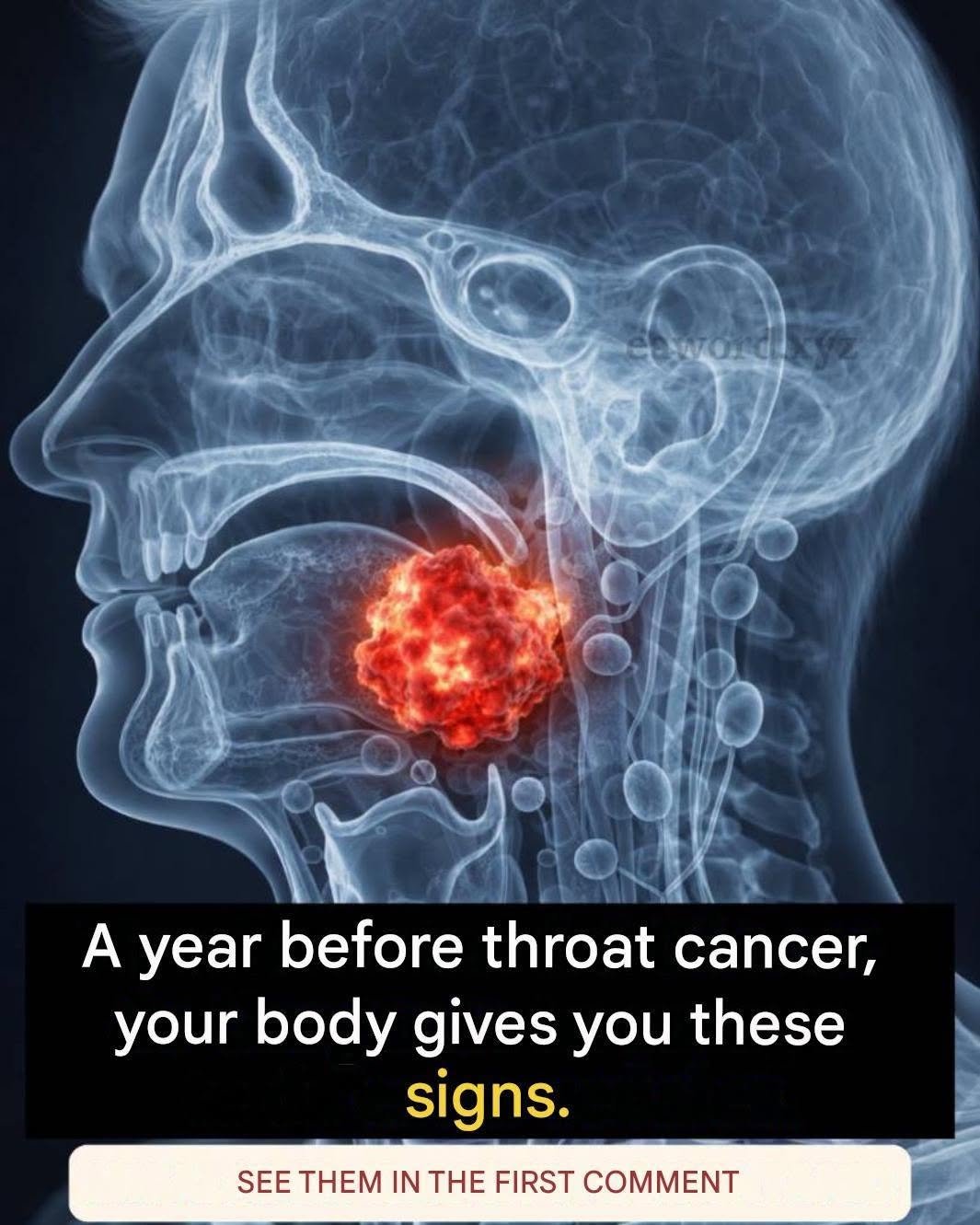
Early Signs of Throat Cancer: Symptoms That Many People Overlook
Throat cancer can develop in different areas, including the pharynx and larynx (voice box). One challenge is that early symptoms can resemble common problems such as a cold, acid reflux, allergies, or a throat infection. In some cases, there may be no obvious early symptoms at all. Cancer.gov+1
That doesn’t mean every persistent sore throat is cancer. Most aren’t. The important issue is recognizing symptoms that persist, worsen, or occur together.
1. A Sore Throat That Doesn’t Go Away
A sore throat that persists rather than improving normally deserves attention.
Throat infections commonly improve within days or a few weeks, depending on the cause. A persistent or progressively worsening sore throat is one of the symptoms doctors consider when evaluating possible throat cancer. Cancer.gov+1
Pay particular attention if: there is no obvious infection and the discomfort continues for several weeks.
2. Persistent Hoarseness or a Change in Your Voice
A voice that remains hoarse, raspy, weak, or noticeably different can be an important warning sign, particularly when the larynx or vocal cords are involved.
Laryngeal cancers affecting the vocal cords can cause voice changes relatively early. The American Cancer Society recommends medical evaluation when hoarseness or another voice change doesn’t improve within about 2 weeks. Cancer.org
Don’t automatically blame persistent hoarseness on smoking, shouting, or “just getting older.”
3. Difficulty or Pain When Swallowing
Another symptom that shouldn’t be ignored is difficulty swallowing (dysphagia) or pain when swallowing (odynophagia).
You may feel as though:
- Food is getting stuck
- Swallowing requires more effort
- There is something caught in your throat
- Swallowing has become painful
These symptoms can have many causes, but persistent swallowing problems warrant medical assessment. Cancer.gov+1
4. A Lump in the Neck
A new lump or swelling in the neck can sometimes be an enlarged lymph node.
Many neck lumps are caused by infections or other benign conditions, but a lump that persists, grows, or occurs without an obvious infection should be checked.
A neck lump can occasionally be one of the first noticeable signs of an oropharyngeal or other head-and-neck cancer. Cancer.gov+1
5. Persistent Ear Pain
This is one of the symptoms people sometimes overlook.
Certain throat cancers can cause pain that is felt in the ear even though the problem originates in the throat. This is known as referred pain.
Persistent ear pain without a clear ear problem—especially when it occurs alongside throat pain or difficulty swallowing—deserves evaluation. Cancer.gov+1
6. An Unexplained Feeling That Something Is Stuck
Some people describe a persistent sensation of having a lump or foreign object in the throat.
This can happen with many non-cancerous conditions, including reflux and inflammation. But if the sensation doesn’t go away or is accompanied by swallowing difficulties, it should be investigated. Cancer.org
7. Unexplained Weight Loss
Losing weight without intentionally changing your diet or activity can be a warning sign of many illnesses, including some cancers.
With throat cancer, weight loss may also occur because swallowing becomes uncomfortable or difficult, reducing how much a person eats. Cancer.gov+1
8. Persistent Cough
A cough that doesn’t resolve can sometimes occur with cancers involving the larynx or lower throat.
But persistent coughing is much more commonly caused by things such as respiratory infections, asthma, allergies, smoking, or reflux.
It becomes more concerning when accompanied by hoarseness, difficulty swallowing, breathing problems, or coughing up blood. Cancer.gov+1
9. Trouble Breathing or Noisy Breathing
A tumor affecting the airway can sometimes cause shortness of breath or abnormal/noisy breathing.
This is not something to ignore.
If breathing becomes difficult or significantly worse, seek urgent medical attention, rather than waiting for a routine appointment. nhs.uk+1
10. A Persistent White or Red Patch
White or red patches that don’t disappear can occur in the mouth or throat and may sometimes represent precancerous or cancerous changes.
However, many harmless conditions can also cause discoloration.
A persistent unexplained patch should be examined by a doctor or dentist, particularly if it doesn’t heal. Cancer.gov+1
11. Difficulty Moving the Tongue or Jaw
Some cancers in the oropharyngeal region can cause difficulty moving the tongue, opening the mouth fully, chewing, or moving the jaw normally. Cancer.gov+1
These aren’t typical symptoms of an ordinary sore throat and deserve professional assessment if persistent.
12. Coughing Up Blood
Blood in saliva or coughed-up mucus can have numerous causes, some relatively minor and others serious.
Coughing up blood should not simply be assumed to be throat cancer, but it should be medically evaluated, particularly when it is unexplained or recurring. Cancer.gov+1
Who Has a Higher Risk?
Important risk factors include tobacco use and heavy alcohol consumption. Certain types of oropharyngeal cancer are also strongly associated with human papillomavirus (HPV) infection. Cancer.gov+1
Other factors vary according to the exact location and type of cancer.
Having a risk factor doesn’t mean you have cancer, and people without obvious risk factors can still develop it.
When Should You See a Doctor?
A useful rule is: don’t ignore a symptom simply because it isn’t severe. Persistence matters.
Arrange a medical evaluation if you have:
- Hoarseness or voice changes that persist
- A sore throat that doesn’t resolve
- Persistent difficulty or pain when swallowing
- A neck lump or swelling
- Unexplained persistent ear pain
- Unexplained weight loss
- A persistent mouth/throat sore or red/white patch
The NHS advises medical assessment for persistent hoarseness, neck swelling, or swallowing problems, while the American Cancer Society emphasizes evaluation of symptoms that last more than a few weeks. nhs.uk+1
🚨 Seek urgent help for breathing difficulty
If you are struggling to breathe, have rapidly worsening airway symptoms, or are coughing up a significant amount of blood, seek emergency medical care.
The Most Important Point
Having one of these symptoms does not mean you have throat cancer. Colds, infections, allergies, reflux, vocal strain, dental problems, and many other conditions can produce similar symptoms. Cancer.gov+1
The reason persistent symptoms matter is that early evaluation can determine what’s actually causing them. Diagnosis may involve examination of the mouth, throat, and neck, followed when appropriate by imaging or a biopsy. Cancer.gov+1
If a throat, voice, swallowing, or neck symptom is new and doesn’t go away, don’t simply keep treating it at home—have it checked.