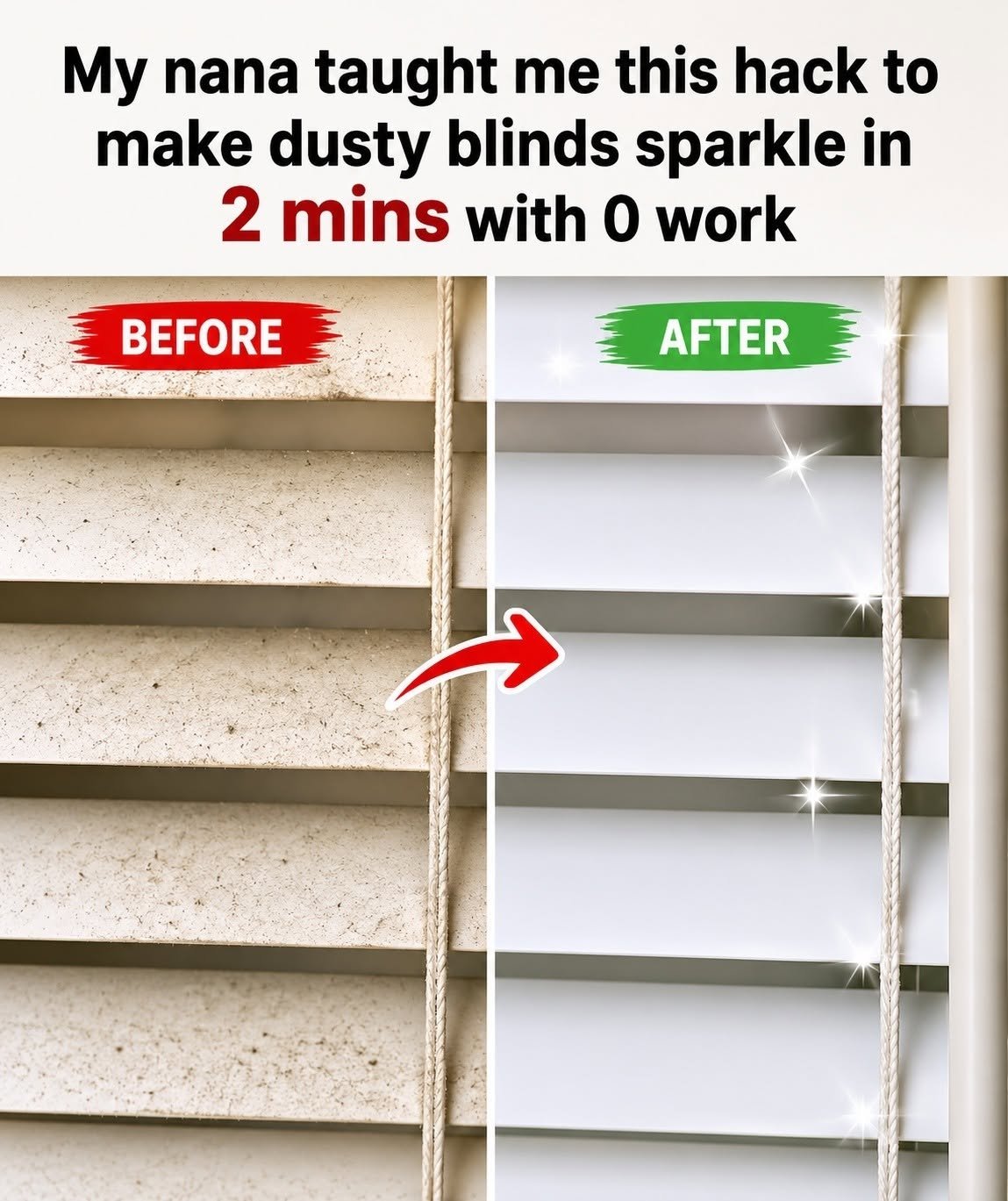
My Nana Taught Me This Hack to Make Dusty Blinds Sparkle in 2 Minutes With Almost No Work
Dusty blinds can be surprisingly annoying to clean because wiping each slat individually takes time and often just moves the dust around. Fortunately, a simple household trick can make the job much easier: use a clean microfiber cloth wrapped around a pair of kitchen tongs to clean several sides of the blinds with one pass.
Here’s how the hack works and how to do it without damaging your blinds.
1. Gather Your Cleaning Supplies
You only need a few basic items:
- A pair of clean kitchen tongs
- Two microfiber cloths
- Rubber bands or reusable hair ties
- A bowl or bucket of warm water
- A small amount of mild dish soap
The microfiber cloth is important because it grabs and traps dust rather than simply pushing it from one place to another.
2. Turn the Blinds So the Slats Are Accessible
Before cleaning, close or tilt the blinds so the slats are positioned in a way that lets you reach their surfaces easily.
For horizontal Venetian-style blinds, work from the top downward. This prevents dust from falling onto areas you’ve already cleaned.
Don’t force the cord, wand, or slats. Older blinds can be fragile, and excessive pressure can bend or break them.
3. Make Your DIY Blind Duster
Take two microfiber cloths and wrap one around each side of the kitchen tongs.
Secure the cloths with rubber bands or hair ties so they don’t slip while you’re cleaning.
You now have a simple double-sided blind cleaner: instead of wiping the top and bottom surfaces separately, the two cloth-covered sides of the tongs can grip a slat between them.
4. Start With Dry Dusting
For ordinary household dust, start with the microfiber cloths dry.
Place the cloth-covered tongs around a slat and gently slide them from one end toward the other.
The microfiber should collect the loose dust rather than spreading it around the room.
This is often enough if the blinds are dusty but not greasy or stained.
5. Work From Top to Bottom
Move systematically across the blinds and then work downward.
Cleaning from the top slat toward the bottom is useful because loose dust naturally falls downward. If you start at the bottom, dust from the upper slats can settle back onto the areas you’ve already cleaned.
For particularly dusty blinds, stop occasionally and shake the microfiber cloths outdoors or vacuum the accumulated dust from them.
6. Use a Slightly Damp Cloth for Stubborn Dirt
If the blinds have fingerprints, kitchen grease, or grime that dry dusting doesn’t remove, lightly dampen the microfiber cloths with warm water.
You can add a small amount of mild dish soap to the water if necessary.
The cloth should be damp—not dripping wet. Excess moisture can damage some blinds, particularly wooden or delicate materials.
7. Don’t Soak Wooden Blinds
If you have real wood blinds, be more conservative with moisture.
Wood can absorb water, potentially causing swelling, warping, discoloration, or damage to the finish.
For wooden blinds, check the manufacturer’s cleaning instructions and generally favor a dry microfiber cloth or a cleaner specifically recommended for the finish.
8. Be Careful With Fabric or Delicate Blinds
Not every blind should be cleaned using the tong method.
Fabric shades, delicate cellular shades, and specialty window coverings may require different cleaning techniques. Aggressive gripping can distort the material.
If the blinds are made from a delicate fabric or have a manufacturer’s care label, follow those instructions instead of assuming the same method is safe.
9. Finish With a Dry Pass
After damp cleaning, use clean, dry microfiber cloths to remove remaining moisture.
This can help prevent water spots and allows the blinds to dry more quickly.
It also gives you a final opportunity to pick up any dust that was loosened during the damp-cleaning step.
10. Clean the Dusty Cloths
Don’t put heavily dusty microfiber cloths straight into the washing machine with other laundry.
Shake or vacuum off loose dust first. Then wash the microfiber according to its care instructions.
Avoid fabric softener when washing microfiber because it can reduce the fibers’ ability to attract and trap dust.
Why This Hack Works
The trick isn’t really a magical cleaning chemical. The microfiber cloth and the design of the tongs are doing most of the work.
The microfiber provides a large number of tiny fibers that can capture dust and debris. Meanwhile, the tongs allow you to hold both sides of a blind slat simultaneously.
That means you can clean the two surfaces with one controlled movement instead of wiping each surface separately.
An Even Easier Option for Light Dust
If your blinds only have a thin layer of dust, you may not need water at all.
A vacuum cleaner with a soft brush attachment can be an excellent alternative. Keep the suction relatively gentle and move along the slats rather than pressing hard against them.
This is particularly useful for blinds that shouldn’t get wet.
One Important Safety Tip
Before cleaning blinds near a window, make sure cords and chains aren’t creating a hazard for children or pets. Keep loose cords secured according to the manufacturer’s safety instructions.
Also avoid spraying cleaning solution directly onto blinds. Spraying onto a microfiber cloth gives you much better control over the amount of moisture.
Final Takeaway
The “grandma hack” is essentially a DIY double-sided blind duster: wrap microfiber cloths around kitchen tongs, secure them, and gently slide them along each slat.
It won’t literally make every set of blinds sparkle in two minutes with zero effort, especially if they’re heavily greasy or neglected. But for ordinary household dust, it can turn a tedious job into a quick, low-effort cleaning routine.