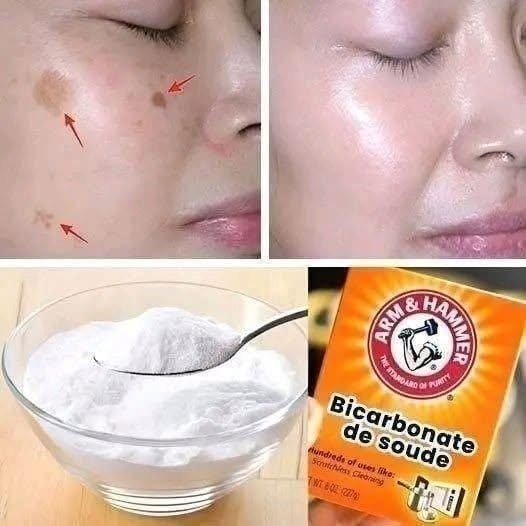
How to Use Baking Soda for Dark Spots, Wrinkles, and Dark Circles: What Actually Works
Baking soda is a popular ingredient in homemade skincare recipes. You’ll often see claims that applying it to the face can erase dark spots, smooth wrinkles, and eliminate dark circles.
The reality is more nuanced.
Baking soda may temporarily make skin feel smoother because it can remove surface oils and dead skin, but there is no good evidence that baking soda can permanently remove wrinkles, dark spots, or dark circles. In fact, because baking soda is alkaline and can disrupt the skin’s natural protective barrier, applying it directly to the face may cause dryness, irritation, redness, or burning.
So if you’re looking for a safe approach, the goal shouldn’t be to use baking soda aggressively. Instead, understand what these skin concerns actually are and use ingredients that have better evidence behind them.
1. Why Baking Soda Is substance may make the surface feel temporarily smoother, aggressive exfoliation doesn’t necessarily remove the underlying pigmentation Risky for Facial Skin
Healthy skin has a naturally acidic environment known as the acid mantle. This barrier helps support normal skin function and protects against irritation and environmental stress.
Baking soda is alkaline.
Applying it repeatedly to facial skin can interfere with the skin barrier. Some people may experience:
- Dryness
- Tightness
- Burning
- Redness
- Itching
- Flaking
- Increased sensitivity
If your skin becomes irritated, pigmentation can sometimes become more noticeable, particularly in people prone to post-inflammatory hyperpigmentation.
That’s why a homemade baking-soda scrub can end up making the problem you’re trying to fix worse.
2. Can Baking Soda Remove Dark Spots?
Dark spots can have many causes, including sun exposure, acne, inflammation, hormonal changes, and certain skin conditions.
Baking soda doesn’t specifically target excess melanin or the biological processes responsible for pigmentation.
Although scrubbing with a gritty substance may make the surface feel temporarily smoother, aggressive exfoliation doesn’t necessarily remove the underlying pigmentation.
In fact, irritating a dark spot can stimulate additional pigmentation in some people.
For pigmentation, daily sunscreen is one of the most important steps.
Depending on the cause, dermatologists may also recommend ingredients such as vitamin C, azelaic acid, retinoids, or other pigment-targeting treatments.
3. What About Wrinkles?
Baking soda cannot reverse the loss of collagen and elastin responsible for many age-related wrinkles.
Wrinkles develop through a combination of natural aging, sun exposure, repeated facial movement, and other factors.
If baking soda makes your face feel temporarily tight, that sensation shouldn’t be mistaken for actual skin tightening.
The long-term approach is very different.
Sun protection and evidence-based skincare are much more useful for preventing and improving visible signs of photoaging.
Retinoids, for example, have substantially more evidence for improving fine lines than baking soda.
4. Can Baking Soda Remove Dark Circles?
Dark circles are particularly complicated because they don’t all have the same cause.
They can result from:
- Genetics
- Thin skin
- Visible blood vessels
- Increased pigmentation
- Allergies
- Lack of sleep
- Dehydration
- Hollowing or shadows beneath the eyes
- Normal aging
Because the causes are different, there is no single home remedy that works for everyone.
And the skin around the eyes is especially delicate.
Applying baking soda close to the eyes is not a good idea. Irritation in this area can be particularly uncomfortable, and getting the powder or paste into the eyes can cause significant irritation.
5. If You Still Want to Use Baking Soda, Don’t Put It Directly on Your Face
The safest recommendation is not to use baking soda as a facial treatment for dark spots, wrinkles, or dark circles.
If you’ve seen a recipe involving baking soda mixed with lemon juice, toothpaste, vinegar, or other household ingredients, don’t follow it.
Combining irritating substances doesn’t create a stronger skincare treatment allergies. It can create a stronger skin reaction.
Lemon juice is particularly problematic because it can irritate skin and, in combination with sunlight, cause certain types of skin reactions.
6. A Better Routine for Dark Spots
If pigmentation is your main concern, keep the routine simple.
Morning
Start with a gentle cleanser if needed, followed by moisturizer and broad-spectrum sunscreen.
Use sunscreen consistently, including on the neck and other exposed areas.
Sun exposure can make existing pigmentation darker and can contribute to new spots.
Evening
Cleanse gently and apply a moisturizer.
Depending on your skin and the cause of your pigmentation, an evidence-based ingredient such as azelaic acid or a retinoid may be appropriate.
Introduce active ingredients gradually because irritation can worsen pigmentation.
If the spots are new, rapidly changing, bleeding, itching, or otherwise unusual, have them examined rather than assuming they are ordinary age spots.
7. A Better Routine for Fine Lines
For wrinkles, focus on protecting and supporting the skin rather than aggressively exfoliating it.
A simple routine can include:
- Gentle cleansing
- Moisturizer
- Daily broad-spectrum sunscreen
- An appropriately chosen retinoid at night, if suitable for you
Moisturizer won’t erase wrinkles, but hydrated skin can look temporarily smoother and less emphasized.
Sunscreen is particularly important because ultraviolet radiation contributes substantially to premature skin aging.
8. A Better Approach to Dark Circles
First, identify what you’re actually seeing.
If the area looks darker because of pigmentation, a dermatologist may recommend pigment-targeting treatment.
If the darkness is primarily a shadow caused by hollowness beneath the eye, a cream won’t completely eliminate it.
If allergies are causing congestion and rubbing around the eyes, treating the underlying allergy may help.
And if you aren’t getting enough sleep, improving your sleep can make the area look less tired.
For immediate cosmetic improvement, a properly matched concealer is often much safer and more predictable than a homemade baking-soda treatment.
9. Don’t Scrub Your Face to “Remove” Dark Spots
This is an important misconception.
Dark spots aren’t blistered, or painful, stop using the product and dirt sitting on top of the skin.
Scrubbing harder doesn’t necessarily make pigmentation disappear.
Excessive exfoliation can damage the skin barrier and trigger inflammation. In people who are prone to pigmentation, that inflammation can lead to more discoloration.
Gentle skincare is usually a better strategy.
10. What If You’ve Already Used Baking Soda?
If you’ve applied baking soda and your skin feels fine, there’s no need to panic.
Simply rinse the area thoroughly and avoid repeating the treatment.
If your skin is burning, very red, swollen, blistered, or painful, stop using the product and gently rinse the skin with water.
Don’t apply additional harsh ingredients in an attempt to “neutralize” the baking soda.
If a significant reaction develops or involves the eyes, seek appropriate medical advice.
A Simple, Safer Five-Minute Facial Routine
If your goal is healthier-looking skin rather than a quick internet “miracle,” try this:
Minute 1: Gently cleanse your face.
Minute 2: Pat the skin dry without rubbing.
Minute 3: Apply a simple moisturizer.
Minute 4: If it’s daytime, apply broad-spectrum sunscreen.
Minute 5: For an immediate cosmetic effect, use a lightweight concealer or complexion product over areas you want to camouflage.
This won’t erase wrinkles or pigmentation permanently, but it avoids unnecessarily irritating your skin.
The Bottom Line
Baking soda is not a proven treatment for dark spots, wrinkles, or dark circles.
Although it may temporarily make skin feel cleaner or smoother, regular facial use can disrupt the skin barrier and cause irritation. Around the eyes, it is particularly unsuitable because the skin is delicate and accidental eye exposure can be painful.
For dark spots, prioritize sun protection and appropriate pigment-targeting ingredients. For wrinkles, focus on sunscreen, moisturizer, and evidence-based anti-aging treatments. For dark circles, determine whether pigmentation, allergies, thin skin, lack of sleep, or facial structure is responsible.
The biggest skincare secret isn’t a kitchen ingredient.
Gentle, consistent, evidence-based care usually beats an aggressive homemade remedy.