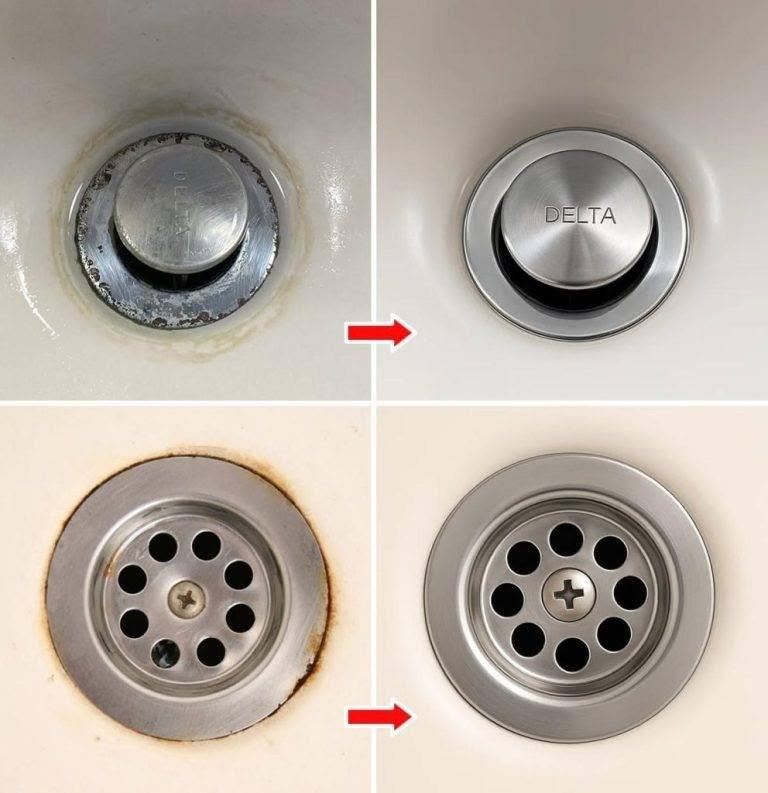
🚰 How to Remove the Dark Circle Around Your Faucets
That dark ring around a faucet is usually caused by a combination of mineral deposits, soap residue, grime, mold/mildew, or moisture that has collected around the base. The best cleaning method depends on what the dark buildup actually is.
Here are several safe methods, starting with the gentlest.
🧽 Method 1: White Vinegar + Dish Soap
This is a good first choice for mineral buildup and general grime.
You need:
- ½ cup white vinegar
- ½ cup warm water
- A few drops of dishwashing liquid
- Soft cloth or old toothbrush
Steps:
- Mix the vinegar, warm water, and dish soap.
- Soak a cloth in the mixture.
- Place the damp cloth around the dark ring.
- Leave it for 10–15 minutes.
- Gently scrub with a soft toothbrush.
- Wipe with clean water.
- Dry the area thoroughly.
For stubborn mineral deposits, you can leave the vinegar-soaked cloth in place a little longer, but don’t let acidic cleaners sit for long periods on surfaces that may be damaged by acids.
🧂 Method 2: Baking Soda Paste
If the dark ring is more like stuck-on grime rather than hard mineral scale, try a mild paste.
Mix:
- 1 tablespoon baking soda
- A small amount of water
You want a soft paste rather than a runny mixture.
Use it like this:
- Apply a thin layer around the stain.
- Let it sit for about 5–10 minutes.
- Gently scrub with a soft toothbrush or microfiber cloth.
- Rinse thoroughly.
- Dry the faucet and surrounding area.
Don’t scrub aggressively, especially on polished or easily scratched finishes.
🍋 Method 3: For Hard Water Rings
If the ring is white, gray, crusty, or chalky underneath the dark discoloration, mineral deposits may be the main problem.
A cloth dampened with diluted white vinegar can help dissolve mineral scale.
After cleaning:
- Rinse the area thoroughly.
- Wipe it completely dry.
- Buff the faucet with a clean microfiber cloth.
Keeping the area dry afterward is important because repeated moisture encourages the buildup to return.
🦠 If It’s Black Mold or Mildew
If the dark material looks black, fuzzy, slimy, or speckled, it may be mildew rather than mineral deposits.
Clean the area with an appropriate bathroom cleaner according to its label, or use a mild soap-and-water solution for small amounts of surface grime.
Wear gloves and ventilate the room.
If the material keeps returning around the faucet, check underneath the faucet and countertop for a leaking seal or persistent moisture.
⚠️ Never mix cleaners
Especially never mix bleach with vinegar, ammonia, or other acidic cleaners. Dangerous gases can be produced.
Use one cleaning product at a time and rinse the surface before switching products.
🛠️ What If the Dark Circle Won’t Come Off?
If you’ve cleaned it thoroughly but a dark ring remains, the problem may not be dirt.
The faucet’s finish, countertop material, or sealant may have become discolored, stained, corroded, or damaged.
In that situation, stronger scrubbing can make things worse.
For example, avoid using abrasive powders, steel wool, or rough scouring pads on chrome, brushed metal, painted finishes, or delicate stone.
✨ How to Keep It From Coming Back
Once you’ve removed the buildup:
- Wipe around the faucet after cleaning.
- Don’t leave standing water around the base.
- Fix dripping faucets or leaking seals.
- Clean the area regularly rather than waiting for heavy buildup.
- Use a microfiber cloth to dry the faucet after washing.
A 30-second wipe every few days can prevent a stubborn ring from developing again.
💡 Quickest Method to Try First
If you’re not sure what the dark circle is, start with:
Warm water + dish soap → soft toothbrush → rinse → dry.
If that doesn’t work and the buildup appears mineral-like, try diluted white vinegar.
If you tell me whether the surface around your faucet is stainless steel, chrome, ceramic, granite, marble, quartz, or another material, I can give you the safest exact recipe for that surface.