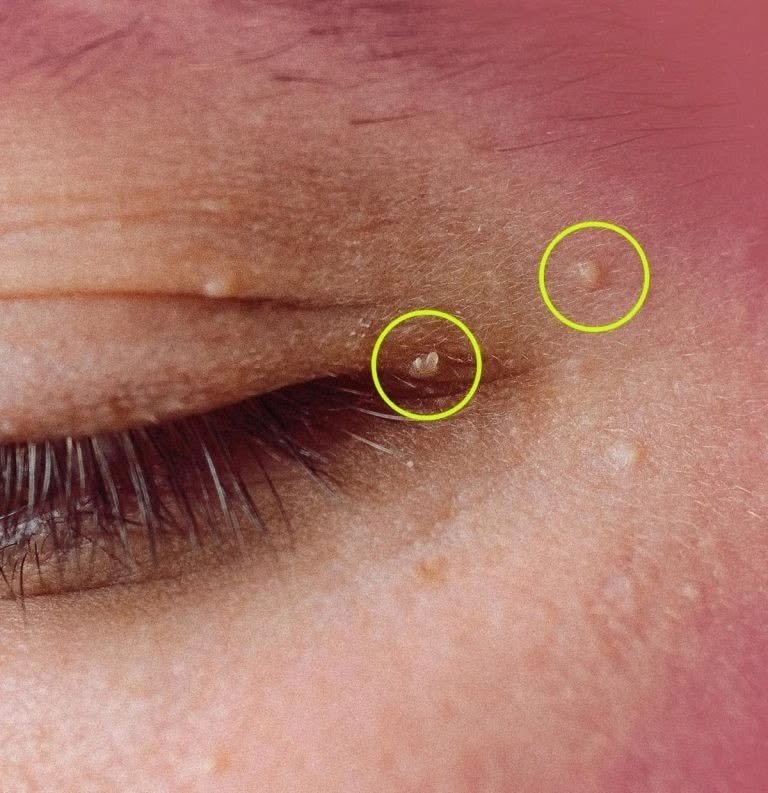
How to Get Rid of Milia: Those Tiny White Bumps
Milia are small, firm, white or yellowish bumps that commonly appear around the eyes, cheeks, forehead, or nose. Despite sometimes being called “fat cysts,” they aren’t fat deposits. They are tiny keratin-filled cysts that form when dead skin cells become trapped beneath the skin.
They are usually harmless and painless, but they can be frustrating if you want smoother-looking skin.
1. Don’t Squeeze or Pop Them
The first rule is simple: don’t try to squeeze milia like pimples.
Milia don’t have the same type of opening as ordinary acne. Trying to force them out can cause:
- Skin irritation
- Bleeding
- Infection
- Scarring
- Dark marks after healing
This is especially important for milia around the delicate eye area.
2. Use Gentle Exfoliation
Regular, gentle exfoliation may help prevent dead skin from accumulating and can sometimes help existing milia gradually resolve.
Ingredients commonly used for this purpose include:
- Lactic acid
- Glycolic acid
- Salicylic acid
Start slowly—perhaps a few times a week rather than using several exfoliating products every day.
If your skin becomes burning, very dry, red, or irritated, reduce or stop the exfoliating product.
3. Consider a Retinoid
Topical retinoids can increase skin-cell turnover and may help with persistent milia.
Over-the-counter adapalene is one example of a topical retinoid, although whether it is appropriate depends on the location and your skin.
Be particularly cautious around the eyes. Don’t apply strong retinoid products directly to the eyelids or very close to the eyes unless a healthcare professional recommends it.
Retinoids can also cause dryness and irritation when you first begin using them.
4. Wear Sunscreen
Sun exposure can contribute to skin damage and may make some types of milia more persistent.
Using a broad-spectrum SPF 30 or higher sunscreen during the day can help protect your skin.
Choose a product that you tolerate well and that doesn’t irritate the area where you have milia.
5. Professional Removal Is Usually the Fastest Option
If you want a particular milia removed quickly, adermatologist or other appropriately trained healthcare professional can remove it using a sterile technique.
Depending on the situation, professional treatment may involve:
- Sterile extraction
- Cauterization
- Cryotherapy
- Laser treatment
- Prescription topical treatments
For a small number of uncomplicated milia, sterile extraction is often sufficient.
6. Be Careful With Home Extraction
You may see videos recommending needles, pins, or lancets to puncture milia at home.
It’s safer not to do this yourself.
The skin around the eyes is particularly delicate, and improper extraction can lead to infection, scarring, or injury. A dermatologist can distinguish milia from other bumps that may look similar.
How Long Do Milia Take to Go Away?
Many milia eventually disappear on their own, although this can take weeks or months, and some can persist considerably longer.
Treatment isn’t always medically necessary because milia are generally benign. Removal is usually performed because of appearance or because a lesion is persistent or bothersome.
What About Babies?
Milia are extremely common in newborns. In babies, they usually don’t require treatment and typically disappear naturally.
Parents should not squeeze, scrape, or puncture them.
When Should You See a Dermatologist?
Consider getting a professional evaluation if:
- The bumps don’t go away
- They are spreading or changing
- They become painful, red, or swollen
- You’re unsure whether they are actually milia
- They are close to the eyes
- You want them removed quickly
Not every small white bump is milia. Closed comedones, sebaceous hyperplasia, xanthelasma, and other skin conditions can look similar, so an accurate diagnosis matters before attempting treatment.
Bottom Line
The safest way to deal with milia is patience, gentle skincare, sun protection, and professional extraction when necessary. Avoid squeezing or puncturing them yourself.
If you want, I can also give you a simple morning-and-night skincare routine specifically for removing/preventing milia, including which ingredients to use and which products to avoid.