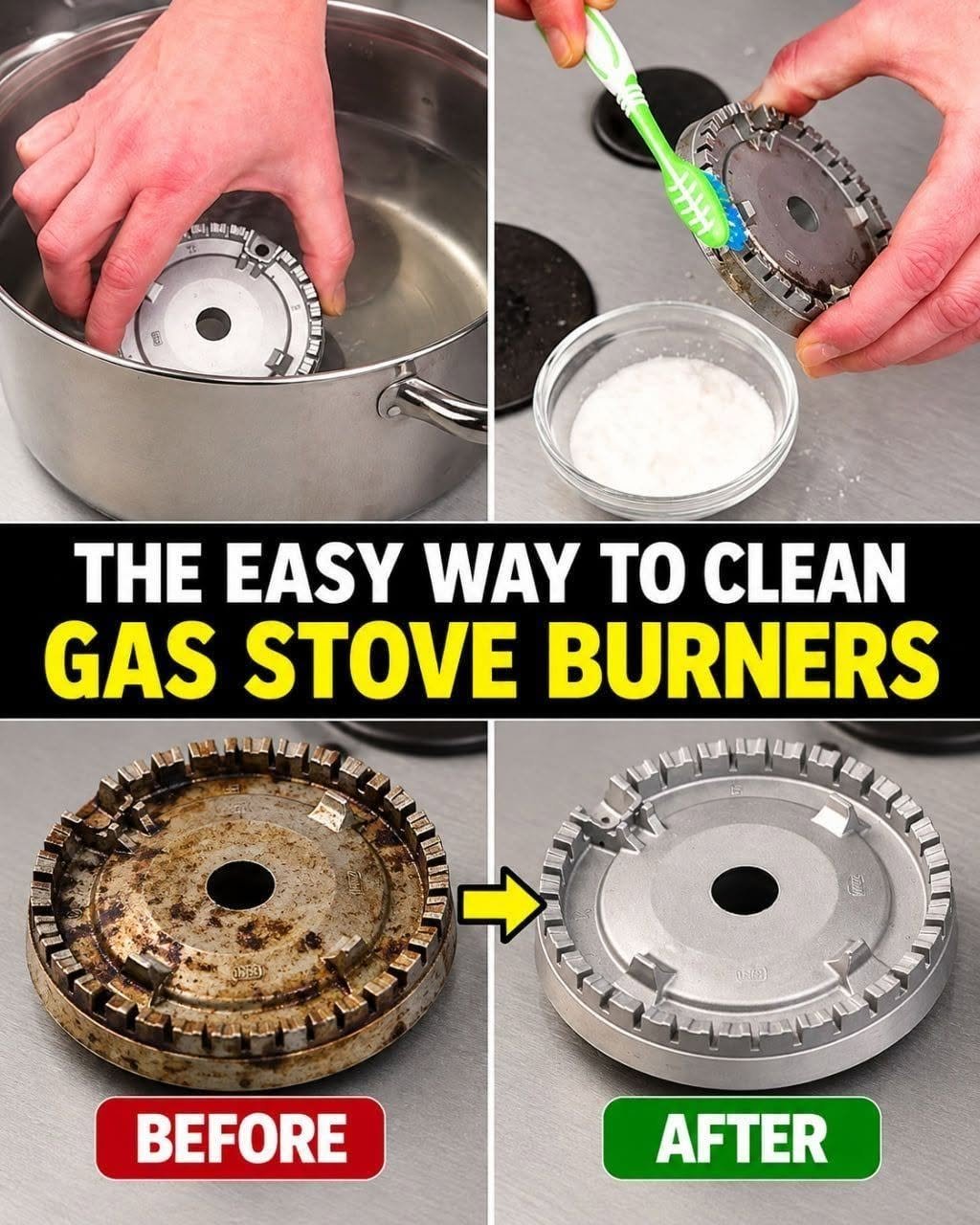
How to Clean a, stained gas stovetop can often be refreshed Gas Stove Top So It Looks Like New
A greasy, stained gas stovetop can often be refreshed with warm water, dish soap, and a little patience. The key is to loosen the buildup instead of aggressively scrubbing it.
1. Let the Stove Cool Completely
Make sure the burners are off and completely cool before cleaning. Remove the grates, burner caps, and other removable parts according to your stove’s instructions.
2. Remove Loose Crumbs
Use a dry microfiber cloth or paper towel to wipe away loose food and crumbs.
3. Soak the Grates
Place removable grates in warm, soapy water for about 15–30 minutes.
For stubborn grease, use a soft brush or non-abrasive sponge after soaking.
4. Clean the Stovetop
Mix warm water with a few drops of dishwashing liquid.
Dip a microfiber cloth or soft sponge into the solution, wring it out, and wipe the entire surface.
For dried-on food, place a warm, damp cloth over the area for several minutes to soften it before wiping.
5. Tackle Stubborn Grease
Apply a small amount of dish soap directly to greasy areas and let it sit for a few minutes.
Gently scrub with a non-scratch sponge. Repeat if necessary rather than using excessive force.
6. Clean Around the Burners Carefully
Use a damp cloth or soft brush around the burner area.
Don’t pour water directly into the burner openings or igniters. Excess moisture can interfere with ignition and may damage components.
7. Clean the Burner Caps
Wash removable burner caps with warm soapy water and dry them completely before putting them back.
Make sure they’re positioned correctly, because improper placement can cause uneven flames or ignition problems.
8. Remove Soap Residue
Wipe the stovetop with a clean, damp microfiber cloth until no cleaner remains.
Then dry everything thoroughly with a clean towel to prevent streaks and water spots.
9. Don’t Use Harsh Abrasives
Avoid steel wool, rough scouring pads, and aggressive scraping unless the manufacturer specifically permits them. They can scratch stainless steel, glass, enamel, or painted surfaces.
Also, never mix cleaning chemicals, especially bleach with acids such as vinegar.
The Simple Deep-Clean Method
Soak → loosen → gently scrub → rinse → dry completely.
This approach usually works better than trying to scrub hardened grease off a completely dry surface.
For a Shiny Finish
If your stovetop is stainless steel, finish with a clean microfiber cloth and wipe in the direction of the metal grain. Use a product specifically designed for stainless steel if needed.
Bottom Line
You don’t need an expensive “miracle” cleaner. Warm water, dish soap, a soft sponge, and microfiber cloths can remove most everyday grease and food buildup while protecting the stove’s finish. Always follow your manufacturer’s cleaning instructions, especially for glass or specialty cooktops.