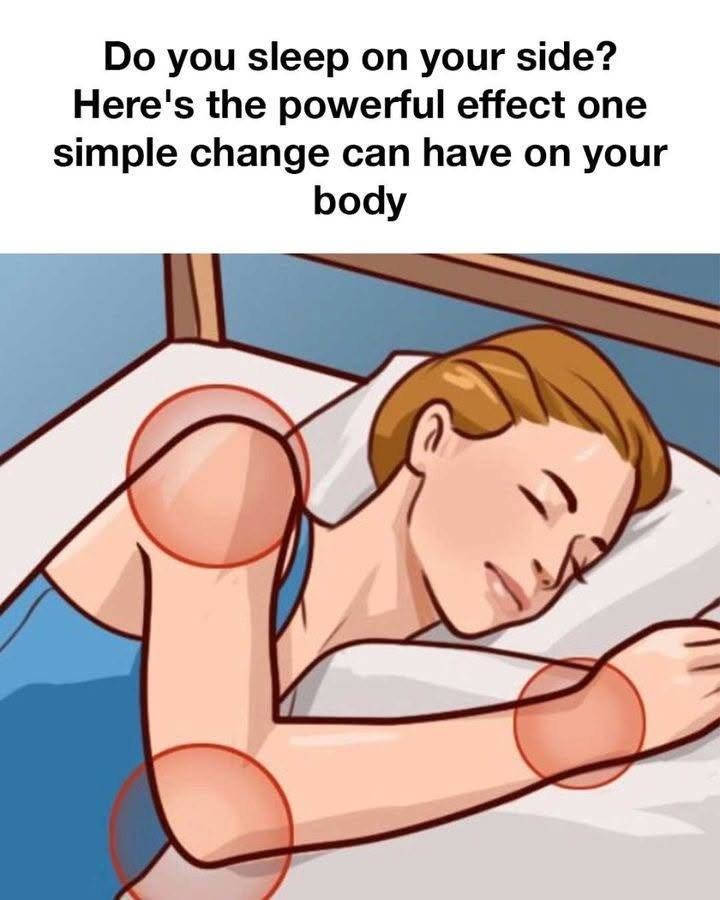
DO YOU SLEEP ON YOUR SIDE? HERE’S WHAT ONE SIMPLE CHANGE CAN DO TO YOUR BODY
Your sleeping position may affect comfort, breathing, reflux, and pressure on different parts of your body. But there isn’t one sleeping position that’s healthiest for everyone.
For many people, side sleeping is perfectly healthy. In certain situations, however, changing which side you sleep on—or slightly changing your position—may make a noticeable difference.
Side Sleeping Can Help Some People Breathe More Easily
Sleeping on your side can reduce the tendency of the tongue and soft tissues to fall backward into the airway compared with sleeping flat on your back.
For some people with obstructive sleep apnea or snoring, side sleeping may therefore reduce breathing problems during sleep.
It isn’t a cure for sleep apnea, though. Persistent loud snoring, witnessed pauses in breathing, gasping during sleep, or significant daytime sleepiness should be discussed with a healthcare professional.
The Left Side May Help With Nighttime Reflux
People who experience gastroesophageal reflux may sometimes benefit from sleeping on their left side.
The position of the stomach and esophagus means that left-side sleeping can reduce exposure of the esophagus to stomach contents compared with certain other positions.
If you frequently experience heartburn at night, changing sleeping position may be one useful lifestyle measure.
Keeping meals away from bedtime can also help some people.
But Right-Side Sleeping Isn’t Automatically Bad
There’s no reason for a healthy person to panic about sleeping on the right side.
People naturally change positions during the night, and comfort matters.
If you don’t have a specific medical reason to favor one side, the best position is often the one that allows you to sleep comfortably and consistently.
Your Pillow Position Matters Too
A simple adjustment may be more useful than completely changing your preferred sleeping position.
When sleeping on your side, a pillow that keeps your head and neck aligned with your spine can reduce unnecessary strain.
A pillow between the knees may also make side sleeping more comfortable by helping keep the hips and pelvis in a more neutral position.
The ideal pillow height depends on your body shape, mattress firmness, and sleeping position.
What About Shoulder Pain?
Side sleeping can place pressure on the shoulder you’re lying on.
If you regularly wake with shoulder discomfort, try changing sides or adjusting your pillow arrangement.
People with an existing shoulder injury may find that sleeping on the unaffected side is more comfortable.
Persistent or worsening pain should be assessed rather than attributed automatically to sleeping position.
Pregnancy Is Different
During pregnancy, sleep position can become an important consideration, particularly later in pregnancy.
Pregnant people should follow the advice of their obstetrician or midwife regarding the safest and most comfortable sleeping position for their individual circumstances.
The “One Simple Change” Isn’t the Same for Everyone
There is no universal sleeping-position trick that will transform everyone’s health overnight.
For one person, the useful change may be moving from back sleeping to side sleeping because of snoring.
For another, it might be sleeping on the left side to reduce nighttime reflux.
For someone else, adjusting the pillow may be the change that improves comfort.
Don’t Sacrifice Sleep Quality for a Trend
Getting enough good-quality sleep is more important than forcing yourself into a position that causes discomfort.
If a particular position helps you breathe comfortably, reduces pain, or minimizes reflux while allowing you to sleep well, it may be a good choice.
But if you’re consistently waking exhausted, choking or gasping during sleep, experiencing significant pain, or suffering from persistent nighttime symptoms, the underlying problem deserves medical attention.
THE BOTTOM LINE
Side sleeping is a healthy option for many people, and a small change in sleeping position can sometimes improve comfort or reduce symptoms such as snoring or nighttime reflux.
But there is no single “perfect” position for everyone.
Choose a position that supports comfortable, uninterrupted sleep, and make adjustments based on your individual symptoms and health needs rather than viral claims about one sleeping position being universally superior.