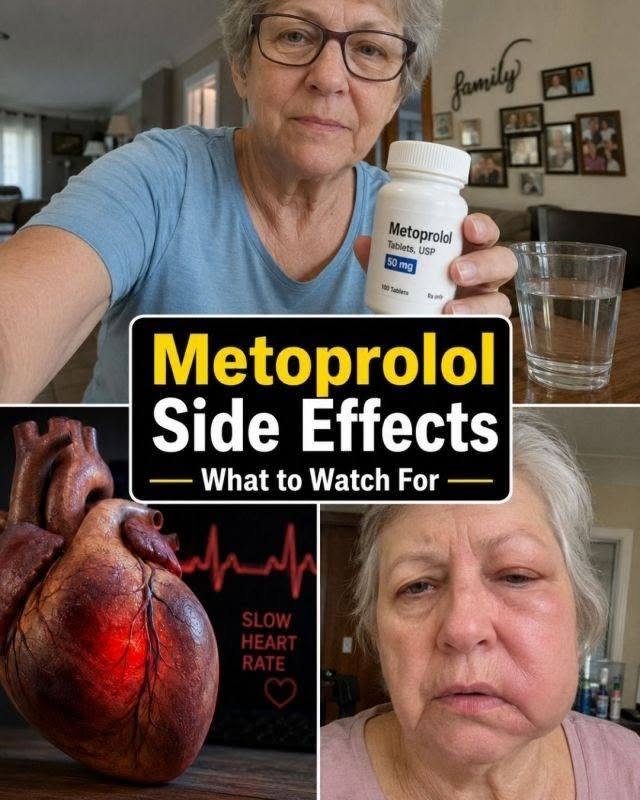
💊 Discovering the 10 Most Common Side Effects of Metoprolol: A Helpful Guide for Anyone Taking This Medication
Metoprolol is a beta-blocker commonly prescribed for high blood pressure, certain abnormal heart rhythms, angina, and other heart-related conditions. It works partly by slowing the heart rate and reducing the workload on the heart. nhs.uk
Like any prescription medication, metoprolol can cause side effects. Many are mild and may improve as your body adjusts to treatment, but some symptoms deserve medical attention. The exact effects and frequency can vary depending on the formulation, dose, and individual health. nhs.uk+1
Here are 10 side effects people taking metoprolol should know about.
1. 😴 Feeling Tired or Weak
Fatigue is one of the commonly reported effects of metoprolol.
Because metoprolol slows the heart rate and reduces the effects of certain stress hormones, some people may initially feel less energetic.
You might notice:
- Lower energy
- General weakness
- Feeling tired during the day
- Reduced exercise tolerance
This may improve as your body becomes accustomed to the medicine. If severe fatigue persists or interferes with normal activities, speak with your doctor rather than changing the dose yourself. nhs.uk+1
2. 🌀 Dizziness or Lightheadedness
Metoprolol can lower blood pressure and slow your heart rate, which may make some people feel dizzy or lightheaded.
This can be especially noticeable when you first start taking it or after a dose increase.
If you feel dizzy, sit or lie down until you feel better and avoid driving or operating machinery while affected. nhs.uk+1
Repeated dizziness or fainting should be discussed with your healthcare professional.
3. ❤️ Slow Heart Rate
Because metoprolol is designed to slow the heart, a slower pulse is an expected pharmacological effect, but an excessively slow heart rate can become a problem.
Pay attention to symptoms such as:
- Unusual weakness
- Dizziness
- Feeling faint
- Fainting
- Shortness of breath
- Reduced ability to exercise
If you have concerning symptoms together with a very slow pulse, contact your healthcare professional promptly. Electronic Medicines Compendium+1
4. 🧊 Cold Hands and Feet
Some people taking metoprolol notice that their hands or feet feel unusually cold.
This is a recognized beta-blocker side effect and may be related to changes in blood flow to the extremities. nhs.uk+1
Keeping your hands and feet warm can help. However, severe pain, numbness, color changes, or worsening circulation problems should be medically assessed.
5. 🤕 Headaches
Headaches are another commonly reported side effect.
They may be more noticeable when beginning treatment and can improve over time. nhs.uk
Rest, adequate hydration, and following your healthcare professional’s advice about pain relief may help.
If you develop a sudden, extremely severe, or unusual headache, seek medical attention rather than automatically assuming it’s the medication.
6. 🤢 Nausea or Feeling Sick
Metoprolol can cause nausea in some people.
If you’re experiencing mild nausea, eating simple meals and taking the medicine according to your prescribed instructions may help. The NHS notes that some people find taking tablets after eating helpful, depending on their formulation and directions. nhs.uk
Persistent vomiting, inability to keep fluids down, or severe abdominal symptoms should be discussed with a healthcare professional.
7. 🚽 Diarrhea or Other Digestive Changes
Digestive symptoms such as diarrhea, constipation, or stomach discomfort can occur with metoprolol. nhs.uk+1
If diarrhea is severe or prolonged, dehydration can become a concern.
Drink appropriate fluids and contact your healthcare professional if symptoms don’t settle or are accompanied by significant weakness or reduced urination.
8. 🌙 Sleep Problems or Vivid Dreams
Some people report insomnia, nightmares, or unusual dreams while taking metoprolol.
These effects are not experienced by everyone, and sleep problems can have many other causes. Electronic Medicines Compendium+1
If sleep problems began after starting or increasing metoprolol and are persistent, mention them to your doctor. They can determine whether the medication or something else may be contributing.
9. 😔 Mood Changes
Depression has been reported with metoprolol, and some patient information also lists anxiety, nervousness, or concentration difficulties among less-common reactions. Electronic Medicines Compendium+1
Don’t assume that a significant change in mood is simply part of aging or everyday stress.
If you develop persistent sadness, major changes in mood, or thoughts of harming yourself, seek professional help promptly.
10. 🫁 Shortness of Breath
Shortness of breath can occur with metoprolol and is listed among reported adverse effects. DailyMed+1
However, new or worsening breathlessness should never automatically be blamed on the medication.
It can also be a symptom of heart failure, lung disease, or another serious condition.
Seek medical attention if breathlessness is new, worsening, occurs at rest, or is accompanied by swelling, an irregular heartbeat, chest pain, or severe weakness.
⚠️ Some Less-Common Effects Are Worth Knowing
The official prescribing information and patient leaflets also report less-common reactions such as:
- Skin rash or itching
- Muscle cramps
- Fluid retention
- Palpitations
- Depression
- Sexual difficulties
- Visual disturbances
- Dry or irritated eyes
- Tingling sensations
- Changes in liver-function tests
These reactions don’t mean that everyone taking metoprolol will experience them. Electronic Medicines Compendium+1
🩸 Important If You Have Diabetes
Metoprolol can mask some warning signs of low blood sugar, particularly the usual rapid heartbeat associated with hypoglycemia.
If you have diabetes and use insulin or other glucose-lowering medication, make sure your healthcare team knows you’re taking metoprolol and follow their recommendations for monitoring blood glucose. DailyMed
Don’t change your diabetes treatment without medical guidance.
🫁 What If You Have Asthma or Breathing Problems?
Metoprolol is relatively selective for beta-1 receptors, but beta-blockers can still cause or worsen breathing problems in susceptible people.
Tell your doctor if you have asthma, chronic lung disease, wheezing, or a history of bronchospasm. The prescribing information specifically warns about bronchospastic disease. DailyMed
New wheezing, chest tightness, or significant difficulty breathing requires prompt medical assessment.
🚫 Don’t Stop Metoprolol Suddenly
This is one of the most important safety points.
If you’ve been taking metoprolol regularly, don’t suddenly stop it without medical advice.
Abrupt withdrawal can worsen heart-related problems, including ischemic symptoms, and can be particularly dangerous in people taking it for cardiovascular disease. nhs.uk+1
If side effects are bothering you, contact your doctor. They can determine whether the dose needs adjustment or whether another treatment would be more appropriate.
🍷 What About Alcohol?
Alcohol can increase the blood-pressure-lowering effects of metoprolol and may make dizziness or lightheadedness worse.
The NHS recommends being particularly cautious when first starting metoprolol or after increasing the dose. nhs.uk
🚨 When Should You Seek Urgent Medical Help?
Contact emergency services if you develop:
5. 🤕 Headaches
They may be more noticeable when beginning treatment and can improve over time. nhs.uk
6. according to your prescribed instructions may help. The NHS notes that some people find taking tablets after eating helpful, dependingoprolol, and some patient information also lists anxiety, nervousness, or concentration difficulties among less-common reactions. insulin or other glucose-lowering medication, make sure your healthcare team knows you’re taking metoprolol and follow their and can be particularly dangerous in people taking it for cardiovascular disease. 🤢 Nausea or Feeling Sick
7. 🚽 Diarrhea or Other Digestive Changes
If diarrhea is severe or prolonged, dehydration can become a concern.
8. 🌙 Sleep Problems or Vivid Dreams
Some people report insomnia, nightmares, or unusual dreams while taking metoprolol.
If you have diabetes and use insulin or other glucose-lowering medication, make sure your healthcare team knows you’re taking metoprolol and follow their recommendations for monitoring blood glucose.
- Severe or persistent chest pain
- Severe difficulty breathing or wheezing
- Fainting or inability to stay conscious
- Signs of a serious allergic reaction, such as swelling of the lips, mouth, throat, or tongue
- Severe symptoms accompanied by a markedly slow heartbeat
The NHS specifically recommends emergency assessment for new or worsening chest pain and significant breathing difficulty. nhs.uk
🩺 Keep Your Doctor Informed
When taking metoprolol, keep track of symptoms that are new or worsening.
It can be useful to discuss:
- Your blood-pressure readings
- Your resting heart rate, when appropriate
- Dizziness or fainting
- Changes in exercise tolerance
- Breathing symptoms
- Swelling
- Changes in sleep or mood
- Other medications and supplements you’re taking
Your healthcare professional can determine whether a symptom is actually related to metoprolol or has another cause.
🌟 The Bottom Line
Metoprolol can be an important medication for protecting the heart and controlling blood pressure, but side effects can occur.
The 10 effects to know about include tiredness, dizziness, slow heart rate, cold hands and feet, headaches, nausea, digestive changes, sleep problems, mood changes, and shortness of breath. nhs.uk+1
Most mild side effects aren’t dangerous and may improve as your body adjusts. But symptoms such as fainting, severe breathing difficulty, new or worsening chest pain, or signs of a serious allergic reaction require prompt medical attention.
Most importantly, don’t stop metoprolol suddenly or change your dose on your own. If you’re experiencing troublesome effects, speak with your doctor or pharmacist so your treatment can be reviewed safely. nhs.uk+1