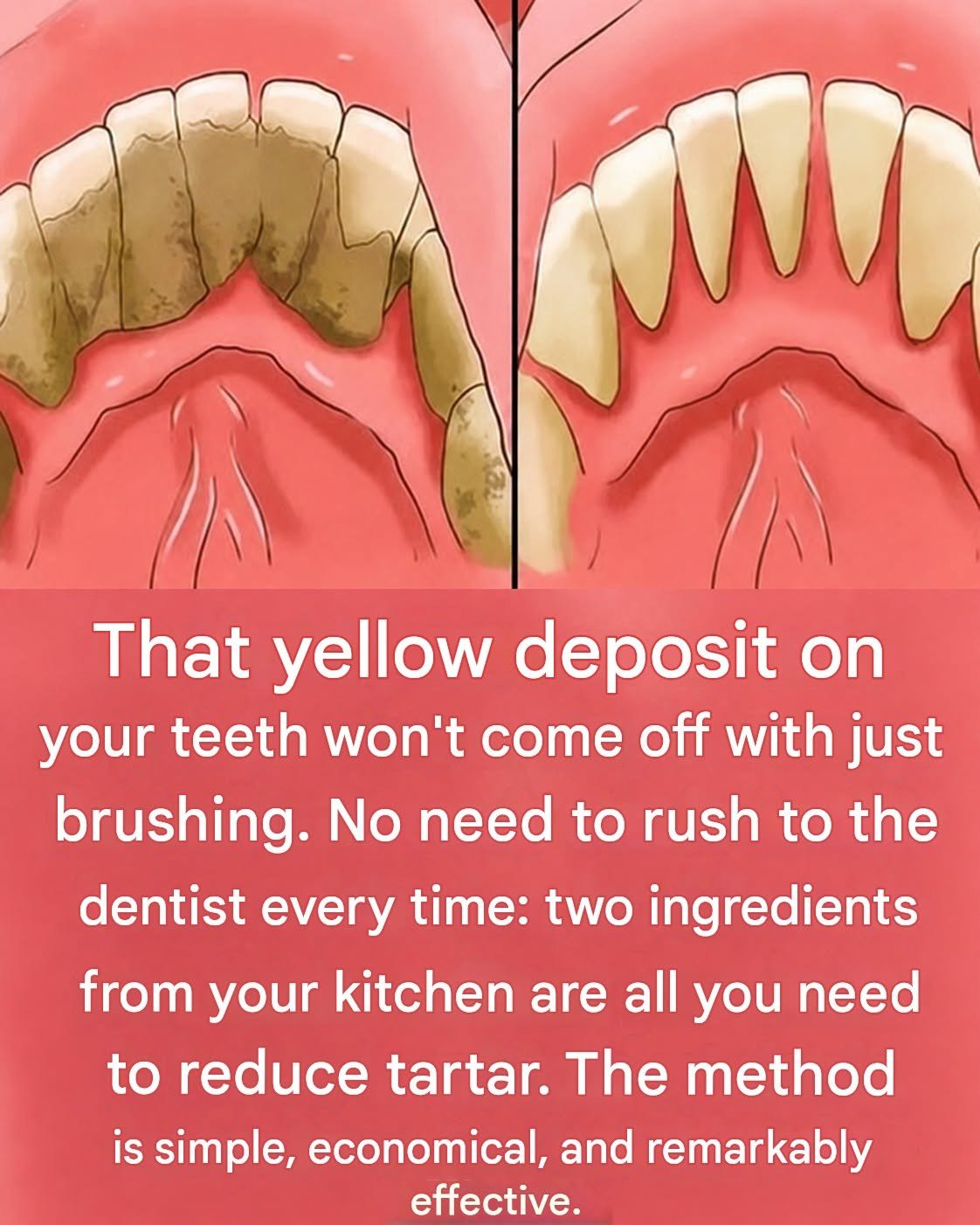
Be Your Own Dentist? What You Can Safely Do About Tartar at Home 🦷
Tartar—also called dental calculus—is hardened plaque. Once plaque mineralizes into tartar, it cannot be safely removed by ordinary brushing or household scraping. A dental professional uses specialized instruments to remove it without unnecessarily damaging enamel or gums.
The good news is that you can do a lot at home to prevent new tartar from building up.
1. 🪥 Brush Twice a Day
Brush for about 2 minutes, twice daily, using a soft-bristled toothbrush and fluoride toothpaste.
Pay particular attention to the gumline, where plaque commonly accumulates.
Don’t scrub aggressively. Hard brushing can irritate gums and contribute to enamel wear.
2. 🧵 Clean Between Your Teeth Every Day
A toothbrush can’t effectively clean every space between your teeth.
Use:
-
Dental floss
-
Interdental brushes
-
A water flosser
Choose whichever method you can use consistently and correctly.
3. 🦷 Use an Electric Toothbrush if You Prefer
An electric toothbrush can make thorough brushing easier for some people. The key isn’t simply owning one—the important thing is effective, consistent brushing.
4. 🧴 Consider an Antibacterial Mouthwash
A therapeutic mouthwash may help reduce plaque and gingivitis as part of an overall oral-care routine.
It won’t dissolve existing tartar, however.
5. 🚫 Don’t Scrape Tartar With Household Objects
You may see advice recommending needles, knives, metal tools, fingernails, or DIY dental scalers.
Don’t do this.
You can accidentally:
-
Cut your gums
-
Damage enamel
-
Cause bleeding
-
Push bacteria beneath the gumline
-
Damage dental restorations
Professional dental instruments require proper technique and visibility.
6. 🍋 Don’t Use Lemon or Vinegar
Acidic substances may make teeth temporarily feel smoother, but repeatedly exposing teeth to acids can erode enamel.
Once enamel is lost, it doesn’t grow back.
7. 🧂 Be Careful With Abrasive DIY Remedies
Baking soda and other abrasive substances can remove some surface staining, but aggressively scrubbing your teeth isn’t a safe way to remove hardened tartar.
For everyday care, fluoride toothpaste and proper brushing are a much better approach.
8. 🚭 Avoid Tobacco
Smoking and other tobacco use can contribute to staining, gum disease, and other oral-health problems. Quitting is one of the most beneficial things you can do for your mouth and overall health.
🦷 What Actually Removes Existing Tartar?
Once plaque has hardened, professional dental cleaning is the reliable way to remove it.
A dentist or dental hygienist can remove calculus from above and, when necessary, below the gumline while checking for cavities and gum disease.
🚨 See a Dentist If You Notice:
-
Bleeding or swollen gums
-
Persistent bad breath
-
Loose teeth
-
Gum recession
-
Pain when chewing
-
Pus around the gums
-
Heavy tartar buildup
-
Teeth becoming increasingly sensitive
These can indicate gum disease or another dental problem that shouldn’t be treated with DIY scraping.
The Bottom Line
You can prevent and control plaque at home, but you shouldn’t try to physically remove established tartar yourself.
The safest routine is simple: brush twice daily with fluoride toothpaste, clean between your teeth every day, avoid tobacco, and have professional cleanings as recommended. 🦷✨
