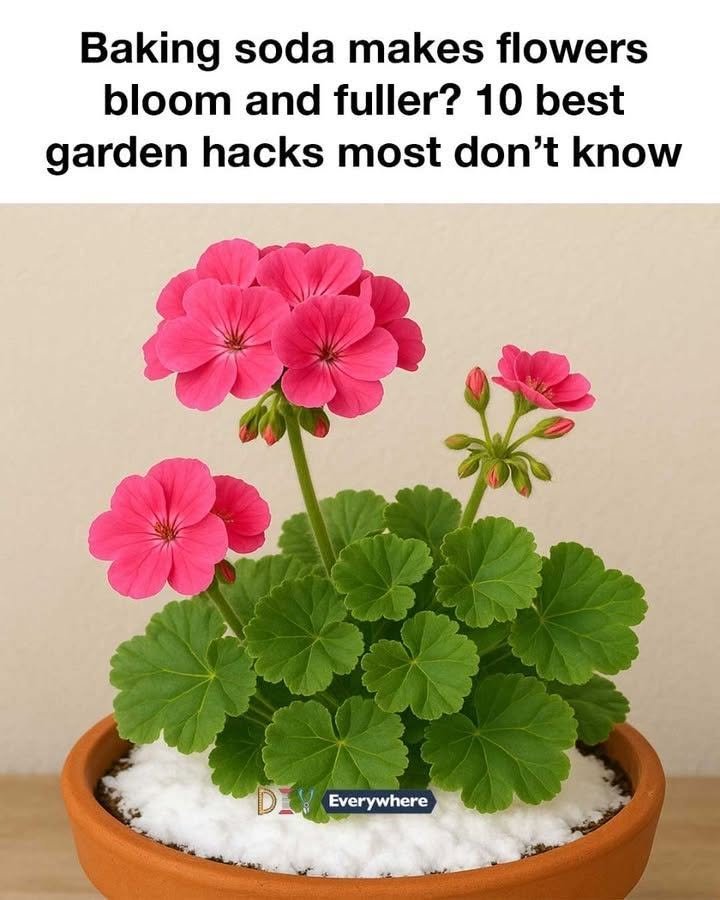
Does Baking Soda Make Flowers Bloom Bigger and Fuller? 10 Garden Hacks Most People Don’t Know
Baking soda is often described online as a secret ingredient that can make flowers bloom faster, grow fuller, or produce more flowers. But there’s an important distinction between a useful gardening trick and a viral gardening myth.
Baking soda can have some legitimate garden uses, but sprinkling it around every plant will not automatically make flowers bloom bigger or fuller. In fact, too much sodium can damage soil and plants.
The best garden hacks are usually much simpler: improving soil, watering correctly, pruning at the right time, attracting pollinators, and giving plants the light and nutrients they actually need.
Here are 10 practical tips worth knowing.
1. Use Baking Soda Carefully—Not as a Universal Bloom Booster
Baking soda is sodium bicarbonate, and it can raise the pH of soil or water when used in sufficient quantities.
Some gardeners use very small amounts in specific situations, but it shouldn’t be treated as fertilizer.
Plants need nutrients such as nitrogen, phosphorus, potassium, magnesium, calcium, and various micronutrients. Baking soda doesn’t provide the complete nutrition required for healthy flowering.
Too much sodium can accumulate in soil and potentially interfere with plant growth.
So if your goal is more flowers, don’t automatically reach for the baking soda.
First figure out what the plant actually needs.
2. Deadhead Spent Flowers
This is one of the easiest ways to encourage continued flowering in many ornamental plants.
When flowers fade, remove the spent blooms according to the plant’s pruning requirements.
Why?
Some plants respond by putting energy into producing additional flowers rather than developing seeds.
Deadheading can make plants look tidier and, for suitable varieties, encourage additional blooms.
However, not every plant should be deadheaded in exactly the same way. Some plants flower only once, while others produce attractive seed heads that you may want to keep.
3. Give Flowers Enough Sunlight
A surprisingly common reason for poor flowering is insufficient light.
Many flowering plants need several hours of sunlight each day to produce abundant blooms.
If a sun-loving plant is growing in deep shade, adding baking soda or fertilizer won’t solve the fundamental problem.
Before changing the soil, check the plant’s light requirements.
If the plant needs full sun, give it an appropriate location with sufficient direct light.
On the other hand, plants that prefer shade can suffer when exposed to intense afternoon sun.
The right amount of light depends on the species.
4. Water Deeply Rather Than Constantly
Frequent shallow watering can encourage plants to develop relatively shallow root systems.
For many established garden plants, deep and appropriate watering is preferable to constantly wetting the surface.
But don’t interpret this as “water as much as possible.”
Overwatering can deprive roots of oxygen and contribute to root disease.
The correct watering schedule depends on:
- Plant species
- Soil type
- Temperature
- Rainfall
- Container size
- Stage of growth
Check the soil rather than following a rigid daily schedule.
5. Mulch Around Plants
Mulching is one of the most useful low-effort garden techniques.
A layer of appropriate organic mulch can help:
- Reduce evaporation
- Moderate soil temperature
- Suppress weeds
- Protect soil structure
- Add organic matter as it decomposes
Keep mulch away from direct contact with plant stems and trunks.
A huge pile of mulch against a stem can retain excessive moisture and create other problems.
6. Improve the Soil Instead of Adding Random Ingredients
If your plants aren’t thriving, the underlying problem may be poor soil.
Adding compost or other suitable organic matter can improve soil structure and water-holding capacity.
Before adding large quantities of amendments, however, understand your soil.
A soil test can tell you important information about pH and nutrient levels.
This is much more reliable than adding baking soda, coffee grounds, eggshells, or other kitchen ingredients simply because someone online claims they are plant “miracles.”
7. Don’t Over-Fertilize
More fertilizer does not necessarily mean more flowers.
Excessive nitrogen can encourage lush green leaves while reducing flowering in some ornamental plants.
Use a fertilizer appropriate for the particular plant and follow the product directions.
If a plant has adequate nutrients, adding more isn’t automatically beneficial.
Think of fertilizer as plant nutrition, not plant steroids.
8. Use Coffee Grounds Carefully
Used coffee grounds are often promoted as a universal fertilizer.
That’s an exaggeration.
Fresh coffee grounds can be acidic and can affect soil chemistry, while used grounds are not a complete fertilizer.
Composted coffee grounds can contribute organic matter, but they shouldn’t be dumped in thick layers around plants.
If you have lots of coffee grounds, composting them with other organic materials is generally a more sensible approach.
9. Encourage Pollinators
If you want flowers to produce seeds or fruit, pollination matters.
Bees, butterflies, moths, and other pollinators can be valuable visitors to a garden.
You can encourage them by growing a variety of flowering plants that provide nectar and pollen throughout the season.
Avoid unnecessary pesticide use, particularly when flowers are actively attracting pollinators.
A diverse garden can support a wider range of beneficial insects.
10. Prune at the Right Time
Pruning can dramatically affect flowering.
But when you prune is often just as important as how you prune.
Some plants produce flowers on new growth. Others produce flowers on older wood.
If you prune a plant at the wrong time, you may accidentally remove the branches that would have produced flowers.
Before cutting heavily, identify the plant and determine whether it flowers on new or old growth.
This one detail can make the difference between a plant covered in flowers and one with plenty of leaves but few blooms.
Bonus Hack: Check for Pests Before Blaming the Soil
Sometimes a plant isn’t flowering well because it is under stress from insects or disease.
Inspect the leaves, stems, buds, and undersides of leaves for:
- Aphids
- Spider mites
- Whiteflies
- Scale insects
- Caterpillars
- Fungal problems
Look for distorted leaves, sticky residue, holes, spots, or unusual discoloration.
Treating the actual problem is much more effective than adding random household ingredients.
So, Does Baking Soda Really Make Flowers Fuller?
Not by itself.
There is no universal rule that baking soda makes flowering plants produce more blooms.
If a plant happens to benefit from a particular soil-pH adjustment, changing the pH could potentially affect nutrient availability—but that doesn’t mean baking soda is the right amendment.
Some plants prefer acidic soil, while others prefer neutral or alkaline conditions.
Changing soil pH without knowing what you’re starting with can actually make nutrient availability worse.
If you suspect a pH problem, test the soil first and use an amendment appropriate for the plant and the measured soil conditions.
What About Spraying Baking Soda on Leaves?
Some gardeners use diluted baking-soda sprays as a traditional approach to certain fungal problems.
However, concentration matters.
A strong solution can burn leaves, especially in hot weather or bright sunlight.
If you’re dealing with a fungal disease, identifying the disease first is much more useful than automatically spraying baking soda.
Good airflow, proper spacing, appropriate watering, sanitation, and resistant plant varieties can often be important parts of disease management.
The 10 Best Garden Hacks at a Glance
If you want healthier, fuller flowering plants, concentrate on these fundamentals:
- Don’t treat baking soda as a universal bloom booster.
- Deadhead suitable plants after flowers fade.
- Give each plant the correct amount of sunlight.
- Water appropriately and deeply when needed.
- Use mulch to conserve moisture and protect soil.
- Improve poor soil with appropriate organic matter.
- Avoid excessive fertilizer, especially nitrogen.
- Use coffee grounds sensibly rather than dumping them everywhere.
- Create a pollinator-friendly garden.
- Prune according to the plant’s flowering cycle.
Final Takeaway
The idea that “baking soda makes flowers bloom bigger and fuller” is much more complicated than social-media gardening videos make it sound.
Baking soda has specific uses, but it isn’t a complete fertilizer or a universal flowering stimulant. Applying too much can introduce excess sodium and potentially harm soil and plants.
If you want abundant flowers, focus first on the basics: correct sunlight, appropriate watering, healthy soil, proper nutrition, deadheading, pest control, and correctly timed pruning.
Those aren’t as mysterious as a secret baking-soda recipe—but they are much more likely to produce the lush, healthy garden you’re actually trying to grow.