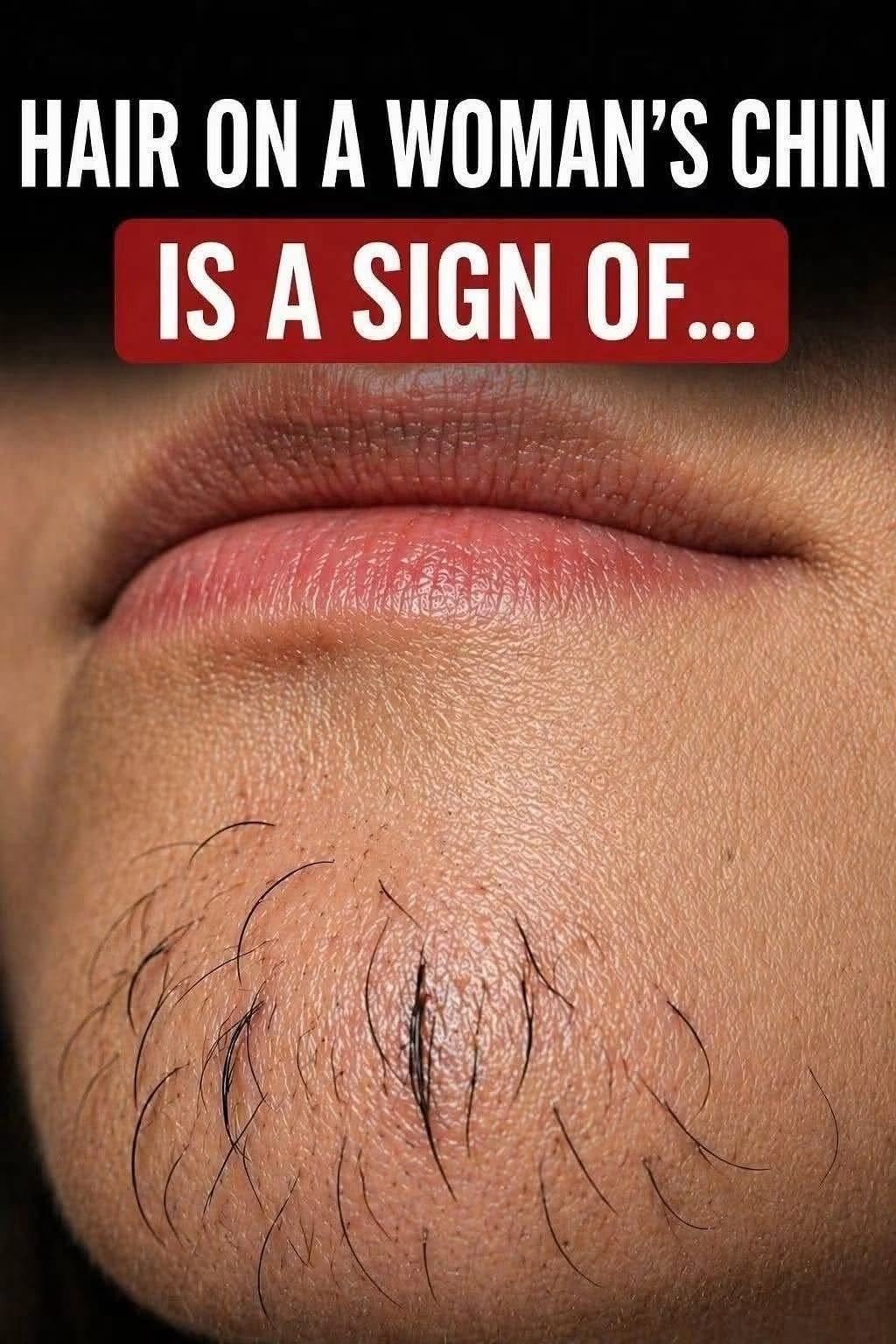
A Woman’s Chin Hair Could Be a Sign of More Than Just Aging, Experts Say
Finding a few coarse hairs on the chin or jawline is extremely common for women, particularly as they get older. A stray chin hair does not automatically mean something is medically wrong.
However, if facial hair becomes noticeably thicker, darker, or more widespread—especially if the change happens relatively quickly—it can sometimes be a clue that androgen hormones are playing a larger role.
The medical term for excessive coarse hair growth in areas where men typically grow hair is hirsutism. Understanding the possible causes can help you recognize when ordinary age-related changes are different from something worth discussing with a healthcare professional.
1. Aging Can Naturally Change Facial Hair
One of the most common explanations is simply getting older.
As women age, particularly around and after menopause, estrogen levels decline. Androgen activity can become relatively more prominent, even if the absolute amount of testosterone hasn’t dramatically increased.
Hair follicles can therefore respond differently.
You may notice:
- A few dark hairs on the chin
- Coarser hairs along the jaw
- Hair above the upper lip
- Thicker individual facial hairs
At the same time, scalp hair may become thinner.
This can seem strange, but it is a normal part of how hair follicles respond to changing hormones.
2. Hormonal Changes Can Cause Excess Facial Hair
When facial hair growth is more extensive than expected, one possibility is androgen excess.
Androgens are hormones such as testosterone that influence hair growth.
Conditions associated with increased androgen activity can cause coarse hair to appear on the chin, upper lip, chest, abdomen, or other areas.
The most common endocrine cause of hirsutism is polycystic ovary syndrome (PCOS).
3. PCOS Is One Possible Explanation
PCOS is a common hormonal disorder that can affect reproductive-age women.
Along with increased facial or body hair, possible signs include:
- Irregular or infrequent periods
- Acne
- Scalp hair thinning
- Difficulty becoming pregnant
- Weight changes
- Darkened skin in certain areas
Not every woman with PCOS has all of these symptoms.
Likewise, having chin hair by itself does not mean you have PCOS.
But if new facial hair appears alongside irregular menstrual cycles or other hormonal symptoms, it is worth discussing with a healthcare professional.
4. Some Medications Can Increase Hair Growth
Certain medications can influence hair growth.
Depending on the medication, increased hair can occur because of hormonal effects or because the drug changes the hair-growth cycle.
If you noticed new facial hair after starting a medication or changing its dose, don’t stop taking the medication yourself.
Instead, ask your doctor or pharmacist whether the medication could be contributing.
5. Sometimes There Is No Identifiable Medical Cause
Some women develop unwanted facial hair despite having normal hormone levels and no obvious underlying illness.
This can be called idiopathic hirsutism.
Genetics also matter.
If women in your family tend to develop facial hair as they age, you may be more likely to experience the same pattern.
Hair follicles also differ from person to person in their sensitivity to hormones.
That means two women with similar testosterone levels can have very different amounts of facial hair.
When Chin Hair Is More Worth Investig more noticeable when it grows back because the new hair has a blunt or relatively thick-looking tip rather than the tapered appearance of a naturally grown hairating
A few isolated chin hairs usually aren’t concerning.
A change becomes more important when facial hair is:
- Appearing rapidly
- Becoming significantly thicker or darker
- Spreading to new areas
- Occurring with irregular periods
- Accompanied by severe acne
- Associated with scalp hair loss
- Accompanied by unexplained weight changes
These patterns can indicate a hormonal issue that deserves evaluation.
6. Sudden, Rapid Hair Growth Is Different
A particularly important warning sign is rapid development of coarse facial or body hair.
If a woman who previously had very little facial hair suddenly develops substantial hair growth over a relatively short period, a healthcare professional may want to investigate hormone levels and other causes.
This is especially true if other signs of increased androgen activity appear at the same time.
7. A Deep Voice or Other Masculinizing Changes Need Attention
Facial hair accompanied by symptoms such as:
- A noticeably deeper voice
- Increased muscle mass
- Significant acne
- Rapid scalp hair loss
- Increased body hair
- Changes in menstrual cycles
- Enlargement of the clitoris
should be medically evaluated.
These changes can sometimes indicate substantially increased androgen activity.
Rarely, an ovarian or adrenal tumor can produce excess androgens. These conditions are uncommon, but rapidly progressive symptoms should not be dismissed as ordinary aging.
What About Menopause?
Menopause is one of the most common reasons women notice new facial hairs later in life.
During the menopausal transition, hormone levels change significantly.
As estrogen decreases, the balance between estrogen and androgens changes. This can make previously fine facial hairs become more noticeable or coarse.
So if a woman in her 50s notices a few chin hairs, that can be completely normal.
It doesn’t necessarily indicate a disease or dangerous hormonal imbalance.
Does Plucking Make Chin Hair Grow Back Thicker?
This is a common myth.
Plucking a hair does not generally cause the follicle to produce a thicker hair.
The hair may appear more noticeable when it grows back because the new hair has a blunt or relatively thick-looking tip rather than the tapered appearance of a naturally grown hair.
Repeated plucking can sometimes irritate the skin or lead to ingrown hairs.
Safe Ways to Manage Unwanted Chin Hair
If the hair is simply a cosmetic concern, several options are available.
Tweezing
Tweezers are practical for a small number of individual hairs.
Use clean tweezers and your facial hair has gradually increased over many years, it may simply reflect normal aging. If the change is sudden or accompanied by other hormonal symptoms, talk with a healthcare professional to avoid repeatedly digging into the skin.
Shaving
Shaving is safe and does not make hair grow back thicker.
It can be one of the easiest methods when several hairs are involved.
Waxing or Threading
These remove hair from the root and can provide longer-lasting smoothness, although they may irritate sensitive skin.
Laser Hair Removal
Laser treatment can provide longer-term reduction in hair growth, particularly when there is sufficient contrast between the hair and skin.
Several sessions are usually needed, and results vary.
Choosing an experienced professional is important, especially for darker skin tones, because certain laser settings can increase the risk of burns or pigmentation changes.
Electrolysis
Electrolysis is another longer-term hair-removal option that targets individual follicles.
It can be particularly useful for smaller areas such as the chin.
Can Diet Get Rid of Chin Hair?
Be cautious about claims that a particular food, tea, or homemade drink will “balance hormones” and permanently eliminate facial hair.
There is no simple food that can reliably remove established coarse facial hair.
If an underlying hormonal condition such as PCOS is present, treating that condition can help manage symptoms, but unwanted hair may still require a separate cosmetic treatment.
Should You Get Your Hormones Tested?
Not everyone with chin hair needs hormone testing.
A few stable hairs in an otherwise healthy woman—especially later in life—usually aren’t enough by themselves to suggest a serious hormonal disorder.
Testing becomes more relevant when there is rapidly increasing hair growth, irregular periods, severe acne, scalp hair loss, or other signs of androgen excess.
A healthcare professional can determine which tests, if any, are appropriate.
The Important Distinction: Normal Hair vs. Hirsutism
It’s useful to distinguish ordinary facial hair from hirsutism.
A few stray hairs can be a normal variation.
Hirsutism generally refers to excessive coarse, pigmented hair growth in androgen-sensitive areas.
The pattern matters more than one individual hair.
Your age, menstrual history, family history, medications, and other symptoms all help determine whether further evaluation is necessary.
Final Takeaway
A woman finding a few coarse hairs on her chin is not automatically a sign of illness. Aging, menopause, genetics, and normal changes in hormone balance can all make facial hair more noticeable.
But a sudden or rapidly worsening increase in facial hair, particularly when accompanied by irregular periods, severe acne, scalp hair loss, a deeper voice, or other masculinizing changes, deserves medical evaluation.
The key isn’t to panic over one stray hair.
It’s to pay attention to changes in the overall pattern.
If your facial hair has gradually increased over many years, it may simply reflect normal aging. If the change is sudden or accompanied by other hormonal symptoms, talk with a healthcare professional to determine what’s behind it.