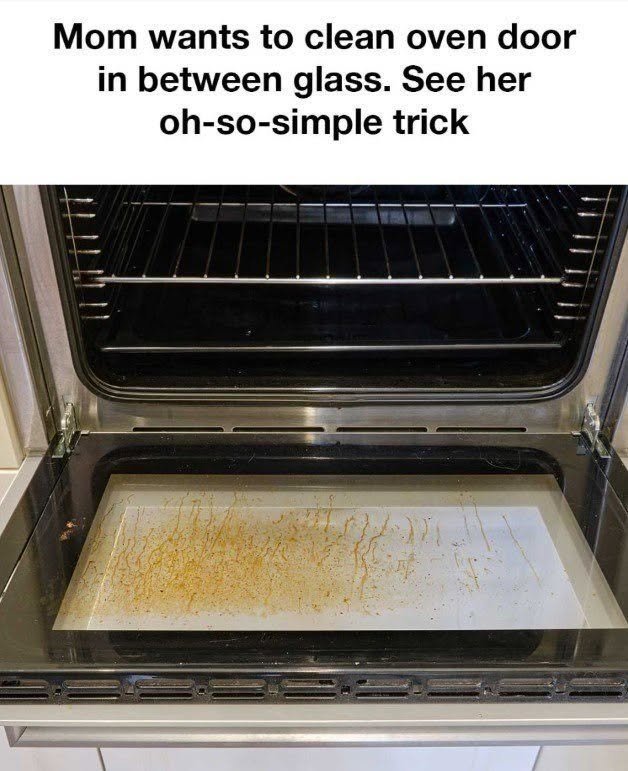
🔥 Mom’s Simple Trick for Cleaning Between Oven Door Glass
If your oven door has grease, crumbs, or cloudy brown buildup trapped between the two glass panels, you don’t necessarily need to take the entire door apart.
Many oven doors have a small access opening at the bottom or sides that allows you to clean between the panels. The exact design varies by oven, so check your owner’s manual first and never force the glass apart.
🧽 What You’ll Need
- Warm water
- A few drops of dish soap
- Microfiber cloth
- Thin, flexible cleaning tool or a wooden spoon
- Clean towel
- Optional: a little white vinegar for greasy residue
✨ The Simple Method
1. Make sure the oven is completely cool
Never attempt this while the oven is warm.
If you recently used it, wait until the door and glass are completely cool models have an opening between the glass panels that can be accessed from underneath. Others have removable to the touch.
2. Look underneath the oven door
Open the door and inspect the bottom edge.
Some models have an opening between the glass panels that can be accessed from underneath. Others have removable trim or a specific cleaning procedure.
Don’t remove screws or clips unless your manufacturer’s instructions specifically say to do so.
3. Make a cleaning cloth
Wrap a thin microfiber cloth around a long, narrow object that won’t scratch the glass.
A wooden spoon can sometimes work well.
Secure the cloth so it can’t come loose inside the door.
4. Add a little soapy water
Dip the cloth lightly into warm water mixed with a few drops of dish soap.
Don’t soak it.
You don’t want excess liquid running into the door’s insulation, electronics, or other components.
5. Slide the cloth between the glass panels
Carefully guide the cloth through the access opening and move it gently across the inside surface of the glass.
Work slowly,If you can’t reach the trapped grime through the manufacturer’s cleaning access, the safest option is to follow the You can often clean between oven-door glass panels without completely dismantling the door—but use the manufacturer’s access method rather especially around the edges.
For stubborn grease, let the damp cloth sit against the residue for a few minutes before wiping again.
6. Wipe with clean water
Use a second cloth that’s lightly dampened with clean water to remove soap residue.
Then use a dry microfiber cloth to remove remaining moisture.
7. Let everything dry completely
Leave the door open for a while so any remaining moisture can evaporate before using the oven.
🧴 What About Vinegar?
For greasy or cloudy glass, a small amount of diluted white vinegar can help with residue.
However, don’t mix vinegar with bleach or other cleaning chemicals.
Also avoid getting liquid into areas of the oven door that aren’t designed to be wet.
🚫 Avoid These Mistakes
Don’t use:
- Steel wool
- Razor blades unless the manufacturer specifically permits them
- Abrasive scouring pads
- Excessive water
- Oven cleaner inside the door unless the manual says it’s safe
- Force when separating glass panels
Some oven-door glass has special coatings or is held together under tension. Damaging or improperly reinstalling the panels can create a safety problem.
👀 If the Glass Is Still Dirty
If you can’t reach the trapped grime through the manufacturer’s cleaning access, the safest option is to follow the specific door-disassembly instructions for your oven model or have a technician clean it.
Different ovens use very different door designs, so the “secret trick” shown in a viral video may be safe for one model but inappropriate for another.
⭐ Quick Tip
The easiest way to prevent that ugly brown film from building up again is to wipe the outside and inside of the oven door regularly once the oven has cooled. Grease becomes much harder to remove after repeated heating.
Bottom line: You can often clean between oven-door glass panels without completely dismantling the door—but use the manufacturer’s access method rather than forcing the door apart.