If You Have These 9 Symptoms in Your Feet 🤔😱, It May Be a Sign That Your Body Needs Attention
Your feet can sometimes provide clues about your overall health. Changes such as swelling, numbness, unusual pain, skin discoloration, or wounds that take a long time to heal canSwelling can happen after standing or sitting for a long time, eating a very salty meal, or during hot weather. However, swelling that repeatedly occurs or doesn’t go away can have other occur for many different reasons. Some are harmless and temporary, while others may deserve medical evaluation.
Here are 9 foot symptoms you shouldn’t simply ignore:
1. Persistent swelling in the feet or ankles
Swelling can happen after standing or sitting for a long time, eating a very salty meal, or during hot weather. However, swelling that repeatedly occurs or doesn’t go away can have other causes, including circulation problems, certain medications, or conditions affecting the heart, kidneys, or liver.
If swelling is sudden, severe, affects only one leg, or occurs with pain or shortness of breath, seek medical attention promptly.
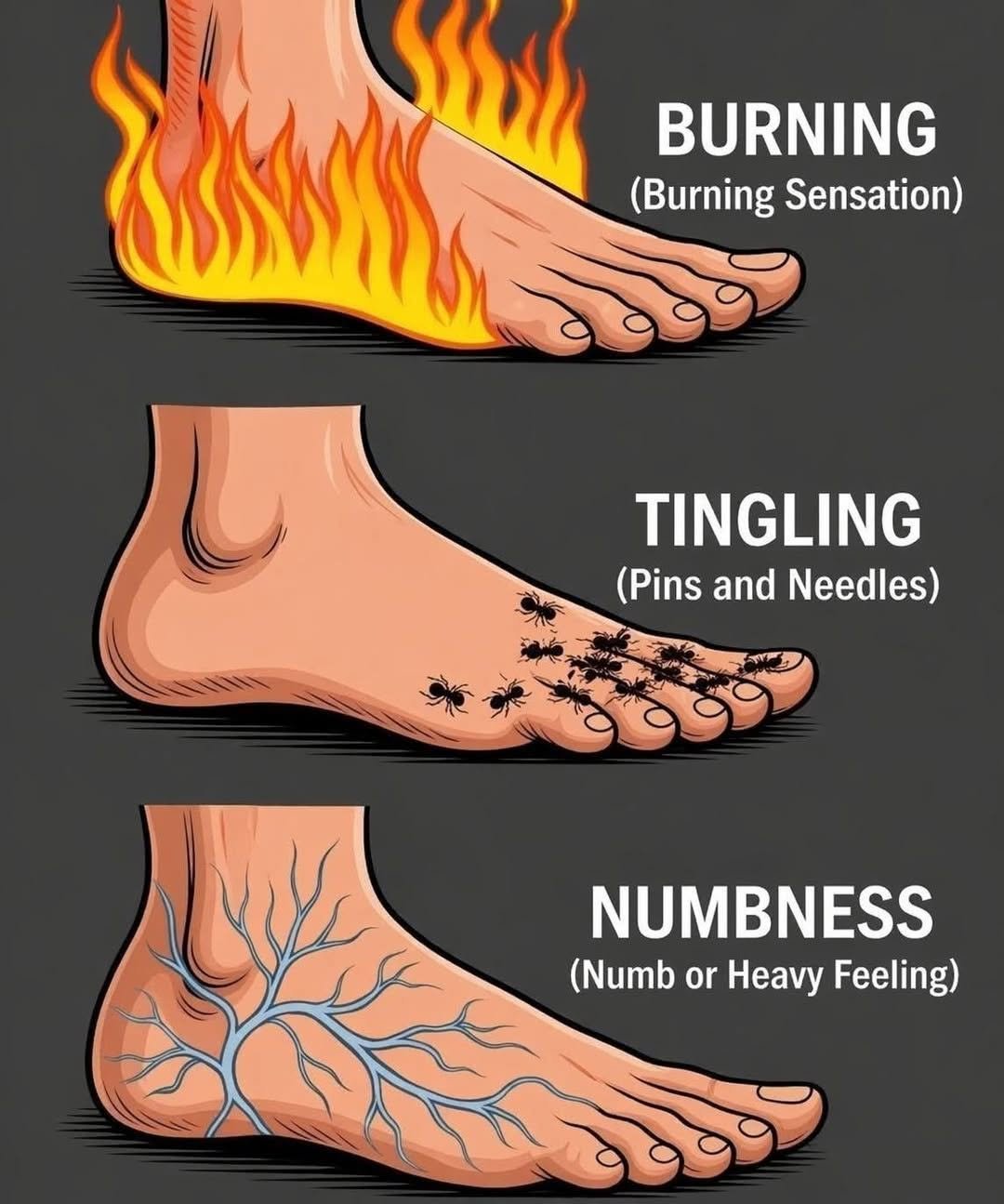
2. Numbness or tingling
A feeling of “pins and needles,” reduced sensation, or numbness in the feet can happen when you sit in one position for too long. But persistent or recurring numbness may sometimes be associated with nerve problems.
People with diabetes, for example, can develop nerve damage that commonly affects the feet. Because reduced sensation can make injuries difficult to notice, persistent numbness is worth discussing with a healthcare professional.
3. Burning sensations in the feet
Feet that repeatedly feel burning, hot, or unusually sensitive may be experiencing nerve-related symptoms. There are many possible causes, including nerve irritation, nutritional deficiencies, certain medications, alcohol-related nerve damage, and diabetes.
Don’t assume that burning feet automatically mean one particular disease—the underlying cause needs to be determined.
4. Feet that remain unusually cold
Feet can naturally feel cold, particularly in cooler weather. But if your feet consistently feel unusually cold compared with the rest of your body, especially when accompanied by pain, numbness, or changes in skin color, circulation or nerve problems may need to be considered.
5. Persistent unexplained foot pain
Foot pain after exercise, wearing uncomfortable shoes, or an injury is common. Pain that continues without an obvious explanation, keeps returning, or interferes with walking deserves attention.
Avoid repeatedly taking pain medication simply to cover up persistent symptoms without finding out what’s causing them.
6. Cuts or sores that heal very slowly
A small blister or cut normally begins to improve with appropriate care. A wound that doesn’t seem to heal, repeatedly opens, becomes increasingly painful, or develops redness, warmth, swelling, or drainage should be evaluated.
This is particularly important for people with diabetes or reduced circulation because foot wounds can become serious more easily.
7. Changes in skin color
Noticeable changes such as unusually pale, bluish, reddish, or darkened skin can have different causes. Temporary redness after pressure or activity isn’t necessarily concerning, but persistent or sudden discoloration—especially when combined with pain, coldness, swelling, or numbness—shouldn’t be ignored.
8. Severe dryness, cracking, or itching
Dry skin is extremely common and can result from weather, frequent washing, or certain skincare products. However, persistent itching, scaling, cracking, or peeling can sometimes be associated with conditions such as fungal infections or eczema.
Keep the feet clean and dry, moisturize dry skin regularly, and seek professional advice if the problem persists or becomes severe.
9. Changes in your toenails or toes
Thickened, discolored, brittle, crumbly, or unusually shaped toenails can occur with fungal infections or repeated trauma from footwear. Changes in the shape of the toes can also develop over time.
A new dark streak or unusual pigmentation under a toenail should be checked by a healthcare professional, particularly if you don’t remember injuring the nail.
What Should You Do?
Don’t panic if you notice one of these symptoms. These signs do not automatically mean you have a serious illness. Many common and treatable conditions can cause similar changes.
However, pay attention when a symptom is:
- Persistent or repeatedly returning
- Getting progressively worse
- Affecting both feet without an obvious explanation
- Associated with numbness or loss of sensation
- Accompanied by a wound that isn’t healing
- Associated with significant swelling or skin-color changes
Keeping your feet clean and dry, wearing properly fitting shoes, checking your feet regularly for cuts or blisters, and seeking medical advice for persistent changes can help prevent small problems from becoming bigger ones.
🚨 When to seek urgent medical care
Get prompt medical attention for sudden severe swelling or pain, a foot that becomes blue/pale or unusually cold, a rapidly worsening wound or infection, or symptoms accompanied by chest pain or difficulty breathing.
The key message is simple: your feet can show changes that deserve attention, but a symptom alone cannot tell you what condition you have. A healthcare professional can determine the actual cause.