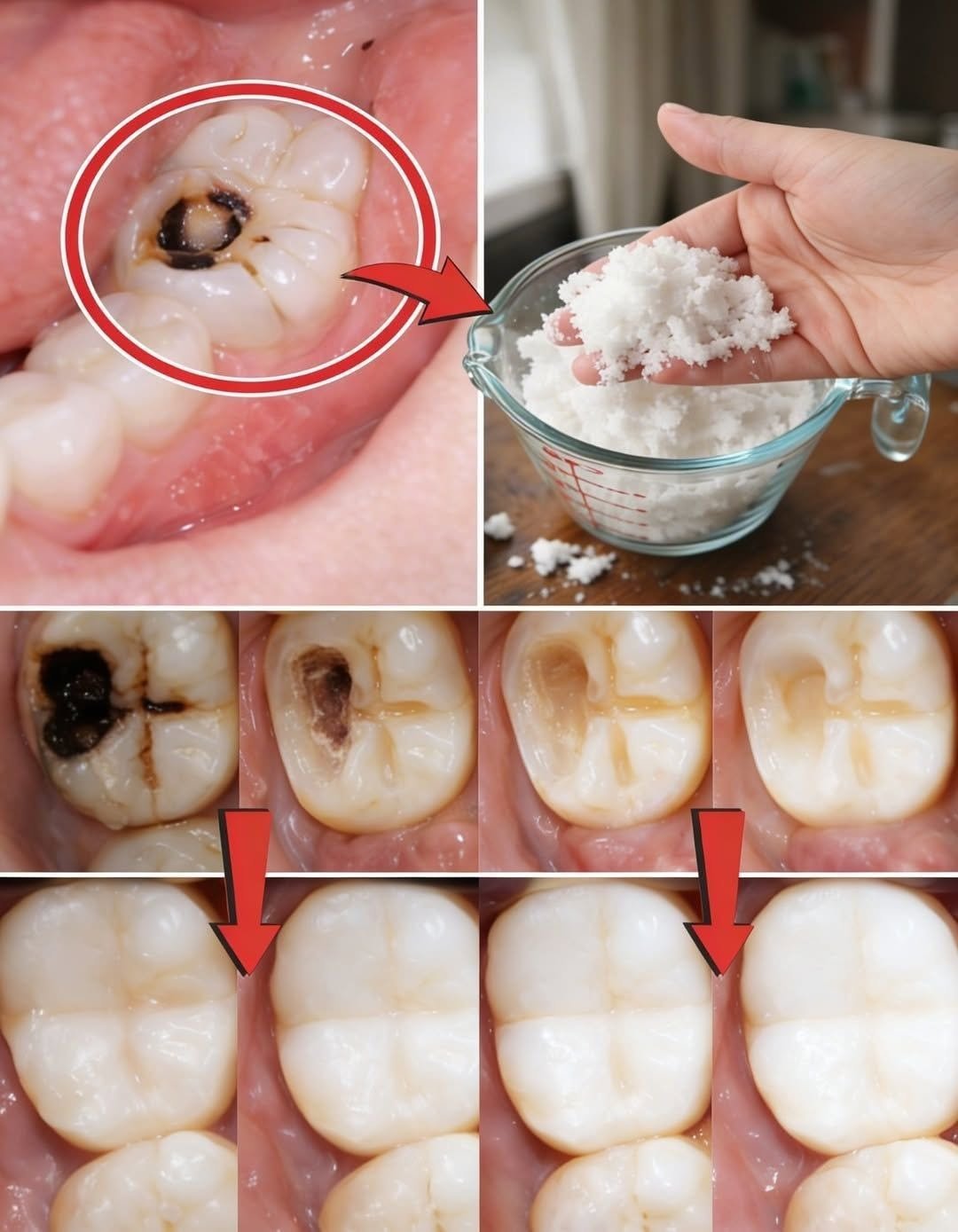
Keep These Tips in Mind to Protect Your Teeth 🦷 — Can You Naturally Repair a Cavity?
A cavity (dental caries) happens when acids produced by bacteria gradually remove minerals from the tooth. Very early tooth decay can sometimes be stopped or reversed through remineralization, but an established cavity—a hole or structural loss in the tooth—cannot reliably be “naturally repaired” at home.
1. Use fluoride toothpaste twice a day
Brush gently for about 2 minutes, morning and night, using fluoride toothpaste. Fluoride helps strengthen weakened enamel and can help reverse very early areas of mineral loss.
After brushing, spit out the toothpaste rather than immediately rinsing with lots of water.
2. Reduce frequent sugar exposure
It’s not only the amount of sugar that matters—the frequency matters too. Repeatedly drinking sugary beverages or snacking on sweets throughout the day gives cavity-causing bacteria repeated opportunities to produce acid.
Try to keep sugary foods and drinks to mealtimes rather than continuously sipping or snacking.
3. Clean between your teeth
A toothbrush can’t effectively clean every surface between teeth. Use dental floss or an interdental brush once a day to remove plaque and food from these areas.
4. Drink water after meals
Water can help wash away food particles and dilute acids in your mouth. If fluoridated water is available where you live, it can also contribute to regular fluoride exposure.
5. Don’t rely on DIY “cavity cures”
Oil pulling, lemon juice, vinegar, charcoal, baking soda mixtures, or herbal pastes cannot rebuild a tooth that has already developed a hole. Acidic substances such as lemon or vinegar can actually damage enamel.
Likewise, don’t put aspirin directly on a painful tooth—it can irritate or burn the gum tissue.
6. Consider sugar-free gum
Chewing sugar-free gum, particularly gum containing xylitol, after meals can stimulate saliva production. Saliva naturally helps neutralize acids and supplies minerals that support enamel.
7. See a dentist if there is an actual cavity
If you can see or feel a hole, dark pit, broken area, persistent toothache, sensitivity, or food repeatedly getting stuck, don’t try to treat it indefinitely at home.
A dentist can determine whether the area is an early enamel lesion that may be managed with preventive treatment or an established cavity that requires restoration, such as a filling.
🦷 The important truth
You may be able to remineralize early tooth decay, but you cannot naturally regrow a missing piece of tooth enamel or dentin once a true cavity has formed. Good oral hygiene can prevent early decay from progressing, but it shouldn’t be used as a substitute for dental treatment when a cavity is already established.
If you have facial swelling, fever, severe tooth pain, difficulty swallowing, or difficulty breathing, seek urgent dental or medical care rather than waiting for a home remedy to work.