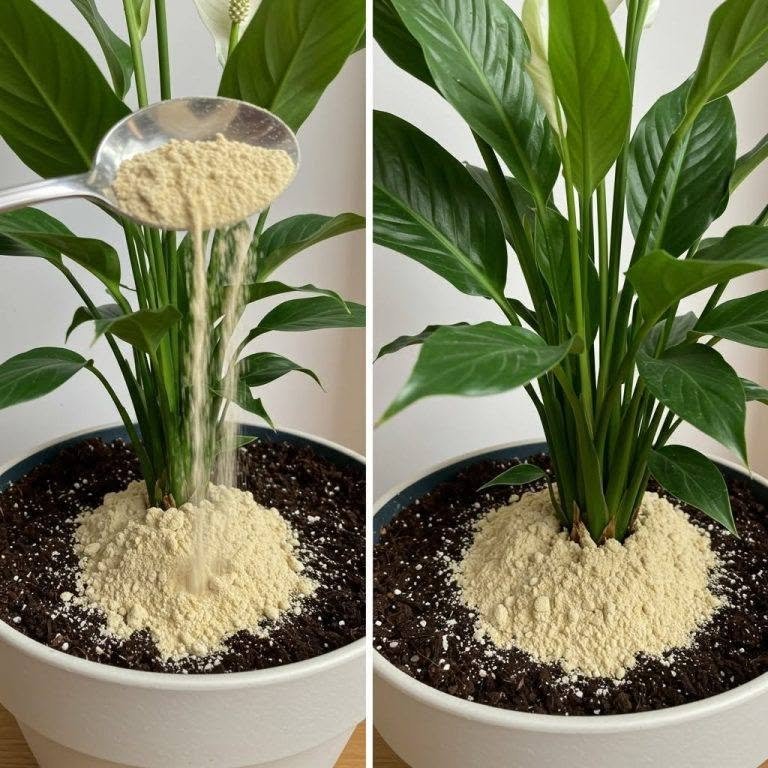
Peace Lily: This One Ingredient Can Help It Bloom for Years
You may have seen claims that a single household ingredient can make a peace lily bloom continuously for 10 years. There is no magic ingredient that guarantees that.
A peace lily (Spathiphyllum) can live for many years indoors when properly cared for, but flowering depends on several factors—especially light, watering, temperature, nutrition, and the plant’s overall health.
The “One Ingredient” That Actually Matters
If you’re looking for a useful addition rather than a miracle remedy, a balanced houseplant fertilizer is a much better choice than kitchen ingredients such as sugar, coffee grounds, rice water, or baking soda.
Peace lilies need nutrients to produce healthy leaves and flowers. Use a fertilizer formulated for indoor plants and follow the package directions. More fertilizer is not better; excessive fertilizer can damage the roots.
Light Is Even More Important
One of the most common reasons a peace lily doesn’t flower is insufficient light.
Place it somewhere with bright, indirect light.
Avoid intense direct sunlight, which can scorch the leaves.
If the plant has plenty of healthy foliage but rarely produces flowers, improving its light conditions may make a bigger difference than adding any homemade fertilizer.
Water It Correctly
Peace lilies like consistently moist—but not waterlogged—soil.
Water when the upper portion of the soil has begun to dry, then allow excess water to drain away.
Don’t leave the pot sitting in stagnant water.
Yellowing leaves, constantly wet soil, or a musty smell can indicate that the roots are staying too wet.
Give It Good Drainage
A pot with drainage holes is essential.
If water cannot escape, roots can become deprived of oxygen and eventually rot.
Use a well-draining indoor potting mix rather than heavy garden soil.
Don’t Overfertilize
A common mistake is assuming that more fertilizer means more flowers.
It doesn’t.
Too much fertilizer can cause salt buildup in the soil and damage roots.
If you see a white crust forming on the surface of the potting mix or leaf tips becoming brown after repeated fertilizing, reconsider your routine and follow the fertilizer manufacturer’s dilution instructions.
What About Sugar?
Sugar is frequently recommended online as a “flowering booster.”
It’s not a good idea.
Adding sugar directly to the soil doesn’t provide the balanced nutrition a peace lily needs and can encourage microbial growth or attract pests.
What About Coffee Grounds?
Used coffee grounds are also sometimes presented as a secret flowering fertilizer.
They shouldn’t be relied upon as a primary source of nutrients.
If you want predictable nutrition, use a properly formulated houseplant fertilizer.
Remove Old Flowers
Once a flower has finished, you can cut the spent flower stalk near its base with clean scissors.
This keeps the plant looking tidy and allows it to direct resources toward new growth.
Don’t expect a new flower immediately after every old one is removed. Peace lilies naturally have flowering cycles.
Can a Peace Lily Really Bloom for 10 Years?
A healthy peace lily can potentially live for many years, but that doesn’t mean it will remain in bloom continuously for a decade.
That’s an important distinction.
The plant may produce flowers periodically throughout its life when conditions are suitable.
Its flowering frequency can change with the seasons, light levels, age, and growing conditions.
A Simple Care Routine
For a long-lived peace lily:
- Give it bright, indirect light.
- Water when the soil begins to dry.
- Use a pot with drainage holes.
- Feed occasionally with a balanced houseplant fertilizer according to the label.
- Remove spent flowers and damaged leaves.
- Repot when the plant becomes seriously root-bound.
- Keep it away from extreme heat, cold drafts, and harsh direct sunlight.
Bottom Line
There isn’t a secret ingredient that guarantees 10 years of continuous peace-lily flowers.
If your goal is a healthy, long-lived plant, focus on the fundamentals—appropriate light, careful watering, good drainage, and balanced nutrition.
A quality houseplant fertilizer can help when the plant actually needs additional nutrients, but no homemade ingredient can replace proper care.