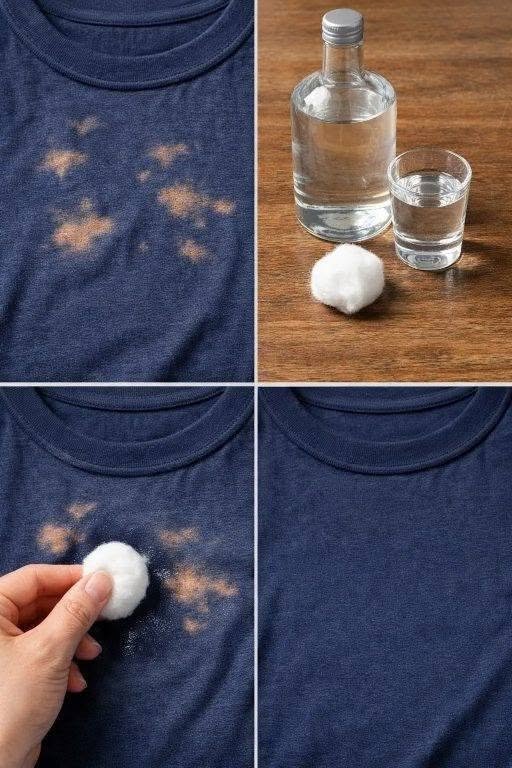
Bleach Stains on Your Clothes? Don’t Throw Them Away Yet—Here’s What You Can Do
A bleach “stain” is actually a little different from an ordinary stain. Bleach removes or changes the fabric’s dye, so once the color has been stripped away, simply washing the garment usually won’t restore it.
The good news is that a bleach-damaged item may still be salvageable.
1. Act Quickly
If bleach has just spilled onto the fabric, rinse the area thoroughly with cool running water.
The goal is to remove as much of the bleach as possible and reduce continued chemical damage.
Don’t mix bleach with vinegar, ammonia, alcohol, or other household cleaners in an attempt to “neutralize” it. Some combinations can release dangerous gases.
2. Wash the Garment
After thoroughly rinsing the affected area, wash the clothing according to its care label.
Check the fabric afterward.
If the original color is gone but the fabric itself remains intact, you’re dealing primarily with color loss rather than a removable stain.
3. For Small Spots, Consider a Fabric Marker
For a tiny bleach mark on a dark garment, a fabric marker in a closely matching color can sometimes make the spot much less noticeable.
Test the marker on an inconspicuous area first.
This works best for small, isolated marks—not large this, check the garment’s fiber content. Different fabrics accept dyes differently, and some synthetic materials require areas of discoloration.
4. Dye the Entire Garment
If the bleach mark is large, an easier solution may be to dye the whole garment a darker color.
For example, a black or navy garment with several orange or pale bleach patches may sometimes be successfully redyed black.
Before doing this, check the garment’s fiber content. Different fabrics accept dyes differently, and some synthetic materials require specialized dye.
5. Turn the Damage Into a Design
Sometimes the simplest solution is to stop trying to hide the bleach marks.
You can transform the garment with:
- Tie-dye
- Fabric paint
- Embroidery
- Decorative patches
- Stencils
- Intentional bleaching patterns
A random bleach spot can become part of a deliberate design.
6. Check for Fabric Damage
Color loss isn’t the only possible problem.
Strong bleach exposure can weaken certain fibers, particularly with prolonged contact or repeated exposure.
If the fabric has become thin, brittle, rough, or unusually weak around the affected area, repairing the color won’t necessarily restore its strength.
What About Baking Soda, Vinegar, or Lemon rinse and wash the garment safely. If the fabric is still in good condition, you may be able to disguise the damage with a fabric marker, redye the Juice?
You’ll find plenty of recipes claiming that these ingredients can reverse bleach damage.
They cannot restore dye that bleach has already removed.
More importantly, mixing household chemicals without knowing how they react can be dangerous.
Stick with rinsing, washing, and an appropriate fabric-repair method.
Can You Make a Bleach Spot Completely Disappear?
Sometimes—but not always.
If the bleach has permanently removed the dye, there’s no simple household ingredient that can put the original color back.
Your best option depends on the size and location of the damage:
- Tiny spot: fabric marker
- Several spots: fabric paint or decorative design
- Large discoloration: redye the garment
- Severe damage: repurpose the clothing
Bottom Line
Don’t automatically throw away clothing with bleach marks.
First, rinse and wash the garment safely. If the fabric is still in good condition, you may be able to disguise the damage with a fabric marker, redye the entire item, or turn the marks into a creative design.
The important thing to remember is that bleach usually hasn’t left a normal “stain”—it has removed the color. Once you understand that, choosing the right repair becomes much easier.