If You See These White LIf you’ve ever noticed small white orumps in Your Throat, You Need to Know This Now!
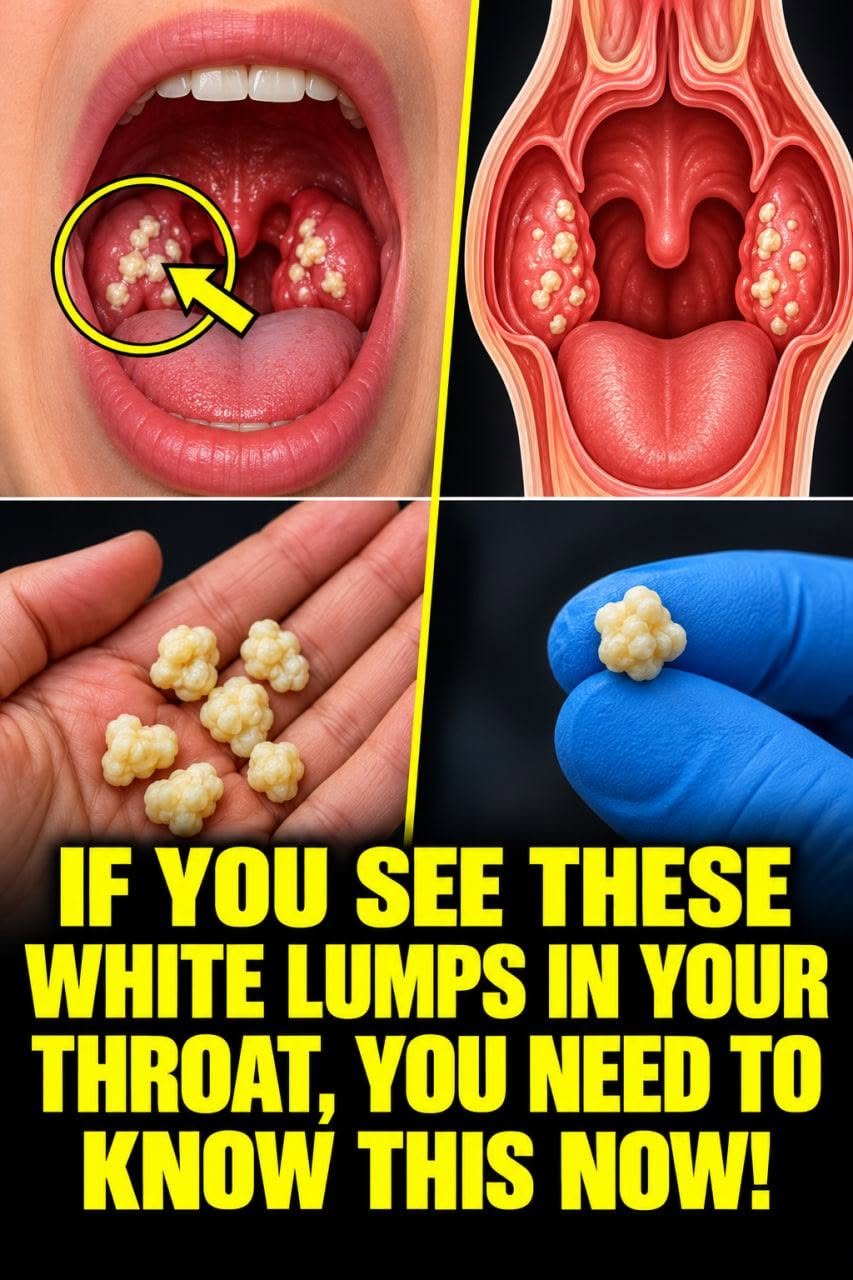
If you’ve ever noticed small white or yellowish lumps at the back of your throat, especially around your tonsils, you may have wondered what they are.
In many cases, these little lumps are tonsil stones, medically known as tonsilloliths. They are usually harmless, but they can cause unpleasant symptoms such as bad breath, a strange taste in the mouth, throat irritation, or the feeling that something is stuck in your throat.
However, not every white spot or lump in the throat is a tonsil stone. Some can be signs of infection or another medical problem, so knowing the difference is important.
What Are Tonsil Stones?
Tonsils have small folds and pockets called crypts.
Food particles, mucus, dead cells, bacteria, and other debris can become trapped inside these pockets. Over time, the material can harden or calcify, forming a small white, cream-colored, or yellowish lump.
Some tonsil stones are tiny and barely noticeable.
Others can become larger and easier to see.
They may look like little grains of rice or small pieces of hardened material lodged in the tonsils.
Why Do Tonsil Stones Smell So Bad?
One of the most noticeable symptoms is bad breath.
That’s because bacteria can break down trapped material inside the tonsil crypts and produce unpleasant-smelling compounds.
A person may brush their teeth, use mouthwash, and still have persistent bad breath because the source is deeper in the tonsil crypts.
If you’ve had ongoing bad breath despite good oral hygiene, tonsil stones are one possible explanation.
But they’re certainly not the only one.
Gum disease, tooth decay, dry mouth, sinus problems, reflux, and other conditions can also cause persistent bad breath.
Other Signs You Might Notice
Tonsil stones can cause:
- A feeling that something is stuck in your throat
- A bad taste in the mouth
- Persistent bad breath
- Mild throat irritation
- Coughing or throat clearing
- Difficulty swallowing in some cases
- Ear discomfort in some people
Interestingly, some people have tonsil stones without experiencing any symptoms at all.
They may discover them accidentally while looking in the mirror.
Are Tonsil Stones Dangerous?
Usually, no.
Most tonsil stones are not dangerous and don’t require emergency treatment.
Small stones may fall out on their own, especially when coughing, swallowing, or eating.
If they aren’t causing symptoms, they often don’t need to be aggressively removed.
However, recurring or unusually large tonsil stones can be bothersome and may warrant evaluation by a healthcare professional.
Don’t Confuse Tonsil Stones With Tonsillitis
This distinction matters.
Tonsillitis is inflammation of the tonsils, often caused by a viral or bacterial infection.
It can produce white patches or spots on the tonsils, but the person may also have:
- Significant sore throat
- Fever
- Swollen, red tonsils
- Pain when swallowing
- Tender glands in the neck
- Feeling generally unwell
A bacterial throat infection such as strep throat can also cause white patches on the tonsils.
So if you have white material in your throat together with fever and significant pain, don’t automatically assume it’s a harmless tonsil stone.
You may need medical evaluation and, depending on the cause, testing or treatment.
Don’t Dig Deep Into Your Tonsils
This is one of the biggest mistakes people make.
When someone sees a tonsil stone, they may immediately grab a sharp object, fingernail, tweezers, or another tool and try to dig it out.
That’s not a good idea.
Tonsils contain delicate tissue and blood vessels. Aggressive digging can cause bleeding, injury, infection, or make the area more irritated.
If a stone is easily visible and you choose to remove it, use only gentle methods that are appropriate and recommended by a healthcare professional.
Never force anything deep into a tonsil crypt.
What Can You Do at Home?
Good oral and throat hygiene may help reduce the material that contributes to tonsil stones.
Consider:
- Brushing your teeth twice a day
- Cleaning your tongue gently
- Flossing regularly
- Drinking adequate water
- Gargling with warm salt water
- Maintaining regular dental checkups
A salt-water gargle can help rinse the throat and soothe irritation, although it isn’t guaranteed to prevent tonsil stones.
Avoid swallowing the salt water.
Why Do Some People Get Them Repeatedly?
Some people naturally have deeper tonsil crypts.
Those deeper pockets can trap more debris, making recurrent tonsil stones more likely.
Chronic inflammation of the tonsils can also contribute to the problem.
If you repeatedly develop large stones, persistent bad breath, or ongoing throat discomfort, an ear, nose, and throat specialist can examine your tonsils and discuss appropriate options.
When Should You See a Doctor?
Make an appointment if white lumps or patches keep returning, particularly if you don’t know what they are.
You should also seek medical advice if you have:
- Persistent or severe throat pain
- Fever
- Difficulty swallowing
- Repeated tonsil infections
- Significant swelling
- Persistent bad breath despite good oral hygiene
- Bleeding from the tonsils
- A lump that doesn’t go away
- Symptoms that are getting worse
And if you have difficulty breathing, severe difficulty swallowing, rapidly increasing swelling, drooling, or severe one-sided throat pain, seek urgent medical attention.
Those symptoms can indicate a more serious infection or another problem requiring prompt treatment.
What If the White Lump Is Not a Tonsil Stone?
This is important.
White material in the throat can have several causes.
It could be:
- A tonsil stone
- Tonsillitis
- Strep throat
- A fungal infection such as oral thrush
- Mucus or food debris
- Another condition affecting the mouth or throat
That’s why internet photos aren’t enough to make a diagnosis.
If you’re uncertain about what you’re seeing, having a healthcare professional examine your throat is safer than trying to remove it yourself.
Can Tonsil Stones Be Prevented?
There is no guaranteed way to prevent them.
But good oral hygiene can reduce the amount of bacteria and debris available to collect in the tonsil crypts.
Regular brushing, flossing, tongue cleaning, adequate hydration, and dental care are reasonable habits.
If you frequently suffer from tonsil stones despite these measures, discuss the problem with an ENT specialist.
The Bottom Line
Those small white or yellow lumps in your throat may be tonsil stones, especially if they’re lodged in the tonsils and accompanied by persistent bad breath or a feeling that something is stuck.
Most tonsil stones are harmless.
But don’t assume every white patch is a tonsil stone. Fever, severe throat pain, significant swelling, difficulty swallowing, or worsening symptoms can point to an infection or another condition.
And perhaps most importantly, don’t aggressively dig into your tonsils with sharp objects.
Your throat is delicate, and an attempt to remove a tiny lump can sometimes create a much bigger problem.
If the lumps keep returning or you’re unsure what you’re seeing, let a healthcare professional take a look.
A tiny white lump may be nothing serious—but the safest approach is to know what you’re dealing with before trying to remove it.