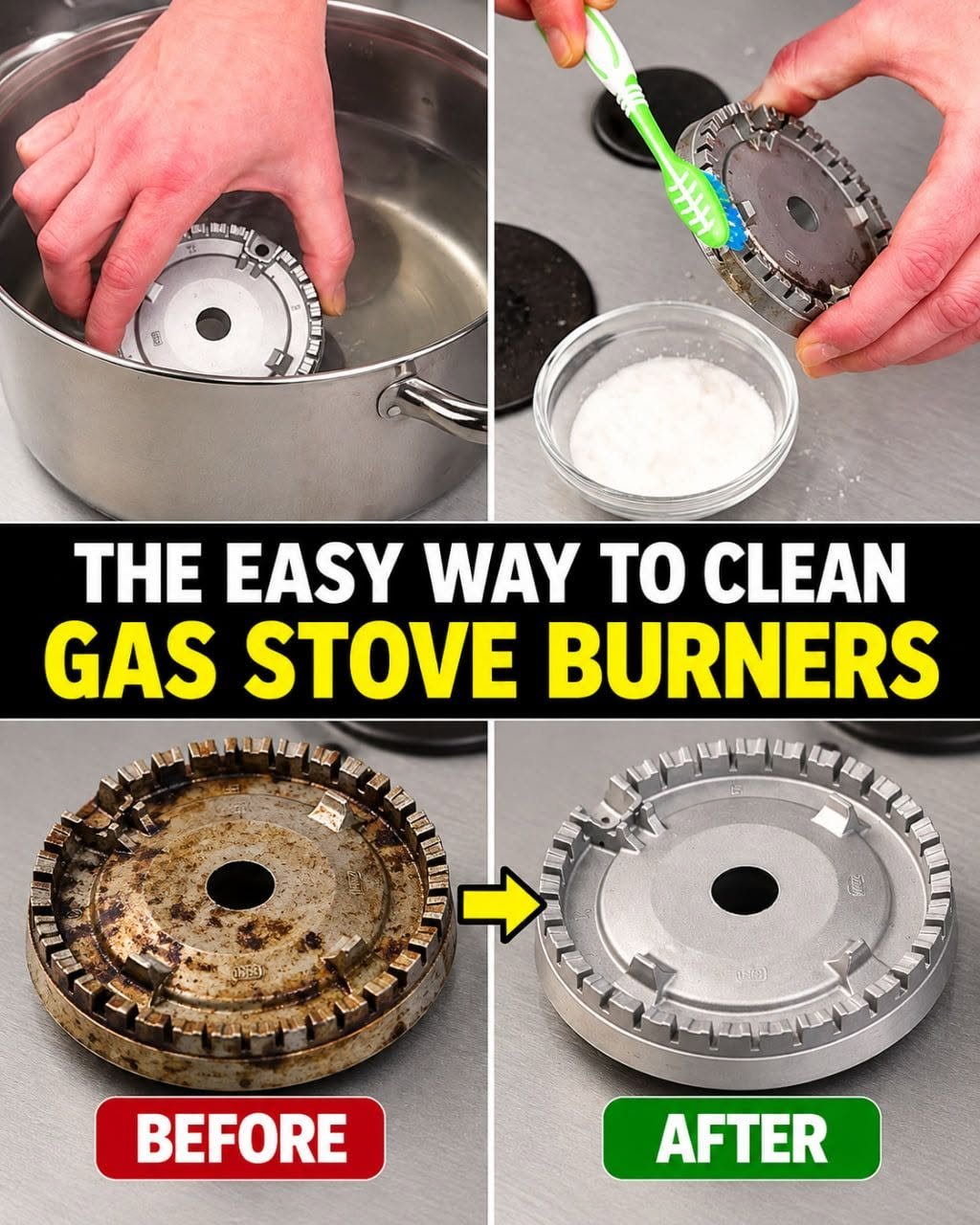
Most People Clean Their Gas Stove the Hard Way — These 2 Simple Ingredients Make the Difference
Cleaning a greasy gas stove doesn’t have to mean scrubbing for an hour. If cooking oil, food splatters, and burned-on residue have built up around the burners, a simple combination of dish soap and baking soda can often make the job much easier.
The trick isn’t using harsh chemicals. It’s giving the grime enough time to soften before you scrub.
1. Dish Soap: Your First Line of Defense
Dish soap is designed to break down grease, which makes it especially useful for stovetop messes.
Start by removing the grates and burner caps only after the stove has completely cooled.
Mix a small amount of dish soap with warm water and use a soft sponge or microfiber cloth to wipe away loose grease and food residue.
Don’t flood the burner openings with water.
2. Baking Soda: For Stubborn, Stuck-On Grime
Baking soda provides gentle abrasive action that can help loosen stubborn residue without requiring aggressive scrubbing.
Make a thick paste using:
- 2–3 tablespoons of baking soda
- A small amount of water
Spread the paste over greasy or burned-on areas of the stovetop surface, avoiding burner openings and ignition components.
Let it sit for around 10–15 minutes.
Then gently scrub with a non-scratch sponge or soft cloth.
For particularly stubborn buildup, you may need to repeat the process rather than applying excessive pressure.
How to Clean the Grates
Place removable grates in a sink or large basin.
Cover them with hot, soapy water and allow them to soak.
The soaking step is important because it softens hardened grease and food particles.
After soaking, use a non-abrasive sponge or appropriate brush to remove the softened residue.
Rinse thoroughly and dry completely before putting the grates back on the stove.
If your stove manufacturer specifically recommends a different cleaning method for the grates, follow those instructions.
What About the Burner Caps?
Remove the burner caps and wash them according to your stove manufacturer’s instructions.
Allow them to dry completely before reinstalling them.
Moisture around burners can interfere with ignition and burner performance.
Never poke metal objects into tiny burner openings to clear them, as this can damage the burner.
A Simple Cleaning Routine
For everyday maintenance, you don’t need a complicated recipe.
After cooking:
- Let the stove cool completely.
- Remove loose crumbs and food particles.
- Wipe the surface with warm, soapy water.
- Treat stubborn grease with baking-soda paste.
- Wipe away all residue with a clean damp cloth.
- Dry the surface thoroughly.
Cleaning small messes regularly is much easier than allowing layers of grease to accumulate.
Don’t Use Vinegar and Baking Soda Together for the Main Job
You’ll often see advice recommending vinegar and baking soda as a powerful cleaning combination.
When mixed, however, they react with each other and produce carbon dioxide bubbles. The fizz may look impressive, but the two substances largely neutralize one another.
For greasy stove surfaces, dish soap is generally more useful for cutting grease, while baking soda can provide gentle scrubbing power.
If you use vinegar for a particular cleaning task, use it appropriately and never mix cleaning products indiscriminately.
Avoid These Common Mistakes
Don’t clean a hot stovetop. You can burn yourself, and sudden temperature changes may damage certain surfaces.
Don’t pour large amounts of water directly onto the stove.
Don’t use steel wool or very abrasive pads on surfaces that can scratch.
And never mix household cleaning products containing bleach with acids such as vinegar or other cleaners.
One More Important Safety Step
Before cleaning, make sure the burners are off and completely cool.
If you smell gas, don’t attempt to clean or troubleshoot the stove. Turn off the gas supply if it is safe to do so, avoid flames and electrical sparks, and follow your local gas supplier’s emergency guidance.
The Bottom Line
You don’t need an elaborate cleaning formula to tackle most everyday stove grease.
Dish soap + baking soda can make a simple and inexpensive cleaning combination:
- Dish soap helps break down grease.
- Baking soda helps loosen stubborn residue.
- Warm water and soaking do much of the heavy lifting.
The biggest secret isn’t scrubbing harder.
Let the grime soften first, use the right cleaner for the type of mess, and clean small spills before they turn into baked-on buildup.