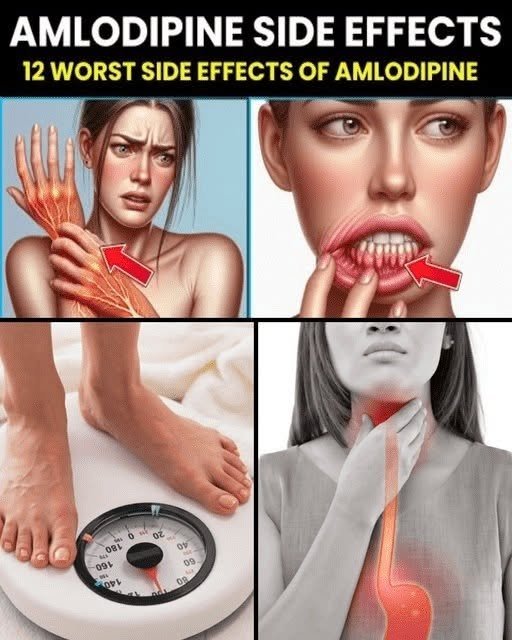
12 Worst Side Effects of Amlodipine You Should NEVER Ignore
Amlodipine is a commonly prescribed calcium-channel blocker used to treat high blood pressure and certain types of angina. Most people tolerate it well, and many reported side effects are mild. However, some symptoms deserve prompt medical attention. The official prescribing information identifies swelling (edema) as the most common adverse effect and warns about symptomatic low blood pressure and, in certain people with severe coronary artery disease, worsening angina or heart attack after starting or increasing the dose. MedlinePlus+1
Here are 12 symptoms worth knowing about.
1. Severe Swelling of the Feet or Ankles
Swelling of the feet, ankles, or lower legs is the most common side effect of amlodipine and becomes more likely as the dose increases. DailyMed
Mild ankle swelling isn’t usually an emergency, but swelling that is severe, rapidly worsening, painful, or accompanied by breathing problems should be evaluated.
Don’t simply stop amlodipine because of swelling. Your doctor may be able to adjust the treatment or use another approach.
2. Severe Dizziness or Lightheadedness
Because amlodipine lowers blood pressure, some people can experience dizziness or lightheadedness, particularly when beginning treatment or after a dose change. MedlinePlus
Occasional mild dizziness may settle, but severe or persistent dizziness can indicate that your blood pressure is too low or that another problem is occurring.
If you’re struggling to stand, repeatedly becoming lightheaded, or nearly fainting, contact your healthcare professional.
3. Fainting
Fainting (syncope) is a symptom that should not simply be dismissed as an ordinary medication side effect.
Amlodipine can cause symptomatic hypotension in some patients, and fainting is listed among serious symptoms requiring medical attention. MedlinePlus+1
If you actually lose consciousness, especially if it happens with chest pain, an abnormal heartbeat, or difficulty breathing, seek urgent medical evaluation.
4. New or Worsening Chest Pain
This is one of the most important warnings.
The prescribing information states that worsening angina and acute myocardial infarction (heart attack) can occur after starting or increasing amlodipine, particularly in people with severe obstructive coronary artery disease. DailyMed
Don’t assume new chest pain is simply a side effect that will disappear.
If chest pain is severe, persistent, or associated with sweating, nausea, shortness of breath, or pain spreading to your arm, jaw, back, or shoulder, seek emergency medical care.
5. Rapid, Pounding, or Irregular Heartbeat
Amlodipine can occasionally be associated with rapid, pounding, or irregular heartbeat. MedlinePlus specifically recommends immediate medical attention for these symptoms. MedlinePlus
A brief awareness of your heartbeat isn’t necessarily dangerous, but a new persistent racing or irregular heartbeat—particularly when accompanied by dizziness, fainting, or chest pain—needs evaluation.
6. Difficulty Breathing
Shortness of breath has been reported in people taking amlodipine, but new or severe breathing difficulty should never automatically be blamed on the medication. MedlinePlus
Breathing problems can have many causes, including heart and lung conditions or an allergic reaction.
Sudden severe difficulty breathing requires emergency medical attention.
7. Swelling of the Face, Lips, Tongue, or Throat
Although uncommon, serious allergic reactions can occur.
Swelling of the face, lips, tongue, throat, or other areas, particularly when accompanied by difficulty breathing or swallowing, can indicate a potentially dangerous allergic reaction. MedlinePlus
This is an emergency. Don’t wait for the swelling to disappear on its own.
8. Severe Skin Rash
A new rash may have many causes, but a severe or rapidly spreading rash deserves medical attention.
Particularly concerning signs include blistering, skin peeling, extensive redness, sores involving the mouth or eyes, facial swelling, or difficulty breathing.
Don’t assume that every rash is caused by amlodipine, but don’t ignore a serious-looking reaction either.
9. Extreme or Persistent Fatigue
Fatigue and excessive tiredness are recognized adverse effects of amlodipine. MedlinePlus+1
Mild tiredness may not be dangerous, particularly when treatment has recently begun. But severe or persistent fatigue can interfere with daily life and may indicate that your blood pressure is too low or that another medical issue is present.
If you’re suddenly exhausted for no obvious reason, discuss it with your healthcare professional.
10. Severe or Persistent Abdominal Pain
Abdominal pain and nausea are recognized adverse effects of amlodipine. DailyMed
Mild stomach discomfort isn’t usually alarming. However, severe or persistent abdominal pain—especially if accompanied by repeated vomiting, weakness, fainting, or other unusual symptoms—should be assessed.
Don’t automatically assume significant abdominal pain is just indigestion.
11. Significant Muscle Stiffness or Tremors
MedlinePlus lists muscle stiffness or tremors among possible side effects of amlodipine. MedlinePlus
Occasional mild symptoms may not be serious, but new, severe, or worsening muscle symptoms deserve discussion with your healthcare professional, particularly if you take several medications.
12. Severe Sleepiness or Unusual Drowsiness
Drowsiness or somnolence has been reported with amlodipine. MedlinePlus+1
Mild sleepiness may occur, but unusual or extreme drowsiness—especially when combined with dizziness, confusion, fainting, or difficulty staying awake—should be evaluated.
Which Side Effects Are Most Common?
It’s important not to confuse common with dangerous.
The most common adverse effect of amlodipine is edema (swelling). Other reported effects include fatigue, nausea, abdominal pain, and sleepiness. Most adverse reactions in clinical trials were mild or moderate. DailyMed+1
So if you notice mild ankle swelling, it doesn’t automatically mean you’re having a dangerous reaction.
The concern increases when symptoms are severe, sudden, worsening, or accompanied by chest pain, fainting, breathing difficulty, or significant changes in heartbeat.
Don’t Stop Amlodipine on Your Own
One of the biggest mistakes is stopping blood-pressure medication suddenly without speaking to your healthcare professional.
Amlodipine helps control high blood pressure and angina, but it does not cure these conditions. MedlinePlus specifically advises patients to continue taking it as prescribed and not stop without talking to their doctor. MedlinePlus
If you’re experiencing troublesome side effects, your clinician can determine whether the dose should be changed or whether another medication would be more appropriate.
When to Get Emergency Help
Seek emergency medical attention if you experience:
- Severe or persistent chest pain
- Severe difficulty breathing
- Swelling of the tongue or throat
- Fainting with ongoing symptoms
- A rapid or severely irregular heartbeat with dizziness or chest discomfort
- A severe allergic-type reaction
These symptoms should not be managed at home simply by skipping your next dose.
Final Takeaway
Amlodipine is generally well tolerated, but severe swelling, fainting, significant blood-pressure symptoms, abnormal heartbeat, new/worsening chest pain, breathing difficulty, and serious allergic reactions should never be ignored. MedlinePlus+1
And remember: a side effect isn’t a reason to stop a prescription medication without medical advice. If you’ve developed a new symptom after starting amlodipine, tell your doctor or pharmacist and let them determine whether the medication is responsible and what should happen next.
