🛁 Why Do Bath Towels Have Lines? The Practical Design Detail Most People Miss
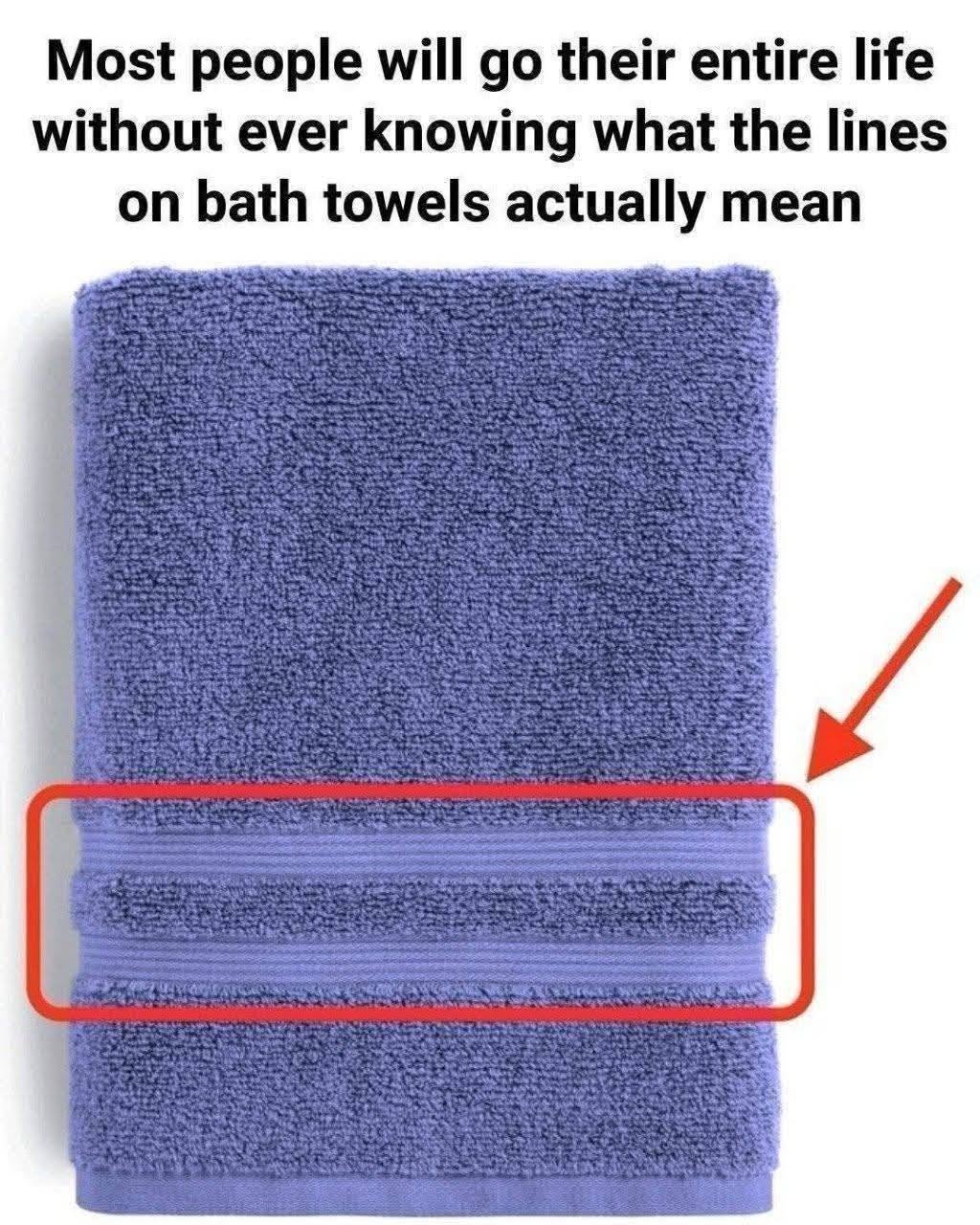
Have you ever noticed the horizontal bands or decorative lines woven into a bath towel and wondered whether they are simply there for decoration?
They often look like decoration, but these woven sections—sometimes called dobby borders or dobby stripes—can serve several practical purposes.
1. 🧵 They Help Stabilize the Towel
Most of a bath towel is made with looped terry fabric, which is designed to absorb water.
The woven bands have a different structure and fewer exposed loops. This creates a more stable section of fabric that can help the towel maintain its shape.
Without some form of structured border, the highly absorbent terry fabric can be more prone to distortion during repeated washing and drying.
2. 📐 They Help Control Stretching
Towels are washed and dried over and over again.
Heat, water, detergent, and mechanical agitation can put stress on the fabric.
The denser woven strip provides a more stable area within the towel and can help control how the fabric stretches or contracts.
This is particularly useful near the ends of the towel.
3. 🪡 They Give the Manufacturer a Stronger Finishing Area
The ends and edges of a towel need to be finished securely so the fabric doesn’t unravel.
A decorative woven band can be incorporated into this construction, helping create a neat transition between the main terry section and the finished edge.
So the stripe isn’t necessarily an extra piece sewn onto the towel—it can be part of the towel’s weave.
🎨 4. They Make Towels Look More Attractive
Of course, appearance is another reason.
A plain rectangular towel can look fairly ordinary, while a woven band gives it:
- A finished appearance
- A recognizable design
- A more luxurious look
- A visual distinction between different towel styles
Hotels and manufacturers often use these bands as part of their overall towel design.
💧 5. Why Isn’t the Whole Towel Made Like the Stripe?
Because the two areas have different jobs.
Terry loops
The fluffy loops provide a large surface area for absorbing water.
Woven band
The flatter, denser section provides structure and decoration but generally absorbs less water.
That’s why the band may feel noticeably smoother and thinner than the rest of the towel.
🛁 Should You Use the Stripe to Dry Your Body?
You can, but the looped terry portion is generally better for absorbing water.
The decorative band isn’t a hidden “scrubbing zone” or a special drying indicator.
If you’re drying your face or body, simply use the softer terry portion.
🧺 One Important Towel-Care Tip
Avoid using excessive fabric softener on towels.
Fabric softener can coat the fibers and gradually reduce their ability to absorb water.
Instead:
- Use the recommended amount of detergent.
- Don’t overload the washing machine.
- Rinse thoroughly.
- Dry towels completely.
- Follow the manufacturer’s care instructions.
⭐ The Interesting Detail
Those lines aren’t necessarily just decoration.
They represent a clever combination of textile engineering and design: the fluffy terry section is optimized for absorbency, while the denser woven band adds structure, helps with finishing, and gives the towel its distinctive appearance.
Bottom Line
The lines on bath towels are usually woven design bands that can provide structural stability and help with finishing, while also making the towel look more polished.
So the next time you grab a towel, that seemingly decorative stripe is actually a small example of practical textile design.