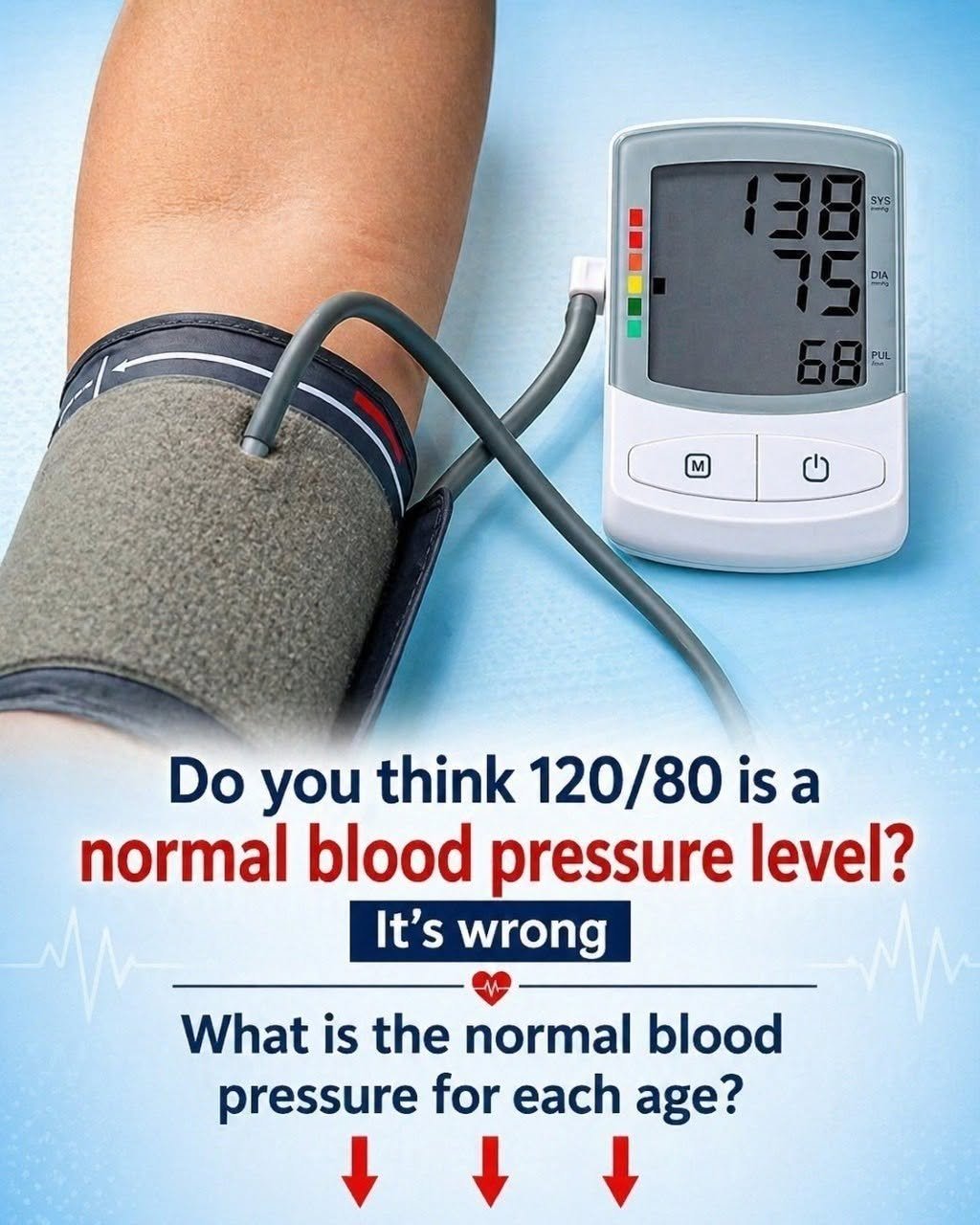
Normal Blood Pressure by Age
Blood pressure doesn’t have one exact “normal” number for each age. In adults, age alone isn’t used to set a separate normal blood-pressure range. A reading is interpreted based on the overall pattern, health conditions, and the guideline being used.
| Age | General healthy adult target |
|---|---|
| 18–39 | Around <120/80 mmHg |
| 40–59 | Around <120/80 mmHg |
| 60–69 | Around <120/80 mmHg |
| 70–79 | Around <120/80 mmHg |
| 80+ | Individualized by the person’s health and doctor |
What the Numbers Mean
Systolic (top number): Pressure when the heart contracts.
Diastolic (bottom number): Pressure when the heart relaxes.
For many adults, below 120/80 mmHg is considered normal.
When Blood Pressure Is High
Repeated readings of 130/80 mmHg or higher may indicate elevated blood pressure or hypertension depending on the guideline used. A single high reading does not necessarily mean you have hypertension.
When Blood Pressure Is Low
Readings around 90/60 mmHg or lower are often considered low, but some healthy people naturally have lower blood pressure. It becomes more concerning when accompanied by dizziness, fainting, weakness, confusion, or blurred vision.
For Older Adults
Older people do not automatically need high blood pressure just because they are older. However, treatment targets may be individualized, especially when someone has other medical conditions or experiences dizziness or falls.
When to Get Urgent Help
A blood pressure reading of 180/120 mmHg or higher requires immediate attention, particularly if accompanied by chest pain, severe headache, shortness of breath, weakness/numbness, vision changes, or confusion.
Tip: For a meaningful measurement, sit quietly for about 5 minutes, keep your feet flat on the floor, support your arm, and take two readings a minute apart.