What Is Normal Blood Pressure for Your Age? A Clear, Updated Guide
Blood pressure is one of the most important numbers you can know about your health. It tells you how strongly blood is pushing against the walls of your arteries as your heart pumps.
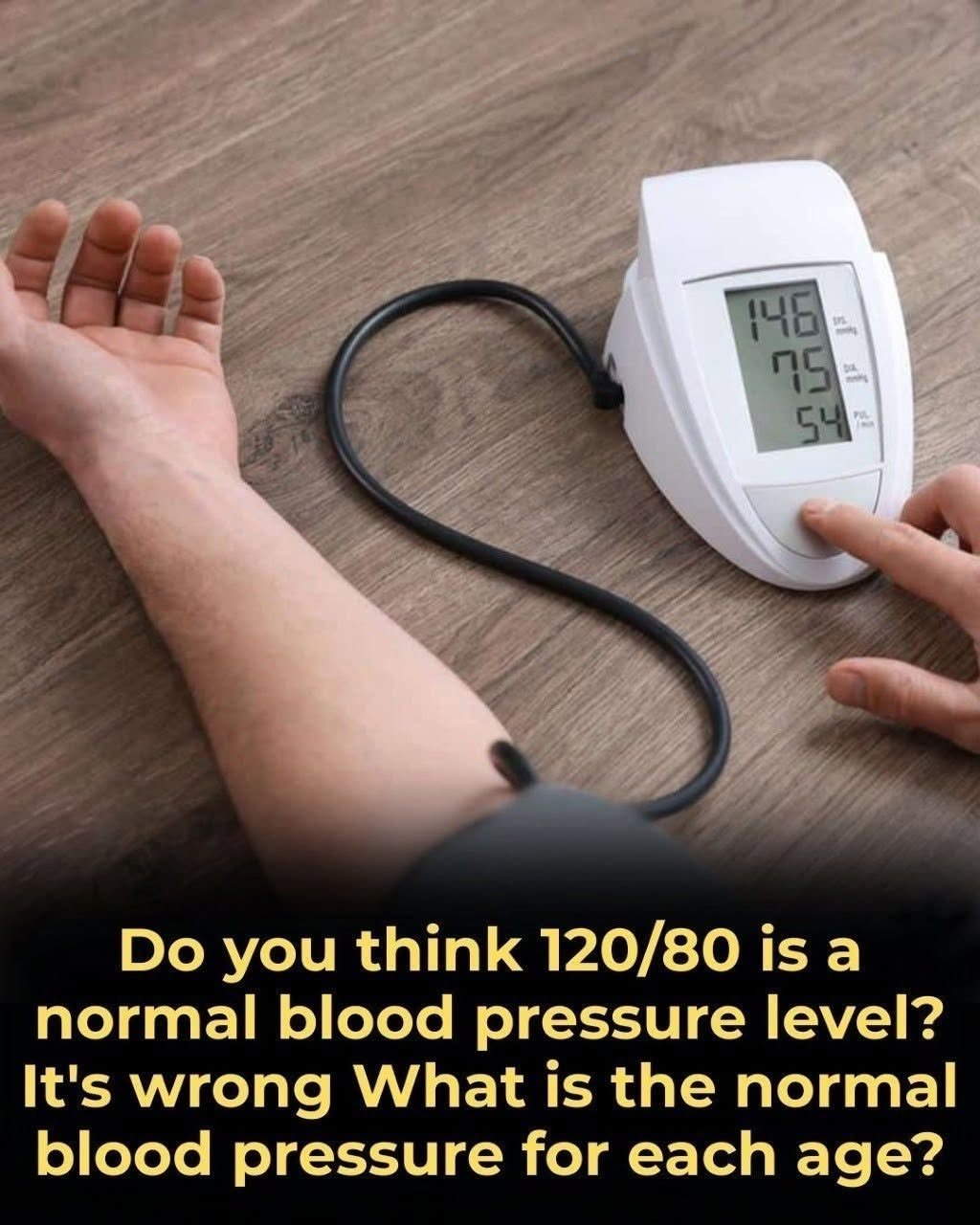
You may have heard that “normal blood pressure changes dramatically with age.” That’s an oversimplification. For adults, current U.S. guidance does not use a separate “normal” blood-pressure range for every decade of life. The general healthy category remains below 120/80 mm Hg, regardless of whether you’re 25, 45, 65, or 85. www.heart.org+1
What does change with age is the likelihood of developing high blood pressure and the way doctors consider your overall health, medications, cardiovascular risk, and treatment goals.
What Do the Two Blood Pressure Numbers Mean?
A reading such as 118/76 mm Hg contains two measurements.
Systolic pressure
The top number is systolic pressure. It represents the pressure in your arteries when your heart contracts and pumps blood.
Diastolic pressure
The bottom number is diastolic pressure. It represents arterial pressure while your heart relaxes between beats.
Both numbers matter.
For adults, the current categories are: www.heart.org+1
| Category | Systolic | Diastolic |
|---|---|---|
| Normal | Less than 120 | and less than 80 |
| Elevated | 120–129 | and less than 80 |
| Stage 1 hypertension | 130–139 | or 80–89 |
| Stage 2 hypertension | 140 or higher | or 90 or higher |
| Severe hypertension | Higher than 180 | and/or higher than 120 |
Notice the word “or.” If either number reaches a higher category, the reading can fall into that category.
Is 120/80 Still Considered Normal?
It’s a useful benchmark, but the precise definition is slightly different.
Normal adult blood pressure is below 120/80, not necessarily exactly 120/80.
For example:
- 110/70 → normal
- 116/75 → normal
- 119/79 → normal
- 120/78 → elevated
- 128/76 → elevated
- 134/82 → stage 1 hypertension
A single reading doesn’t necessarily diagnose hypertension. Blood pressure naturally fluctuates throughout the day, and diagnosis generally requires appropriately obtained measurements over time. www.heart.org+1
What Is Normal Blood Pressure at Different Ages?
In Your 20s
A healthy young adult can certainly have blood pressure around 100–119/60–79 mm Hg, although individual readings vary.
There’s no requirement that someone in their 20s should have a particular number such as 110/70.
A consistently elevated reading shouldn’t be dismissed simply because you’re young.
High blood pressure can occur at any age.
In Your 30s
The same general adult categories apply.
Ideally, blood pressure remains below 120/80.
If readings are repeatedly in the 130s or the diastolic number is repeatedly 80 or above, discuss them with a healthcare professional rather than assuming they’re normal for your age.
In Your 40s
Blood pressure may gradually increase as people get older, but that doesn’t mean a reading such as 140/90 should automatically be considered “normal for your age.”
Current adult categories still classify 140/90 or higher as stage 2 hypertension. www.heart.org
In Your 50s
By this age, high blood pressure becomes increasingly common.
You may hear that a systolic pressure of 150 or 160 is acceptable simply because you’re older.
That is not a good general rule.
Age-related increases in blood pressure are common, but they don’t make hypertension harmless. Persistently high pressure can damage blood vessels and increase the risk of cardiovascular disease, stroke, kidney disease, and other complications. CDC+1
In Your 60s
People in their 60s should still pay attention to blood pressure rather than using age alone to determine what’s acceptable.
The general adult classification remains:
below 120/80 = normal
120–129/<80 = elevated
130–139 or 80–89 = stage 1 hypertension
140 or higher or 90 or higher = stage 2 hypertension. professional.heart.org
Your doctor may individualize treatment depending on your overall health and cardiovascular risk.
In Your 70s
Being 70 does not automatically make 140/90 a healthy blood pressure.
At the same time, treatment decisions should consider more than a single number.
Doctors may take into account:
- Other heart conditions
- Kidney function
- Diabetes
- Previous stroke
- Medications
- Fall risk
- Frailty
- Symptoms from low blood pressure
- Overall cardiovascular risk
The goal is to control blood pressure without causing problematic side effects such as excessive dizziness or falls.
In Your 80s and Beyond
Older adults can still benefit from good blood-pressure control.
But treatment may need to be individualized, particularly in people who are frail or have multiple medical conditions.
This is why it isn’t useful to say:
“If you’re over 80, your blood pressure should be 150.”
There is no single age-based number that applies to everyone.
Your healthcare professional should determine the appropriate target based on your health and circumstances.
Why Does Blood Pressure Often Rise With Age?
Blood vessels tend to become less elastic as people age.
Changes in the arteries, accumulated cardiovascular risk factors, kidney function, lifestyle, and other biological processes can contribute to increasing blood pressure.
The American Heart Association notes that systolic blood pressure tends to become particularly important in older adults because larger arteries can become stiffer over time. www.heart.org
But common does not mean harmless.
A higher blood pressure may be common in older age precisely because the underlying risk factors have accumulated—not because the pressure is healthy.
What About Low Blood Pressure?
High blood pressure receives most of the attention, but very low blood pressure can also matter when it causes symptoms.
Some people naturally have relatively low readings and feel completely well.
Concern increases when low blood pressure is accompanied by:
- Dizziness
- Fainting
- Weakness
- Blurred vision
- Confusion
- Falls
- Unusual fatigue
Certain medications, dehydration, blood loss, infections, and heart problems can contribute to low blood pressure.
If you’re repeatedly experiencing symptoms, have your blood pressure and medications reviewed.
How to Measure Your Blood Pressure Correctly
A surprisingly large number of inaccurate readings come from the way the measurement is taken.
For a more reliable home reading:
- Avoid exercise, caffeine, and smoking for about 30 minutes beforehand when possible.
- Empty your bladder.
- Sit quietly for several minutes.
- Keep your back supported.
- Keep both feet flat on the floor.
- Rest your arm at heart level.
- Use the correct cuff size.
- Don’t talk during the measurement.
- Take a second reading after waiting briefly if appropriate.
- Record your readings so you can see the pattern over time.
The American Heart Association recommends a supported seated position with the feet flat and the arm supported at heart level for accurate measurement. www.heart.org+1
Don’t Judge Your Health From One Reading
Imagine you normally have readings around 115/72, but one morning you get:
137/84
That doesn’t automatically mean you’ve developed chronic hypertension.
Stress, pain, poor sleep, caffeine, recent exercise, a full bladder, or an incorrect measurement technique can temporarily raise blood pressure.
On the other hand, repeatedly getting readings in the 130s or higher shouldn’t be ignored.
The pattern is more informative than one isolated number.
What If Your Blood Pressure Is 180/120 or Higher?
This deserves special attention.
If your reading is higher than 180/120 mm Hg, wait at least one minute and measure it again. www.heart.org
If it remains that high and you have symptoms such as chest pain, shortness of breath, back pain, weakness, numbness, vision changes, or difficulty speaking, seek emergency medical care immediately. www.heart.org
If it’s still above 180/120 but you have no symptoms, contact a healthcare professional promptly for advice rather than ignoring the reading.
Can You Lower Blood Pressure Naturally?
Lifestyle changes can make a meaningful difference.
Helpful habits include: “If you’re over 80, your blood pressure should be 150.”
Why Does Blood Pressure Often Rise With Age?
What About Low Blood Pressure?
- Eating a heart-healthy diet
- Reducing excessive sodium intake
- Eating plenty of vegetables and other nutrient-rich foods
- Maintaining a healthy weight when appropriate
- Getting regular physical activity
- Limiting or avoiding alcohol
- Not smoking
- Getting adequate sleep
- Managing stress
- Taking prescribed medications as directed
The 2025 AHA/ACC guideline emphasizes healthy eating patterns such as DASH, reducing sodium, increasing dietary potassium when appropriate, physical activity, healthy weight, stress management, and reducing or eliminating alcohol as important strategies for preventing or treating high blood pressure. professional.heart.org
Don’t Stop Blood Pressure Medication Because of One “Good” Reading
If you’re taking medication for hypertension and suddenly see a normal reading, that generally means the treatment may be working—not that you should stop it.
Never change or discontinue prescribed blood-pressure medication without discussing it with your healthcare professional.
Likewise, don’t double a dose because a single reading is unusually high unless you’ve been specifically instructed to do so.
The Bottom Line
There isn’t a separate “normal” blood-pressure number for every age.
For adults, the current benchmark is:
Normal: below 120/80 mm Hg. www.heart.org+1
As people get older, high blood pressure becomes more common, and treatment decisions may become more individualized. But 140/90 isn’t automatically healthy just because you’re 60, 70, or 80.
The most useful approach is to monitor your blood pressure correctly, look at repeated readings rather than one isolated measurement, and discuss persistent elevations with a healthcare professional.
And if you ever see a reading above 180/120 accompanied by chest pain, severe shortness of breath, weakness, numbness, vision changes, or difficulty speaking, seek emergency care immediately. www.heart.org+1