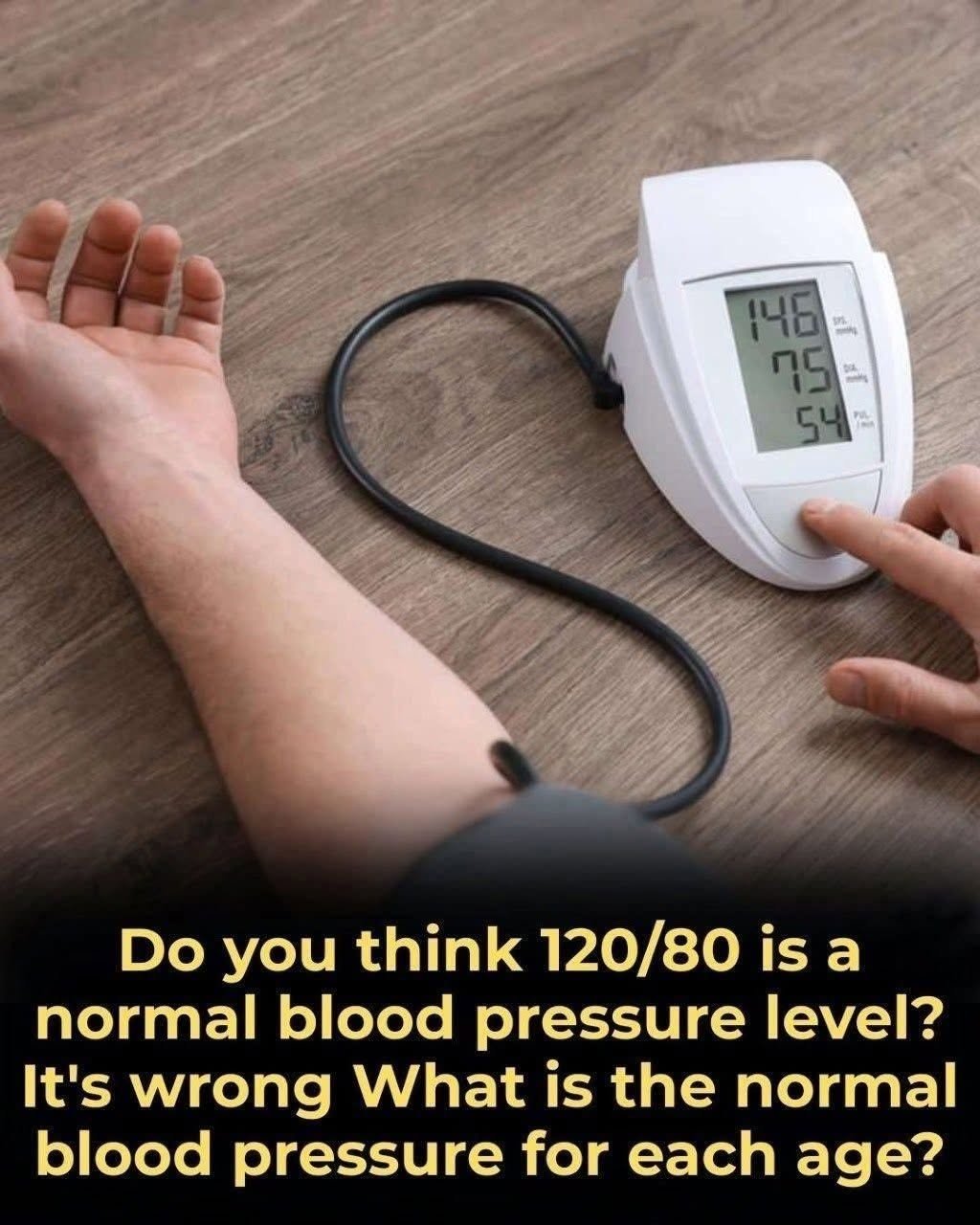
What Is Normal Blood Pressure for Your Age? A Clear, Updated Guide
Blood pressure is one of the most important measurements of cardiovascular health. It tells you how strongly your blood is pushing against the walls of your arteries as your heart pumps and relaxes. Because blood pressure naturally changes with age, activity, stress, sleep, and even the time of day, a single reading does not always tell the whole story.
A common misconception is that there is one “normal” blood-pressure number for every age group. In reality, there isn’t a separate ideal blood-pressure target for every decade of adulthood. For most adults, blood pressure is interpreted using established categories rather than simply saying, for example, “your blood pressure should be your age plus 100.”
Understanding the numbers—and knowing when a reading is concerning—is much more useful.
What Do the Two Blood Pressure Numbers Mean?
A blood-pressure reading has two numbers, such as 120/80 mmHg.
The first number is systolic blood pressure. It measures the pressure in your arteries when your heart contracts and pumps blood.
The second number is diastolic blood pressure. It measures the pressure in your arteries while your heart relaxes between beats.
So if your reading is:
120/80 mmHg
- 120 = systolic pressure
- 80 = diastolic pressure
The unit mmHg means millimeters of mercury.
Both numbers matter. A person can have a normal systolic pressure but an elevated diastolic pressure, or vice versa.
Adult Blood Pressure Categories
For nonpregnant adults, commonly used U.S. categories are:
| Category | Systolic | Diastolic |
|---|---|---|
| Normal | Less than 120 | and less than 80 |
| Elevated | 120–129 | and less than 80 |
| Stage 1 hypertension | 130–139 | or 80–89 |
| Stage 2 hypertension | 140 or higher | or 90 or higher |
| Severe hypertension | Higher than 180 | and/or higher than 120 |
The word “or” is important. If either number falls into a higher category, the reading can be classified according to the higher category.
For example, 118/86 is not considered normal simply because the systolic number is below 120. The diastolic value is elevated.
Likewise, 145/75 has an elevated systolic value even though the diastolic number is below 80.
Is 120/80 the Perfect Blood Pressure?
You will often hear 120/80 described as the “perfect” blood pressure.
It is certainly within the normal range, but it isn’t a magical number that everyone must have.
A healthy person’s blood pressure can naturally vary. It may be lower during sleep and higher during exercise, stress, pain, or anxiety.
The goal is generally to maintain blood pressure in a healthy range over time rather than trying to force every reading to exactly 120/80.
What About Blood Pressure by Age?
Children
Children are different from adults.
Blood-pressure interpretation in children depends on age, sex, and height, rather than simply applying adult numbers.
A blood pressure that might be normal for an adult could be abnormal for a young child.
Parents should therefore have children’s blood pressure interpreted using pediatric reference standards by a healthcare professional.
Teenagers
Adolescents undergo major physical changes, and blood pressure can also vary with growth and body size.
For teenagers, clinicians use age-appropriate pediatric/adolescent criteria. In older adolescents, adult-style thresholds may be used depending on the guideline and clinical circumstances.
A consistently high reading in a teenager deserves evaluation rather than being dismissed as “normal for their age.”
Adults in Their 20s and 30s
Young adulthood does not provide immunity from high blood pressure.
A reading below 120/80 mmHg is generally considered normal under adult categories.
If a young adult repeatedly has readings of 130/80 or higher, it is worth discussing with a healthcare professional, particularly if there are additional risk factors such as obesity, diabetes, kidney disease, smoking, or a strong family history.
High blood pressure can begin at a young age and may cause damage silently for years.
Adults in Their 40s and 50s
Blood pressure tends to become more likely to rise with age, partly because arteries gradually become less elastic and because cardiovascular risk factors can accumulate.
However, 130/80 is not automatically “normal because you’re over 40.”
For adults, the same general categories continue to apply.
Someone in their 50s with consistently elevated blood pressure should not simply accept it as an unavoidable part of aging.
Adults in Their 60s and 70s
Older adults commonly develop isolated systolic hypertension, where the systolic number is high while the diastolic number remains relatively normal.
For example:
155/72 mmHg
The systolic pressure is high even though the diastolic pressure is below 80.
This happens partly because arteries become stiffer with age.
Treatment targets for older adults can depend on overall health, frailty, other medical conditions, medications, and the risk of dizziness or falls. Your personal target should therefore be determined with your healthcare professional rather than based solely on age.
Adults Over 80
Very old adults require particularly individualized blood-pressure management.
Lowering blood pressure can reduce cardiovascular risk, but treatment must also consider factors such as frailty, kidney function, falls, dizziness, other medications, and overall health.
There isn’t one blood-pressure number that is automatically correct for every person over 80.
Why One Reading Isn’t Enough
Blood pressure changes constantly.
It can temporarily rise because of:
- Stress or anxiety
- Exercise
- Pain
- Caffeine
- Nicotine
- A full bladder
- Talking during the measurement
- Incorrect cuff size
- Poor sitting position
This is why a single high reading does not necessarily mean that you have chronic hypertension.
For home monitoring, it is often more useful to take multiple properly performed readings over several days and discuss the average or pattern with your healthcare professional.
How to Measure Blood Pressure Correctly at Home
Accurate technique matters.
Before measuring:
- Avoid exercise, caffeine, and smoking for about 30 minutes when possible.
- Empty your bladder.
- Sit quietly for about five minutes.
- Keep your back supported.
- Keep both feet flat on the floor.
- Don’t cross your legs.
- Rest your arm on a surface so the cuff is approximately at heart level.
- Put the cuff on bare skin rather than over clothing.
- Don’t talk while taking the measurement.
- Use a properly sized upper-arm cuff.
Take another reading after a short rest if appropriate.
If you’re tracking your blood pressure, record the date, time, and readings so that your healthcare professional can identify patterns.
What If Your Blood Pressure Is Low?
Low blood pressure isn’t necessarily a problem.
Some healthy people naturally have relatively low readings without symptoms.
It becomes more concerning when low blood pressure causes symptoms such as:
- Dizziness
- Fainting
- Blurred vision
- Weakness
- Confusion
- Unusual fatigue
Very low blood pressure can sometimes result from dehydration, blood loss, medications, heart problems, severe infection, or other medical conditions.
The symptoms and circumstances matter more than a single arbitrary number.
What If Your Blood Pressure Is 180/120 or Higher?
A readingabove 180 systolic and/or above 120 diastolic is severely elevated.
Repeat the measurement after resting quietly and using correct technique.
If it remains that high, contact a healthcare professional promptly.
If a severely elevated reading occurs with symptoms such as chest pain, shortness of breath, severe headache, weakness or numbness, confusion, difficulty speaking, vision changes, or other signs of acute illness, seek emergency medical care immediately.
Do not attempt to rapidly lower very high blood pressure yourself with extra medication unless a clinician has specifically instructed you to do so.
How Can You Keep Blood Pressure Healthy?
Lifestyle can make a major difference.
Helpful habits include:
- Eating plenty of vegetables and fruits
- Choosing whole grains and high-fiber foods
- Limiting excessive sodium intake
- Maintaining a healthy weight
- Exercising regularly
- Not smoking
- Limiting alcohol
- Getting adequate sleep
- Managing stress
- Taking prescribed medications consistently
If you have hypertension, lifestyle changes can complement medication but should not replace prescribed treatment without medical advice.
Final Takeaway
There isn’t a separate “normal” blood-pressure number for every age. For most adults, less than 120/80 mmHg is considered normal, while repeated readings at or above 130/80 may indicate hypertension depending on the measurement pattern and clinical context.
Age matters because blood pressure tends to rise as people get older, and treatment decisions become more individualized in older adults—but high blood pressure should not simply be dismissed as a normal consequence of aging.
The most useful approach is to measure your blood pressure correctly, look at repeated readings rather than one isolated result, and discuss persistent abnormalities with a healthcare professional.
And remember: high blood pressure often causes no obvious symptoms. Feeling perfectly well does not necessarily mean your blood pressure is healthy, which is why regular monitoring is so valuable.