What Is Normal Blood Pressure at Every Age?
Blood pressure naturally changes throughout life, and there isn’t one single “normal” number for every age. For adults, current guidelines generally focus more on the blood-pressure reading itself and overall cardiovascular risk than on assigning a separate normal range to each decade of life.
Blood pressure is written as systolic/diastolic, measured in mmHg. The systolic number is the pressure when the heart contracts, while the diastolic number is the pressure between heartbeats.
Children and Teenagers
Blood-pressure interpretation in children is different from that in adults because normal values depend on factors such as age, sex, and height.
A child’s blood pressure should therefore be interpreted using pediatric reference charts rather than an adult cutoff.
As children grow, their blood pressure normally increases. A reading that is appropriate for one child may not be appropriate for another of the same age because height and other factors matter.
Persistent abnormal readings should be assessed by a pediatric healthcare professional.
Young Adults
For adults, a blood pressure below 120/80 mmHg is generally considered normal.
A reading consistently above this level may indicate that blood pressure is moving into a higher category, depending on the exact numbers.
One isolated reading doesn’t necessarily establish a diagnosis. Blood pressure can temporarily rise because of stress, physical activity, caffeine, pain, illness, or other factors.
Adults in Their 30s and 40s
The same adult categories generally apply during the 30s and 40s.
A normal reading is generally:
Less than 120/80 mmHg
Blood pressure can gradually increase with age, but elevated blood pressure should not simply be dismissed as an unavoidable part of getting older.
Maintaining a healthy weight, staying physically active, limiting excessive sodium, avoiding tobacco, and following a balanced diet can help support healthy blood pressure.
Adults in Their 50s and 60s
Blood pressure often becomes more difficult to control as people get older because arteries can become less flexible and other cardiovascular risk factors may accumulate.
However, age alone does not make high blood pressure normal.
A reading of 140/90 mmHg, for example, shouldn’t automatically be considered acceptable simply because someone is older.
The appropriate treatment target can vary depending on a person’s health, medications, cardiovascular risk, and other medical conditions, so individualized advice from a healthcare professional is important.
Adults Over 70
Older adults can still benefit from controlling elevated blood pressure.
Treatment decisions become more individualized with advancing age because healthcare professionals may consider overall health, frailty, falls, kidney function, medications, and other conditions.
There isn’t a universal rule saying that everyone over 70 should have a particular blood-pressure number.
Instead, the appropriate target should be determined with a healthcare professional.
A Simple Adult Blood Pressure Guide
For adults, a commonly used classification is:
- Normal: less than 120/80 mmHg
- Elevated: systolic 120–129 mmHg and diastolic less than 80 mmHg
- Stage 1 hypertension: systolic 130–139 mmHg or diastolic 80–89 mmHg
- Stage 2 hypertension: systolic at least 140 mmHg or diastolic at least 90 mmHg
Different medical organizations can use somewhat different thresholds and treatment targets, so these categories shouldn’t replace advice from your healthcare professional.
What About Low Blood Pressure?
Blood pressure that’s unusually low can also be a concern, particularly when it causes symptoms.
Possible symptoms include dizziness, fainting, weakness, blurred vision, confusion, or unusual fatigue.
Some people naturally have relatively low blood pressure and feel perfectly well. In that situation, the number alone may not indicate a problem.
A sudden drop in blood pressure, particularly when accompanied by severe symptoms, requires prompt medical attention.
One Reading Isn’t the Whole Story
Blood pressure naturally fluctuates throughout the day.
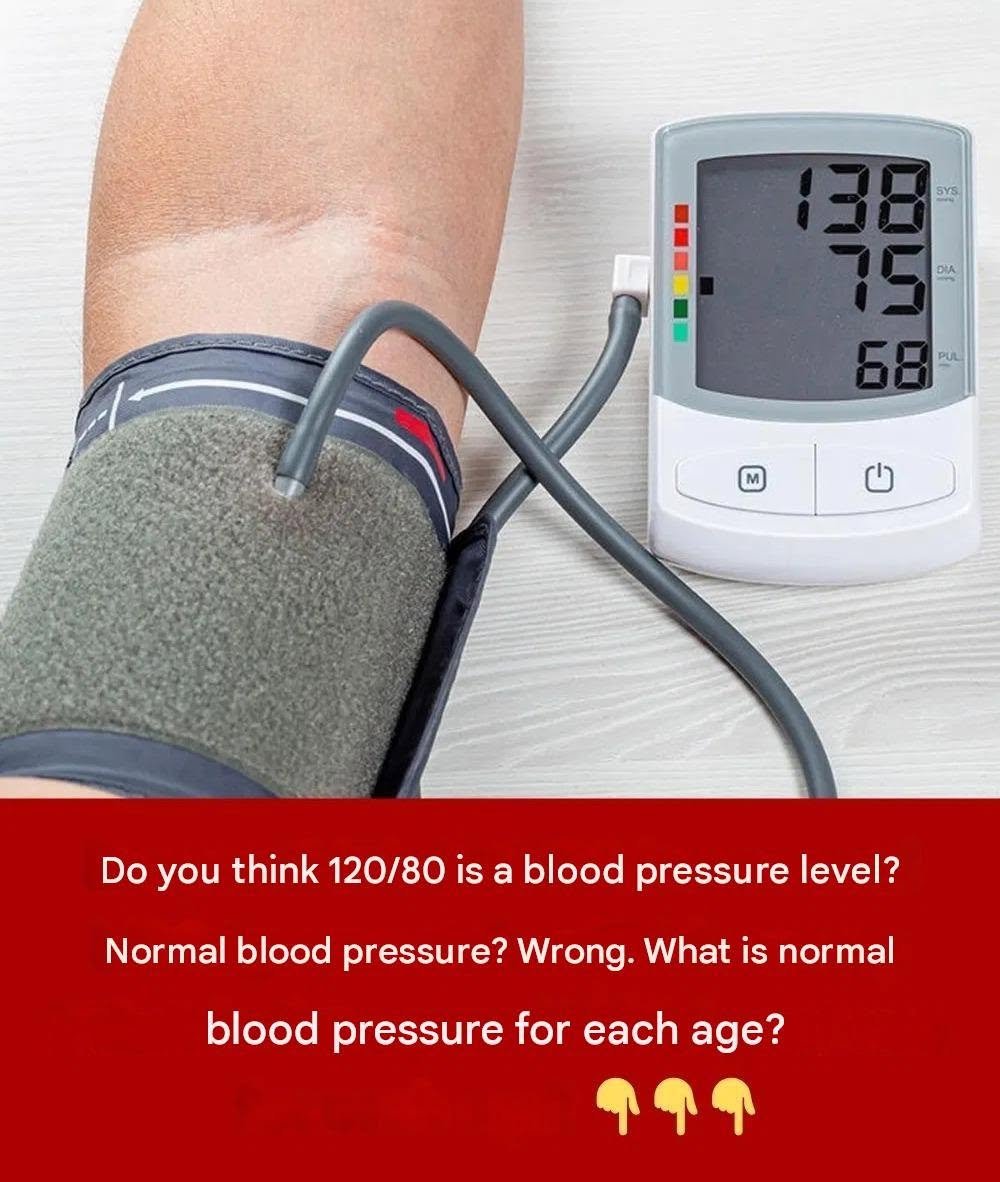
For a more reliable home measurement, sit quietly for several minutes beforehand, keep your back supported, place both feet on the floor, and keep your arm supported at approximately heart level. Avoid measuring immediately after exercise, smoking, or consuming caffeine.
Taking multiple readings on different occasions can provide a more useful picture than relying on one measurement.
When Is Blood Pressure an Emergency?
Extremely high blood pressure accompanied by symptoms such as chest pain, difficulty breathing, severe headache, weakness or numbness, confusion, vision changes, or difficulty speaking can indicate a medical emergency.
Seek emergency blood pressure isn’t determined by age alone. Children medical care rather than waiting for the blood pressure to come down on its own.
Bottom Line
For most adults, less than 120/80 mmHg is considered normal, but healthy blood pressure isn’t determined by age alone. Children require age-, sex-, and height-specific assessment, while older adults may need individualized treatment targets.
If your readings are repeatedly elevated, keep a record of them and discuss the results with a healthcare professional rather than assuming that high blood pressure is simply a normal part of aging.