⚠️ Warning: Can These Tablets Cause Blood Clots, Thrombosis, or Heart Attacks?
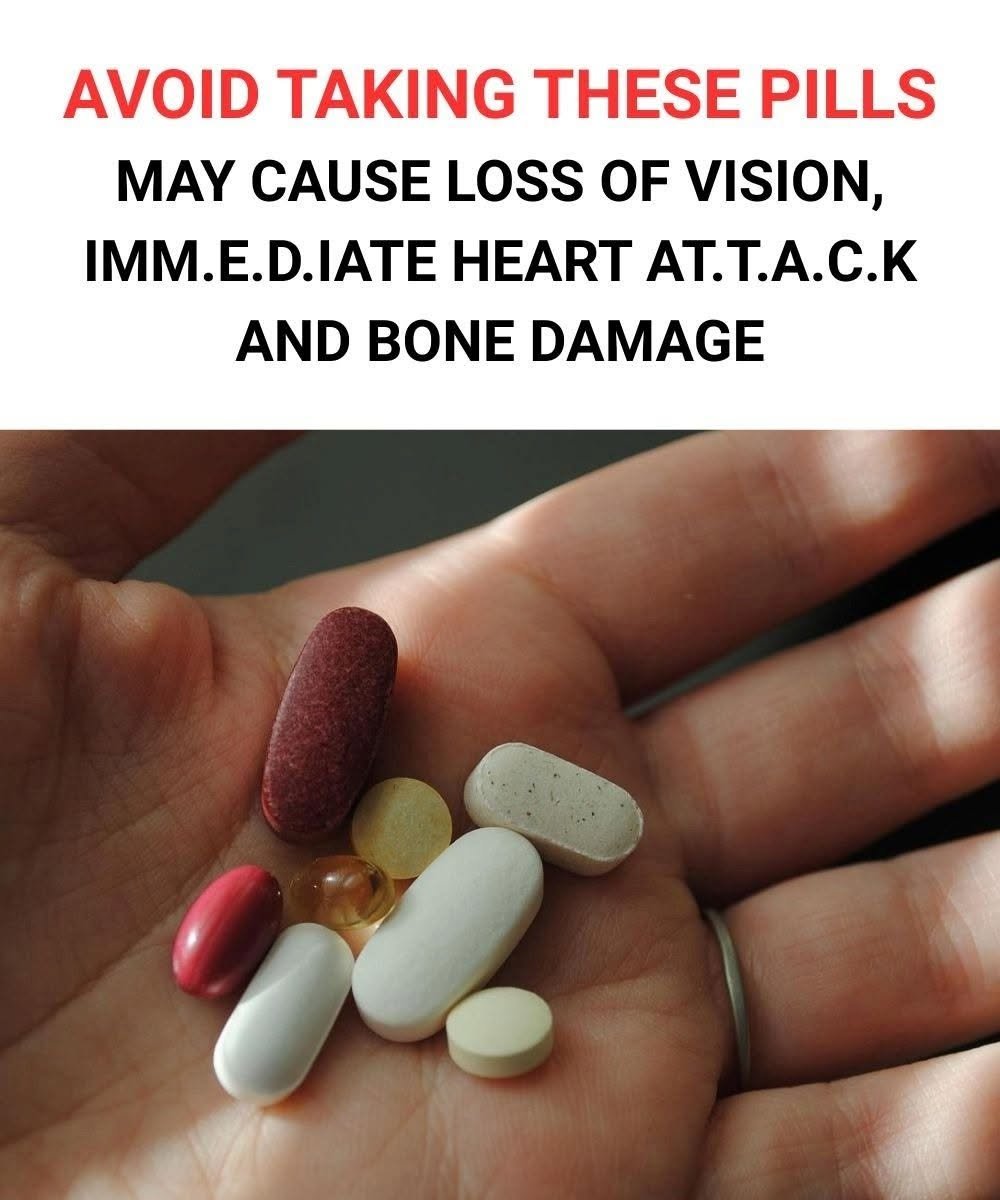
Posts saying “these tablets cause blood clots, blood thrombi, and heart attacks” can be misleading because the actual risk depends entirely on which tablet is being discussed.
Some medicines can increase clot risk, while others are specifically prescribed to prevent blood clots, heart attacks, and strokes.
💊 Which Medicines Can Increase Clot Risk?
One well-established example is oral estrogen-containing hormone treatment.
For example, some HRT tablets can increase the risk of blood clots, although the absolute risk remains low. Interestingly, HRT delivered through patches, gels, or sprays does not appear to increase clot risk in the same way as tablets. nhs.uk+1
Certain estrogen-containing contraceptives can also increase the risk of venous blood clots. The risk is influenced by factors such as age, smoking, obesity, previous clots, and certain medical conditions. nhs.uk
🩸 What Is a Thrombus?
A thrombus is simply a blood clot that forms inside a blood vessel.
Depending on where it forms, it can cause:
- DVT — a clot in a deep vein, usually in the leg
- Pulmonary embolism — a clot that travels to the lungs
- Ischemic stroke — a clot blocks blood flow to part of the brain
- Heart attack — a blockage interrupts blood flow to heartots. They’re prescribed to reduce the risk of serious complications such as stroke, DVT, pulmonary embolism, and—in appropriate patients—heart attack. muscle
💊 Some “Blood-Thinning” Tablets Do the Opposite
It’s particularly important not to assume that every tablet mentioned in a viral warning causes clots.
Medicines such as warfarin, apixaban, rivaroxaban, dabigatran, and edoxaban are anticoagulants used to prevent or treat blood clots. They’re prescribed to reduce the risk of serious complications such as stroke, DVT, pulmonary embolism, and—in appropriate patients—heart attack. nhs.uk+1
Likewise, low-dose aspirin is sometimes prescribed to reduce the risk of heart attack or stroke in people for whom it is appropriate. nhs.uk
Never stop an anticoagulant or prescribed aspirin simply because you’ve seen a social-media warning.
🚨 Know the Warning Signs
Possible DVT
Watch for new swelling, pain, warmth, redness, or tenderness in one leg, particularly the calf.
Possible pulmonary embolism
Sudden breathlessness, chest pain, coughing up blood, rapid heartbeat, or fainting can be signs of a pulmonary embolism and require emergency medical attention. nhs.uk
Possible heart attack
Emergency symptoms can include chest pressure or pain, particularly when accompanied by shortness of breath, sweating, nausea, or pain spreading to the arm, jaw, back, or shoulder.
Possible stroke
Remember FAST:
F — Face: one side droops
A — Arms: sudden weakness or numbness
S — Speech: difficulty speaking
T — Time: seek emergency help immediately
The Risk Depends on the Person
The likelihood of developing a clot isn’t determined by the medicine alone.
Risk can also be affected by:
- Previous blood clots
- Smoking
- Age
- Obesity
- Immobility or prolonged travel
- Cancer
- Certain inherited clotting disorders
- Pregnancy
- Heart failure
- Other medications
That’s why a medicine that is appropriate for one person may not be appropriate for another.
Bottom Line
“These tablets cause blood clots and heart attacks” is not enough information to determine whether a medication is dangerous. Some medicines increase clot risk; others are specifically designed to prevent clots.
If you give me the exact name of the tablet (or upload a clear photo of the package), I can explain its actual clot and heart-attack risk, common side effects, important interactions, and the warning symptoms that require urgent care.