💧 Waking Up With Dry Mouth? Here’s What Your Body Might Be Telling You
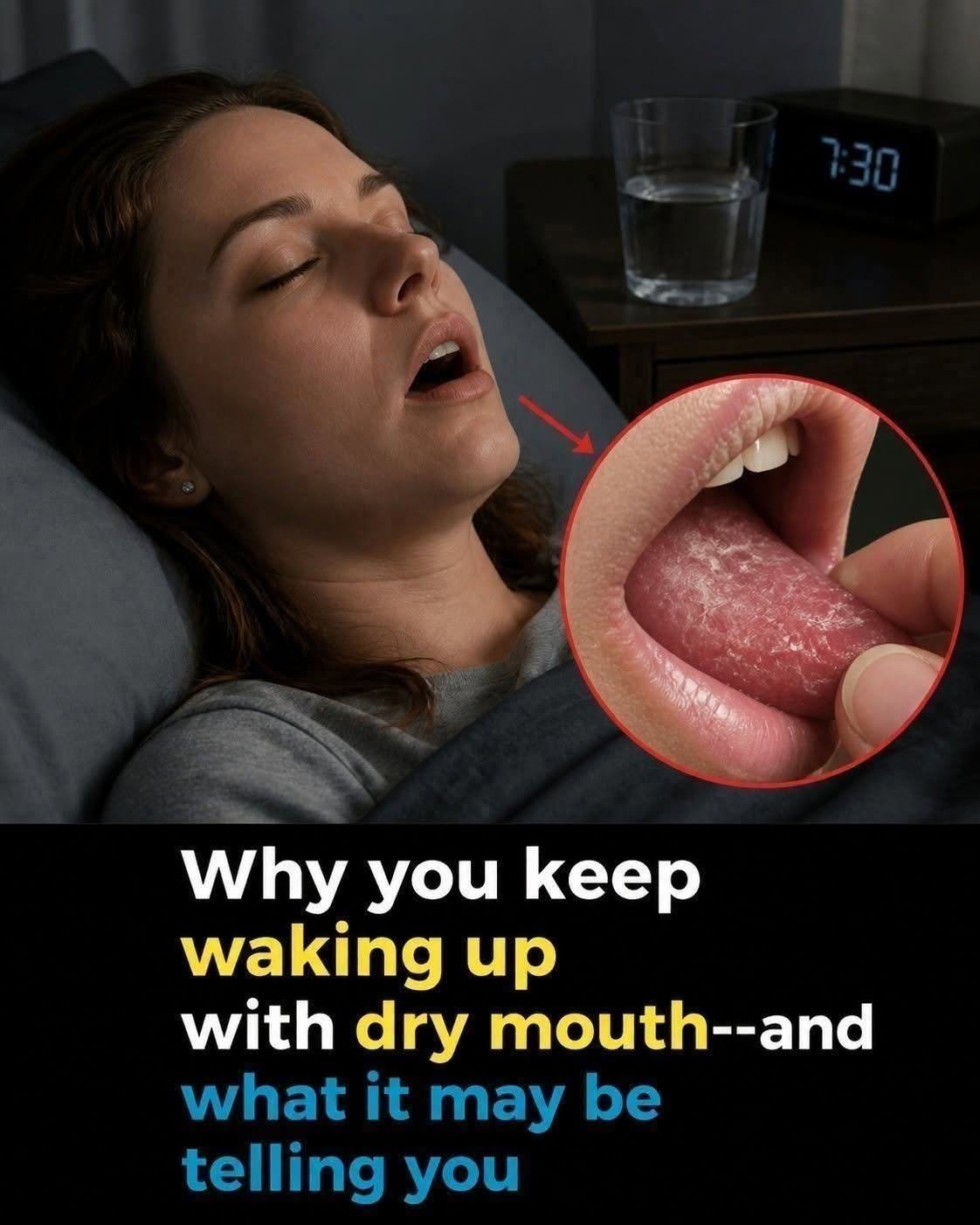
Waking up with a dry, sticky mouth is common, and it doesn’t automatically mean something is seriously wrong. Overnight, saliva production naturally decreases, but persistent morning dry mouth can also be related to mouth breathing, medications, dehydration, sleep problems, or certain medical conditions.
Dry mouth—also called xerostomia—is more than just an uncomfortable feeling. Saliva helps protect your teeth, control bacteria, make swallowing easier, and keep the tissues of your mouth healthy.
Here are some of the most common reasons you may wake up feeling unusually thirsty or have a dry mouth.
1. 😮💨 You’re Breathing Through Your Mouth While Sleeping
One of the simplest explanations is mouth breathing.
If your nose is blocked because of allergies, a cold, nasal congestion, or structural problems, you may unconsciously breathe through your mouth during sleep.
You might wake up with:
- A very dry tongue
- Sticky saliva
- Dry lips
- Bad breath
- A scratchy throat
If you regularly wake with a dry mouth and also snore, it’s worth discussing the symptoms with a healthcare professional.
2. 😴 Sleep Apnea Could Be Contributing
Obstructive sleep apnea can cause repeated interruptions in breathing during sleep and is often associated with loud snoring and mouth breathing.
Other possible clues include:
- Waking up choking or gasping
- Morning headaches
- Excessive daytime sleepiness
- Difficulty concentrating
- Witnessed pauses in breathing during sleep
Dry mouth alone doesn’t diagnose sleep apnea, but if several of these symptoms occur together, talk with your doctor about whether a sleep evaluation is appropriate.
3. 💊 Your Medication May Be Responsible
A surprisingly large number of medications can reduce saliva production.
Examples include some medicines used for:
- Allergies
- Depression
- High blood pressure
- Pain
- Anxiety
- Bladder problems
- Asthma and respiratory conditions
If your dry mouth started after beginning a new medication, don’t stop the medicine on your own.
Instead, ask your doctor or pharmacist whether dry mouth is a known side effect and whether adjustments are possible.
4. 💧 You May Simply Be Dehydrated
Not drinking enough fluid during the day, sweating heavily, vomiting, diarrhea, fever, or consuming alcohol can contribute to dehydration.
You may notice:
- Thirst
- Darker urine
- Dry mouth
- Headache
- Dizziness
- Fatigue
Drink fluids regularly according to your individual needs. If you’ve been told to restrict fluids because of a heart, kidney, or other medical condition, follow your healthcare professional’s instructions rather than increasing your fluid intake on your own.
5. ☕ Caffeine and Alcohol Can Make It Worse
Coffee, tea, energy drinks, and alcohol may contribute to dehydration or make the sensation of dry mouth more noticeable in some people.
If you’re frequently waking with a dry mouth, pay attention to whether the problem is worse after drinking alcohol or consuming large amounts of caffeine later in the day.
6. 🩸 High Blood Sugar Can Cause Increased Thirst
Persistent dry mouth accompanied by unusual thirst and frequent urination can sometimes occur with high blood glucose.
Other possible symptoms of diabetes include:
- Increased hunger
- Unexplained weight loss
- Fatigue
- Blurred vision
- Slow-healing wounds
- Recurrent infections
These symptoms don’t prove that you have diabetes, but persistent unexplained thirst or urination is a good reason to discuss blood-glucose testing with a healthcare professional.
7. 👅 Your Mouth May Be Producing Less Saliva
Some people simply develop reduced saliva production, particularly with age or certain medical conditions.
Low saliva levels can make the mouth feel sticky and can increase the risk of:
- Tooth decay
- Gum disease
- Mouth sores
- Difficulty swallowing
- Changes in taste
- Bad breath
If dry mouth occurs most days, a dentist or doctor can help determine the underlying cause.
8. 😬 Stress and Anxiety Can Affect Your Mouth
Stress can temporarily reduce saliva production and make your mouth feel dry.
If you notice dry mouth mainly during periods of anxiety or poor sleep, stress may be contributing.
However, don’t automatically assume persistent symptoms are “just stress.” Ongoing dry mouth still deserves attention if it continues.
9. 🦷 Dry Mouth Can Affect Your Teeth
Saliva is one of your mouth’s natural defense systems.
When saliva is reduced, acids and bacteria can have a greater opportunity to damage teeth.
Over time, chronic dry mouth may increase the risk of:
- Cavities
- Gum problems
- Bad breath
- Difficulty wearing dentures
- Oral infections
That’s why persistent dry mouth isn’t something to ignore indefinitely.
🌿 What Can You Do Tonight?
A few simple habits may help:
- Keep water nearby and sip when needed.
- Brush twice daily with fluoride toothpaste.
- Clean between your teeth every day.
- Avoid tobacco.
- Limit alcohol.
- Consider reducing caffeine if it clearly worsens your symptoms.
- Use sugar-free gum or sugar-free lozenges to stimulate saliva if appropriate.
- Avoid products containing a lot of sugar, since reduced saliva already increases cavity risk.
- If your nose is chronically blocked, ask a healthcare professional about the cause rather than simply accepting mouth breathing.
🚫 Don’t Treat Dry Mouth With Sugary Candy
Sucking on candy may temporarily increase saliva, but frequent sugar exposure can increase the risk of tooth decay.
Sugar-free gum or lozenges are generally a better option for stimulating saliva.
🩺 When Should You Talk to a Doctor or Dentist?
Make an appointment if your dry mouth:
- Happens frequently
- Has lasted for several weeks
- Makes eating or swallowing difficult
- Causes persistent bad breath
- Is accompanied by mouth sores
- Is causing repeated cavities
- Started after a medication change
- Occurs with excessive thirst or frequent urination
- Occurs alongside significant snoring or daytime sleepiness
A healthcare professional can review your medications, medical history, hydration, blood glucose, and other possible causes.
🚨 When Is It More Urgent?
Seek prompt medical attention if severe thirst and dry mouth occur together with confusion, severe weakness, vomiting, difficulty breathing, or significant changes in urination, particularly if you have diabetes.
These symptoms can sometimes indicate serious dehydration or dangerously high blood glucose.
🌟 The Bottom Line
Waking up with a dry mouth is often caused by something relatively simple, such as mouth breathing, dehydration, medications, or normal reductions in saliva during sleep.
But if it happens regularly—especially alongside loud snoring, excessive thirst, frequent urination, dental problems, or medication changes—it’s worth finding out why.
Your body isn’t necessarily sending a warning that something is seriously wrong. More often, persistent dry mouth is a clue that deserves context rather than a diagnosis from the symptom alone.