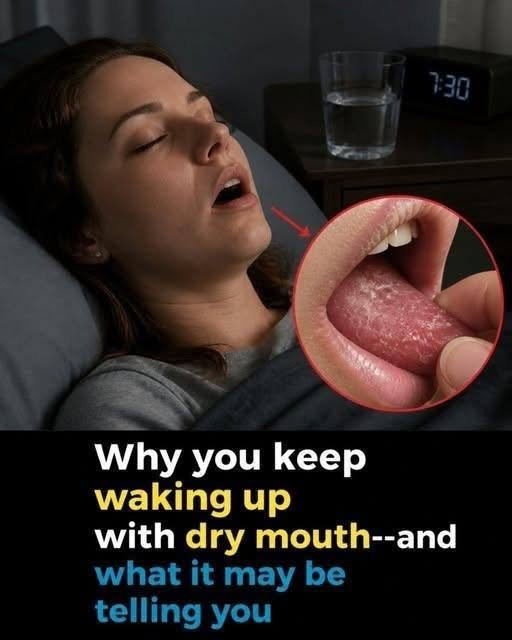
Waking Up With Dry Mouth? Here’s What Your Body Might Be Telling You
Waking up with a dry mouth is common and often harmless. But if it happens regularly, it can sometimes point to a sleeping habit, medication side effect, or an underlying health issue.
1. You May Be Breathing Through Your Mouth
A blocked nose, allergies, a deviated nasal septum, or simply sleeping with your mouth open can dry out the mouth overnight.
What may help: Treat nasal congestion appropriately and consider using a humidifier if your bedroom air is very dry.
2. You May Not Be Getting Enough Fluids
Dehydration can reduce saliva production and leave your mouth feeling dry or sticky when you wake up.
Drink fluids regularly during the day. Avoid deliberately drinking large amounts immediately before bed, especially if nighttime urination is already a problem.
3. Your Medication Could Be Responsible
Many medications can cause dry mouth, including some antihistamines, antidepressants, decongestants, and blood-pressure medications.
Don’t stop a prescribed medication on your own. Ask your doctor or pharmacist whether dry mouth could be a side effect and whether alternatives are available.
4. Snoring or Sleep Apnea May Be Involved
Persistent snoring and sleeping with your mouth open can contribute to morning dry mouth.
If someone notices that you stop breathing during sleep, gasp or choke at night, or you’re extremely sleepy during the day, talk to a healthcare professional about possible sleep apnea.
5. High Blood Sugar Can Cause Increased Thirst and Dryness
Persistent dry mouth accompanied by unusual thirst, frequent urination, fatigue, or unexplained weight loss can occur with diabetes and deserves medical evaluation.
6. Your Mouth May Simply Be Producing Less Saliva
Dry mouth, medically called xerostomia, can have many causes. Persistent lack of saliva can increase the risk of tooth decay, gum problems, mouth infections, and difficulty swallowing or speaking.
What Can You Do Tonight?
-
Drink adequate fluids during the day.
-
Keep your bedroom comfortably humid if the air is dry.
-
Avoid smoking and excessive alcohol.
-
Limit caffeine late in the day if it worsens dryness or sleep.
-
Maintain good dental hygiene.
-
Consider sugar-free gum or lozenges during the day to stimulate saliva.
When Should You See a Doctor or Dentist?
Get professional advice if dry mouth continues for several weeks, is becoming worse, or makes eating, swallowing, or speaking difficult.
Also mention it if you have persistent thirst, frequent urination, significant snoring, or symptoms suggestive of sleep apnea.
Bottom Line
Occasional morning dry mouth is usually related to mouth breathing, dehydration, dry air, or medication. But persistent symptoms shouldn’t simply be ignored.
Your morning mouth can provide a clue—but it can’t diagnose a disease by itself.