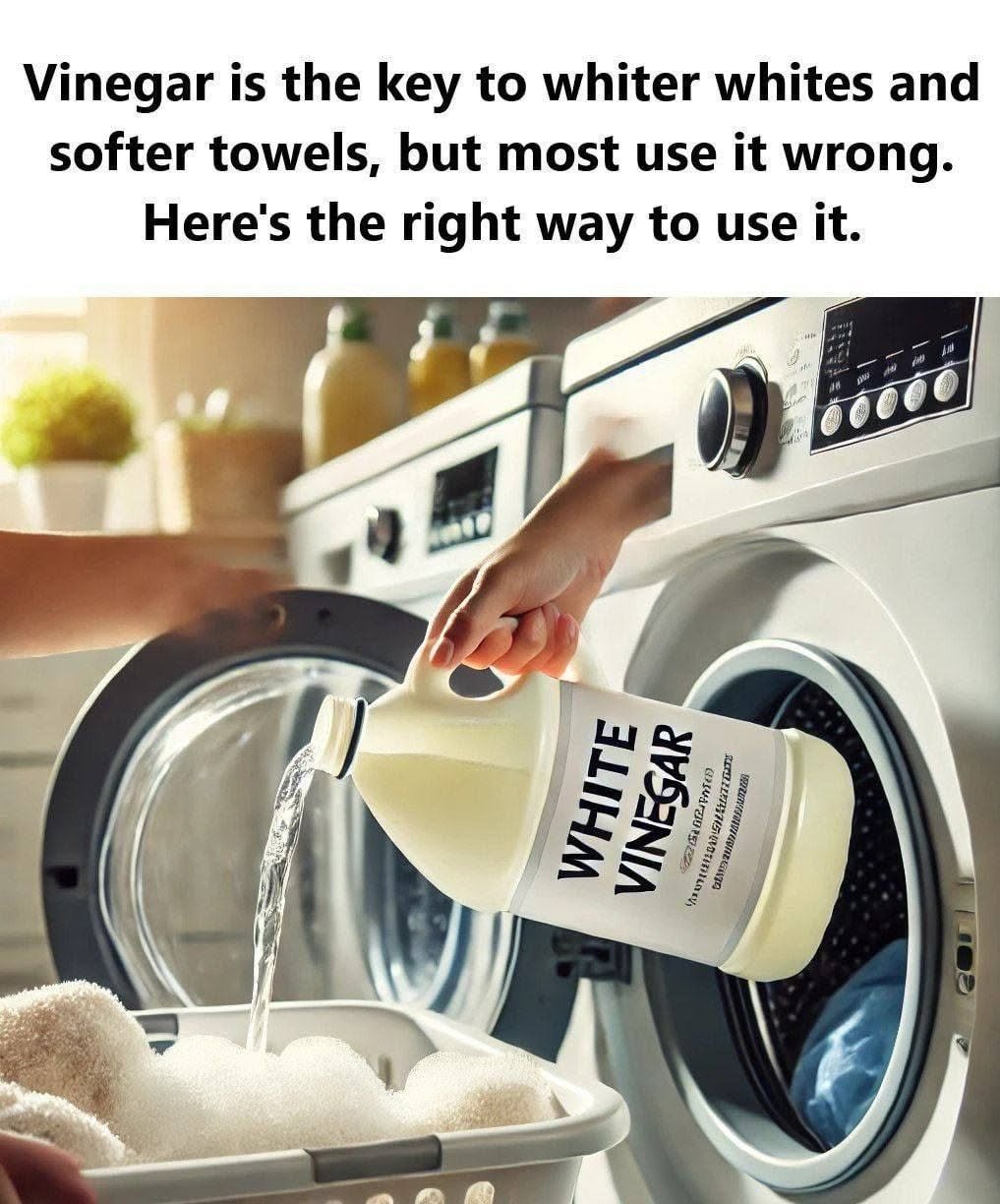
Vinegar: The Key to Whiter Whites and Softer Towels — Here’s the Right Way
White vinegar can be useful in the laundry room, especially for reducing detergent residue and odors. But it isn’t a miracle bleach, and using it incorrectly can damage some materials or create dangerous chemical fumes.
1. Use White Distilled Vinegar
Choose plain distilled white vinegar, not colored or flavored vinegar.
2. Add It to the Rinse Cycle
For a typical household washing machine, add about ½ cup (120 ml) of white vinegar to the fabric-softener compartment, following your machine’s instructions.
This allows it to be released during the rinse rather than mixing directly with concentrated detergent.
3. Don’t Pour Vinegar Directly on Clothes
Undiluted vinegar sitting directly on fabric may potentially damage delicate materials or dyes over time. Using the dispenser is preferable.
4. Great for Towels
Towels can become stiff when detergent and fabric-softener residue builds up. Vinegar in the rinse cycle can help remove some of that residue, leaving towels feeling cleaner and less coated.
5. Don’t Expect Vinegar to Bleach Whites
Vinegar isn’t a substitute for chlorine bleach or a proper oxygen-based laundry whitener. If white clothing has become gray or heavily stained, use a laundry product designed for whitening and follow its label.
6. Avoid Mixing Vinegar With Bleach
Never mix vinegar with chlorine bleach. The combination can produce dangerous chlorine gas.
Also avoid mixing vinegar with other strong cleaning chemicals unless the product instructions specifically say the combination is safe.
7. Be Careful With Delicate Fabrics
Check the care label before using vinegar. Items made from delicate or specialty materials may require different cleaning methods.
8. Don’t Overuse It
More vinegar doesn’t necessarily mean cleaner laundry. Frequent or excessive use isn’t needed for ordinary washing.
9. Skip Fabric Softener for Some Towels
Traditional fabric softeners can coat towel fibers and reduce their absorbency. If fluffy, absorbent towels are your goal, consider using less fabric softener—or avoiding it altogether.
10. Use the Right Amount of Detergent
If clothes or towels feel stiff, the problem may simply be too much detergent. Follow the detergent manufacturer’s recommended amount, particularly if you have a high-efficiency washing machine.
A Simple Laundry Routine
Detergent in the detergent compartment → normal wash cycle → white vinegar in the fabric-softener compartment during the rinse → thorough drying.
Bottom Line
White vinegar can be a useful laundry aid for odor and detergent residue, especially with towels. But it doesn’t magically whiten clothes, and it should never be mixed with chlorine bleach. For the best results, use the correct detergent amount and follow the care label on your fabrics.