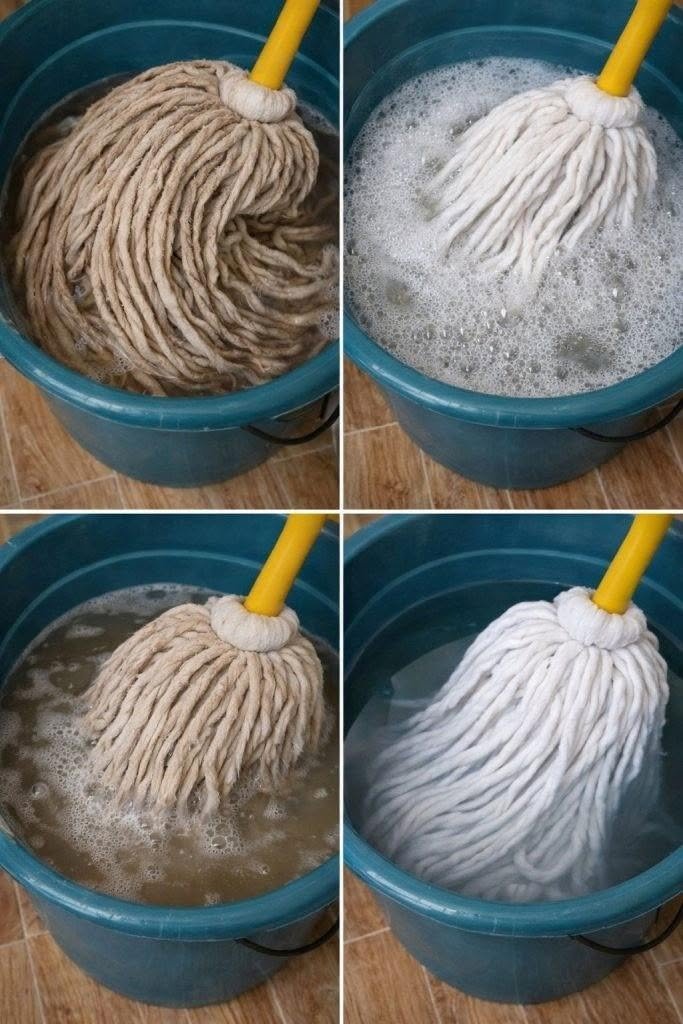
🧹 Very head can become surprisingly dirty over time. It picks up grease, food residue, dust, hair, and grime from the floor, and simply rins Dirty Mop? Don’t Throw It Away—One Simple Ingredient Can Help Make It Look Like New Again
A mop head can become surprisingly dirty over time. It picks up grease, food residue, dust, hair, and grime from the floor, and simply rinsing it under the tap often isn’t enough.
The good news is that you usually don’t need to buy a new mop every time it looks dirty. With proper washing and one inexpensive household ingredient, you can often remove much of the built-up grime and unpleasant odor.
The ingredient commonly recommended for this trick is white vinegar.
🧴 What You’ll Need
- A dirty washable mop head
- Warm or hot water
- Regular laundry detergent or dishwashing liquid
- White distilled vinegar
- A bucket or large basin
- An old brush, if the mop is heavily soiled
- Clean water for rinsing
If your mop head is removable, take it off the handle before cleaning.
🪣 Step 1: Remove Loose Dirt First
Don’t immediately soak a heavily dirty mop.
First, rinse it thoroughly with running water to remove loose dirt, hair, dust, and debris.
If necessary, wear household gloves and remove tangled hair or debris by hand.
This makes the subsequent cleaning much more effective.
🧼 Step 2: Soak It in Warm Water and Detergent
Fill a bucket with warm water and add a small amount of detergent.
Place the mop head into the solution and let it soak for approximately 15–30 minutes.
For a very greasy mop, gently work the fibers with your hands or use an old soft brush to loosen the accumulated grime.
Don’t mix multiple cleaning chemicals together. In particular, never mix vinegar with chlorine bleach.
🍶 Step 3: Add White Vinegar
After the initial wash, you can use white vinegar as an additional deodorizing and cleaning step.
Add roughly ½ to 1 cup (120–240 mL) of white vinegar to a bucket of water, depending on the size of the bucket.
Soak the mop head for around 15–30 minutes.
Vinegar’s acidity can help with mineral deposits and some odors, although it isn’t a disinfectant that should be relied upon to kill all disease-causing microorganisms.
🚿 Step 4: Rinse Extremely Well
This step is important.
Rinse the mop repeatedly with clean water until the water runs clear and you can no longer feel detergent in the fibers.
Leftover detergent can actually attract dirt and leave the mop feeling stiff or sticky.
☀️ Step 5: Dry It Completely
Don’t put the mop away while it’s damp.
Squeeze out as much water as possible and hang the mop somewhere with good airflow and, when practical, sunlight.
Allow it to dry completely before storing it.
A damp mop left in a dark bucket or closet can develop a musty odor and provide a favorable environment for microbial growth.
🧽 What If the Mop Is Extremely Dirty?
For a mop that hasn’t been washed for a long time, one cleaning may not be enough.
You can repeat the detergent wash rather than simply adding more vinegar.
A useful sequence is:
Rinse → detergent soak → scrub → rinse → vinegar-water soak → rinse again → completely dry.
The detergent does much of the work of removing grease and dirt. Vinegar is better viewed as an optional additional cleaning/deodorizing step, not a miracle ingredient that sterilizes the mop.
⚠️ Important: Don’t Mix Vinegar With Bleach
This deserves special attention.
Never combine vinegar and bleach.
Mixing an acid such as vinegar with chlorine bleach can produce toxic chlorine gas, which can seriously irritate or damage the eyes and respiratory system.
If you’ve previously used bleach on the mop, rinse it extremely thoroughly with plenty of clean water before considering any other cleaning product—and the safest approach is to follow the manufacturer’s cleaning instructions.
Also avoid mixing vinegar with other commercial cleaners unless the label specifically says the combination is safe.
🧺 Can You Put the Mop Head in the Washing Machine?
Some removable microfiber or cotton mop heads are machine washable.
If the manufacturer’s instructions allow it, washing the mop head separately can be an excellent option.
A practical routine is:
- Remove loose dirt.
- Wash according to the manufacturer’s instructions.
- Use the recommended amount of detergent.
- Don’t overload the machine.
- Dry completely before storing.
Avoid fabric softener on microfiber mop heads because it can coat the fibers and reduce their ability to pick up dirt and absorb liquid.
🧹 Don’t Forget the Mop Handle and Bucket
Cleaning only the mop head isn’t enough.
The bucket and handle can also accumulate grime.
After washing the mop:
- Empty the dirty water.
- Wash the bucket with detergent.
- Rinse it thoroughly.
- Wipe the handle.
- Allow everything to dry completely.
Otherwise, you’re essentially putting a clean mop back into a dirty container.
🏠 How Often Should You Wash a Mop?
That depends on how frequently you mop and what you’re cleaning.
If you mop frequently, wash the mop head after each use or as recommended by the manufacturer, particularly after cleaning kitchens, bathrooms, spills, or areas contaminated with bodily fluids.
Never leave a used mop sitting wet for days.
The faster it dries, the less likely it is to develop that characteristic unpleasant “dirty mop” smell.
🌟 The Bottom Line
A dirty mop doesn’t necessarily need to go in the trash.
Try this simple routine:
Rinse away dirt → soak with warm water and detergent → scrub → rinse → optionally soak in diluted white vinegar → rinse thoroughly → dry completely.
The most important part isn’t a secret ingredient—it’s proper washing and thorough drying.
And if the mop head is permanently stained, falling apart, has a persistent foul odor despite repeated washing, or can no longer be cleaned effectively, replacing it may ultimately be the more hygienic choice.