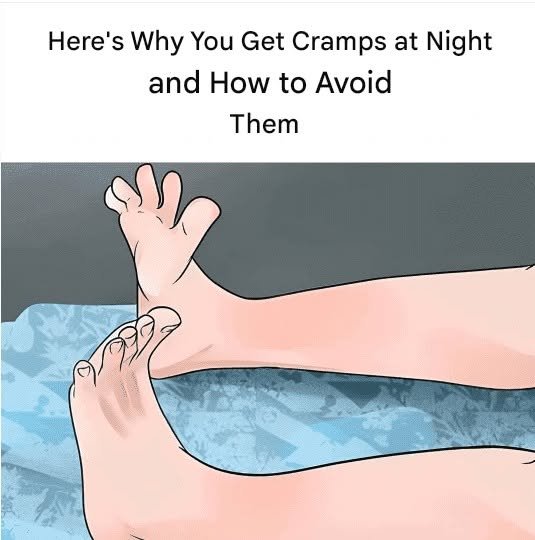
This Is Why We Get Cramps at Night: What Your Body May Be Telling You
Few things are more frustrating than being woken from a deep sleep by a sudden, painful cramp in your calf or foot. One moment you’re comfortable common, especially among middle-aged and older adults. In most cases, they are not dangerous. But if they happen frequently, become severe, or appear alongside other symptoms, in bed, and the next your muscle feels hard, tight, and almost impossible to relax.
Nighttime leg cramps are very common, especially among middle-aged and older adults. In most cases, they are not dangerous. But if they happen frequently, become severe, or appear alongside other symptoms, they can sometimes point to an underlying problem that deserves attention.
So why do cramps seem to strike at night, when you’re doing absolutely nothing?
The answer is more complicated than simply “you need more potassium.”
1. Your Muscles May Be Tired From the Day
One of the most common contributors is muscle fatigue.
A long day of walking, standing, climbing stairs, exercising, gardening, or physical work can leave your muscles tired. Sometimes you don’t notice the fatigue until you’re lying still at night.
Sudden changes in activity can make this more likely. If you’ve recently started exercising or dramatically increased your walking, your muscles may need time to adapt.
Gradually increasing activity and allowing adequate recovery can help.
2. Your Sleeping Position May Play a Role
When you sleep, your feet may naturally rest in a position where the toes point downward. This keeps the calf muscles somewhat shortened.
For some people, remaining in this position for a prolonged period may make a cramp more likely.
You may notice that your cramps happen after you’ve been asleep for several hours rather than immediately after going to bed.
Gentle stretching before bedtime and changing your position when you wake can sometimes help.
3. Dehydration Can Contribute
Not drinking enough fluid may make muscles more prone to cramping, particularly if you’ve lost a lot of fluid through sweating, fever, vomiting, or diarrhea.
That’s why it’s useful to stay appropriately hydrated throughout the day.
However, don’t assume every cramp means you should drink huge amounts of water before bed. That can simply result in more nighttime bathroom trips.
And people with certain heart, kidney, or liver conditions may need to follow specific fluid restrictions.
4. Electrolytes Aren’t the Whole Story
Potassium, magnesium, calcium, and sodium are important for normal nerve and muscle function.
This has led to a popular belief that nighttime cramps automatically mean you’re deficient in magnesium or potassium.
That’s not necessarily true.
Electrolyte abnormalities can contribute to muscle cramps, but many people with nighttime leg cramps do not have a simple mineral deficiency.
Taking large doses of supplements without knowing whether you need them can also be harmful.
If cramps are persistent, a healthcare professional can decide whether blood tests or other evaluation are appropriate.
5. Some Medications Can Make Cramps More Likely
Certain medications can contribute to muscle cramps or other muscle symptoms in some people.
If your cramps began shortly after starting a medication or became noticeably worse after a dose change, tell your doctor or pharmacist.
Don’t stop a prescribed medication on your own. Sometimes a medication is essential, and the solution may be changing the dose, timing, or treatment rather than simply discontinuing it.
6. Aging Can Increase Nighttime Cramps
Nighttime leg cramps become more common as people get older.
Changes in muscle mass, flexibility, activity levels, circulation, nerves, and medications can all contribute.
But there’s an important distinction between common and unavoidable.
If you’ve had occasional cramps for years, they may simply be a recurring nuisance.
If you suddenly begin having severe cramps every night, it’s worth investigating what changed.
7. Nerve Problems Can Cause More Than Cramps
Your nerves control muscle contractions. When nerves are irritated or damaged, you may experience abnormal muscle activity.
If cramps occur together with:
- Numbness
- Tingling
- Burning sensations
- Weakness
- Loss of sensation
- Problems with balance
you should discuss the symptoms with a healthcare professional.
Diabetes is one possible cause of nerve problems, but it is certainly not the only one.
8. Circulation Problems Can Sometimes Be Involved
Circulation problems can produce leg discomfort, although not every cramp is caused by poor circulation.
Peripheral artery disease, for example, can cause aching or cramping in the legs, particularly when walking, which often improves after resting.
Other warning signs may include cold feet, changes in skin color, slow-healing sores, or persistent pain.
If these symptoms accompany your cramps, medical evaluation is important.
9. What to Do When a Cramp Hits
When a cramp suddenly wakes you up, try not to panic.
For a calf cramp, gently straighten the leg and slowly pull the toes toward your face. This stretches the calf muscle.
If you can safely stand, carefully putting weight on the affected leg and walking slowly may also help.
You can gently massage the cramped area as it begins to relax.
Don’t violently force the muscle into a stretch. A slow, controlled stretch is usually more comfortable.
The muscle may remain tender for several hours afterward.
10. Stretching Before Bed May Help
If you frequently experience cramps, consider adding gentle stretching to your bedtime routine.
A simple calf stretch against a wall can be useful. Stand facing the wall, place your hands against it, keep one leg behind you with the heel on the floor, and gently lean forward until you feel a comfortable stretch.
Hold the stretch without bouncing.
The goal isn’t to force flexibility. It’s simply to give the muscles a gentle stretch before they spend several hours at rest.
11. Be Careful With “Miracle” Remedies
Internet advice often claims that a particular food, drink, mineral, or supplement will permanently eliminate nighttime cramps.
Be skeptical.
Some remedies may help individual people, but there isn’t one universal cure because nighttime cramps can have many different causes.
Magnesium supplements, for example, aren’t guaranteed to solve ordinary nighttime leg cramps unless a deficiency or another specific reason is involved.
And excessive supplementation can create health problems of its own.
Finding the cause is more useful than randomly taking supplements.
12. When Cramps Shouldn’t Be Ignored
Occasional nighttime cramps are usually harmless.
But make an appointment with a healthcare professional if your cramps:
- Happen frequently or almost every night
- Are becoming increasingly painful
- Regularly disrupt your sleep
- Continue for a long time after the muscle relaxes
- Occur with weakness or numbness
- Started after a new medication
- Occur with significant swelling or skin changes
There is also one situation that deserves urgent attention.
If one leg suddenly becomes swollen, warm, red, and painful, particularly if you also develop chest pain or difficulty breathing, don’t assume it’s a simple muscle cramp. Seek urgent medical care because these symptoms can occur with a potentially dangerous blood clot.
The Bottom Line
Nighttime leg cramps don’t necessarily mean your body is seriously ill.
They can happen because of muscle fatigue, prolonged positioning, aging, dehydration, certain medications, nerve problems, or other medical conditions. Sometimes there is no obvious cause at all.
The mistake is assuming that every cramp means you need more magnesium or potassium.
Instead, pay attention to the pattern.
If you occasionally wake up with a calf cramp after an unusually active day, gentle stretching, appropriate hydration, and recovery may be enough.
But if you’re being awakened night after night—or if cramps are accompanied by numbness, weakness, swelling, significant pain, or other unusual symptoms—it’s time to look beyond the cramp itself.
Your nighttime cramps may be harmless, but persistent changes are worth understanding rather than simply accepting as “part of getting older.”