This Is Why We Get Cramps at Night: 10 Real Reasons Behind Painful Nighttime Leg Cramps
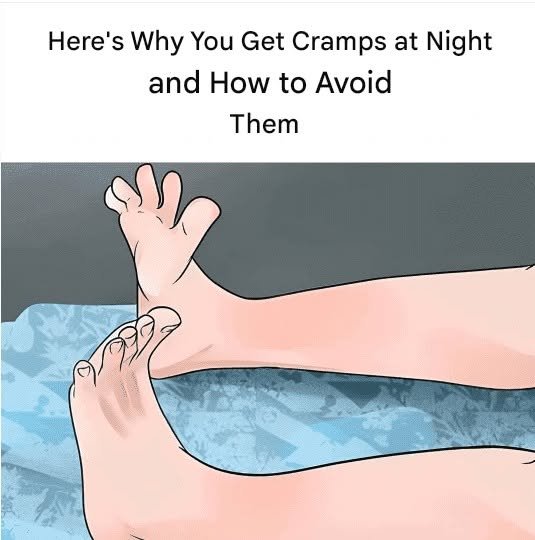
Few things are more frustrating than finally falling asleep and then suddenly waking up with an intense, painful contraction in your calf or foot. The muscle becomes hard and tight, and for several seconds—or sometimes minutes—you may feel as though you can’t make it relax.
Nighttime leg cramps are extremely common, especially as we get older. They are usually brief and harmless, but frequent cramps can interfere with sleep and leave your legs sore the next morning.
So why do they happen at night?
The surprising answer is that there isn’t one single cause. A number of factors can make muscles more likely to contract involuntarily while you’re resting.
1. Your Muscles May Be Tired From the Day
One of the simplest explanations is muscle fatigue.
If you’ve spent the day walking, climbing stairs, exercising, standing for long periods, gardening, doing housework, or performing physically demanding work, your leg muscles may become fatigued.
You might not notice anything unusual while you’re busy during the day. Once you lie down and your muscles are no longer being used, however, an involuntary contraction can occur.
This is one reason cramps may appear after a particularly active day.
If you’ve recently increased your exercise routine, increase your activity gradually rather than suddenly demanding much more from your muscles.
2. Staying in One Position for Too Long
Your sleeping position may also contribute.
When a muscle remains shortened for a long period, it may become more susceptible to cramping. Some people notice cramps when their feet are pointed downward while sleeping.
Long periods of sitting during the day can also contribute to stiffness and reduced movement.
Gentle movement throughout the day and light stretching before bedtime may help some people.
3. Dehydration Can Make Cramps More Likely
Not drinking enough fluids can contribute to muscle problems, particularly when you’ve lost substantial amounts of fluid through sweating, fever, vomiting, or diarrhea.
When you’re dehydrated, your body’s normal fluid and electrolyte balance can be affected, and muscles may become more prone to abnormal contractions.
However, it’s important not to assume that every nighttime cramp means you simply need to drink more water.
People with certain heart, kidney, or liver conditions may have specific fluid restrictions. If you’ve been told to limit fluids, follow your healthcare professional’s instructions.
4. Electrolyte Problems May Sometimes Be Involved
You’ve probably heard that leg cramps mean you need more potassium or magnesium.
The truth is more complicated.
Minerals such as potassium, magnesium, calcium, and sodium play important roles in normal nerve and muscle function. Significant disturbances can contribute to muscle cramps.
But taking a magnesium or potassium supplement isn’t automatically the correct solution.
Electrolyte abnormalities can result from illnesses, fluid loss, certain medications, kidney problems, and other conditions.
If your cramps are frequent or severe, a healthcare professional can determine whether testing is appropriate.
5. Certain Medications Can Contribute
Some medications are associated with muscle cramps in certain people.
For example, medicines that affect fluid balance or certain cholesterol-lowering medications may sometimes be associated with muscle symptoms.
If your cramps began soon after starting a new medicine or became worse after your dose changed, mention this to your doctor or pharmacist.
But don’t stop a prescribed medication on your own.
Your healthcare professional can determine whether the medication is actually contributing and whether a different treatment is appropriate.
6. Getting Older Can Increase the Risk
Nighttime leg cramps become more common with age.
As we get older, muscle mass, flexibility, physical activity, circulation, nerve function, and medication use can all change.
That doesn’t mean painful cramps are something you simply have to accept.
If cramps suddenly become frequent after years without them, become significantly more severe, or interfere with your sleep several nights a week, it’s worth discussing them with a healthcare professional.
7. Nerve Problems Can Cause Cramping
Your nerves control the signals that tell muscles when to contract and relax.
If nerves become irritated or damaged, abnormal sensations and muscle activity can occur.
A person may experience cramps along with:
- Tingling
- Burning
- Numbness
- Muscle weakness
- Pins-and-needles sensations
- Changes in sensation
Diabetes is one condition that can affect nerves, but there are many other possible causes.
If you regularly experience cramps together with numbness or weakness, don’t simply assume it’s ordinary aging.
8. Circulation Problems Deserve Attention
Circulation problems can also cause leg discomfort, although they aren’t responsible for every nighttime cramp.
Peripheral artery disease, for example, can cause pain or cramping during walking that improves after resting.
Other symptoms can include cold feet, changes in skin color, slow-healing wounds, or reduced pulses.
If you’re experiencing persistent leg pain or changes in your feet along with cramping, a medical evaluation is appropriate.
9. Stretching May Help—But Do It Gently
When a cramp strikes, your first instinct may be to massage the muscle or try to force it straight.
A gentler approach is usually better.
For a calf cramp, try slowly straightening your leg and gently pulling your toes toward your face. If you’re able to stand safely, carefully putting weight on the affected leg and walking slowly can also help.
Massage the cramped muscle as it begins to relax.
Don’t aggressively stretch a muscle that is extremely painful.
Afterward, the area may remain tender for a while.
10. contributing to the problem, correcting that deficiency may help. But taking large amounts of supplements without knowing whether you need them can create Don’t Assume You Need a “Miracle” Supplement
Nighttime cramps have created an enormous market for supplements and home remedies.
But there is no universal pill that eliminates all nighttime leg cramps.
If a genuine nutritional deficiency is contributing to the problem, correcting that deficiency may help. But taking large amounts of supplements without knowing whether you need them can create other health problems.
Potassium, in particular, can become dangerous at excessive levels in susceptible people.
The best approach is to identify the likely cause rather than guessing.
What Can You Do Before Bed?
If you frequently experience nighttime cramps, a simple bedtime routine may help.
Try gentle calf and hamstring stretches before going to bed. Stay appropriately hydrated during the day. Avoid suddenly increasing intense physical activity. Make sure your sleeping position isn’t keeping your feet pointed downward for long periods.
If you spend most of your day sitting, getting up periodically for gentle movement may also be useful.
Keep a record for a week or two if the problem is persistent. Note when the cramps occur, which muscles are affected, what you did that day, and whether you started any new medication.
That information can be surprisingly helpful when discussing the problem with a healthcare professional.
When Is a Leg Cramp More Concerning?
An ordinary nighttime cramp usually comes on suddenly and resolves after a short period.
But some symptoms shouldn’t be dismissed as a simple cramp.
Seek medical advice if your cramps are:
- Happening frequently
- Becoming progressively worse
- Preventing you from sleeping
- Associated with persistent weakness or numbness
- Associated with significant swelling
- Accompanied by changes in skin color
- Occurring after starting or changing medication
- Causing significant ongoing pain
And seek urgent medical attention if one leg suddenly becomes swollen, warm, red, and painful, particularly if you also develop chest pain or difficulty breathing. Those symptoms can indicate a potentially serious blood clot rather than an ordinary muscle cramp.
The Bottom Line
Nighttime leg cramps aren’t usually your body “warning you” that something terrible is happening.
More often, they’re related to a combination of factors such as muscle fatigue, prolonged positioning, aging, dehydration, certain medications, nerve problems, or other underlying conditions.
The important thing is to look for patterns.
If you occasionally wake up with a calf cramp after a long day of walking, there’s usually little reason to panic.
But if you’re waking up repeatedly, night after night, with severe cramps—or if the cramps are accompanied by numbness, weakness, swelling, or other unusual symptoms—don’t simply blame age.
Persistent symptoms deserve an explanation.
And before reaching for a supplement, remember: the best treatment for nighttime cramps is not necessarily more magnesium, potassium, or another product. It is finding out why your muscles are cramping in the first place.