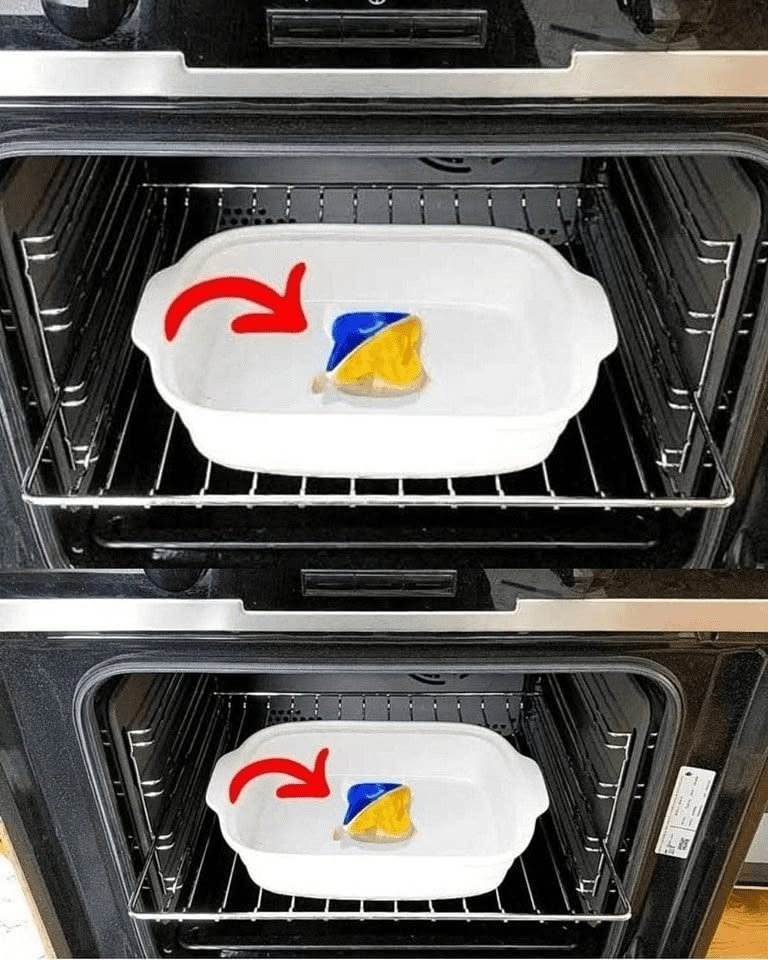
The Trick to Cleaning the Oven “Effortlessly” — Even Burnt-On Grease
A heavily soiled oven can look impossible to clean, especially when layers of burnt grease and baked-on food have accumulated. The easiest approach is not to scrub everything at once. Instead, soften the buildup first, then wipe it away.
🧽 What You’ll Need
- Dishwashing liquid
- Baking soda
- Warm water
- A spray bottle
- Non-abrasive sponge or microfiber cloth
- Plastic scraper or old plastic card
- Rubber gloves
Never mix household cleaning chemicals together, particularly bleach with ammonia or acidic products.
1. Remove the Oven Racks
Take out the racks and soak them separately in hot/warm water with dish soap.
Let them sit for 30–60 minutes. Stubborn deposits can then be loosened with a non-abrasive scrubber.
2. Make a Baking-Soda Paste
Mix approximately:
- ½ cup baking soda
- Enough water to make a thick paste
Spread a thin layer over the greasy interior surfaces.
Avoid coating:
- Heating elements
- Gas burners
- Electrical components
- Vent openings
Also check your oven manufacturer’s instructions before applying anything to its interior.
3. Let It Sit
This is the part that makes the job easier.
Leave the paste for several hours or overnight if the buildup is heavy.
The baking soda won’t magically dissolve years of carbonized grease, but it can help loosen grime so considerably less scrubbing is required.
4. Wipe Away the Grime
Use a damp microfiber cloth or sponge to remove the softened residue.
For stubborn burnt-on spots, gently lift the buildup with a plastic scraper.
Avoid aggressive metal scraping, which can scratch or damage some oven surfaces.
5. Tackle the Glass Door Carefully
For the inside of the oven door, apply a small amount of the baking-soda paste and allow it to sit before wiping.
Don’t allow liquid or paste to run into the door’s vents or between the glass panels.
If grease is trapped between the glass panes, don’t dismantle the door unless the manufacturer’s instructions specifically explain how to do it safely.
6. Rinse Thoroughly
Use a clean damp cloth several times to remove remaining baking soda and loosened grease.
Finally, dry the interior with a clean towel.
A second wipe is worthwhile because baking-soda residue can leave a white film.
🔥 What About Really Burnt-On Black Deposits?
Very old carbonized deposits can be much harder to remove.
Instead of repeatedly scrubbing, soften them and work in stages:
Warmth → cleaning solution → soaking time → gentle scraping → wiping.
For extremely stubborn buildup, a commercial oven cleaner specifically approved for your oven type may work better than homemade remedies.
Follow the product label exactly and provide adequate ventilation.
🚫 Don’t Use This Dangerous Shortcut
Never combine cleaning products in an attempt to make a stronger cleaner.
In particular, never mix bleach with ammonia or other incompatible cleaners, because dangerous gases can be produced.
Also don’t pour large quantities of water into a hot oven or onto heating elements.
✨ The Easy Maintenance Trick
Once your oven is clean, the best “effortless” method is simply not letting grease accumulate.
After cooking, once the oven has cooled enough to work safely, wipe fresh splashes and grease with a damp cloth.
Cleaning a small amount of fresh residue takes minutes; removing months of baked-on carbon can take much longer.
Bottom Line
For ordinary baked-on grease, try baking soda + water + plenty of soaking time, followed by gentle wiping and scraping. For extremely stubborn carbonized buildup, a manufacturer-approved commercial oven cleaner may be more effective.
If you tell me whether your oven is gas or electric and whether it has a self-cleaning/steam-cleaning function, I can give you the safest step-by-step method for that type.