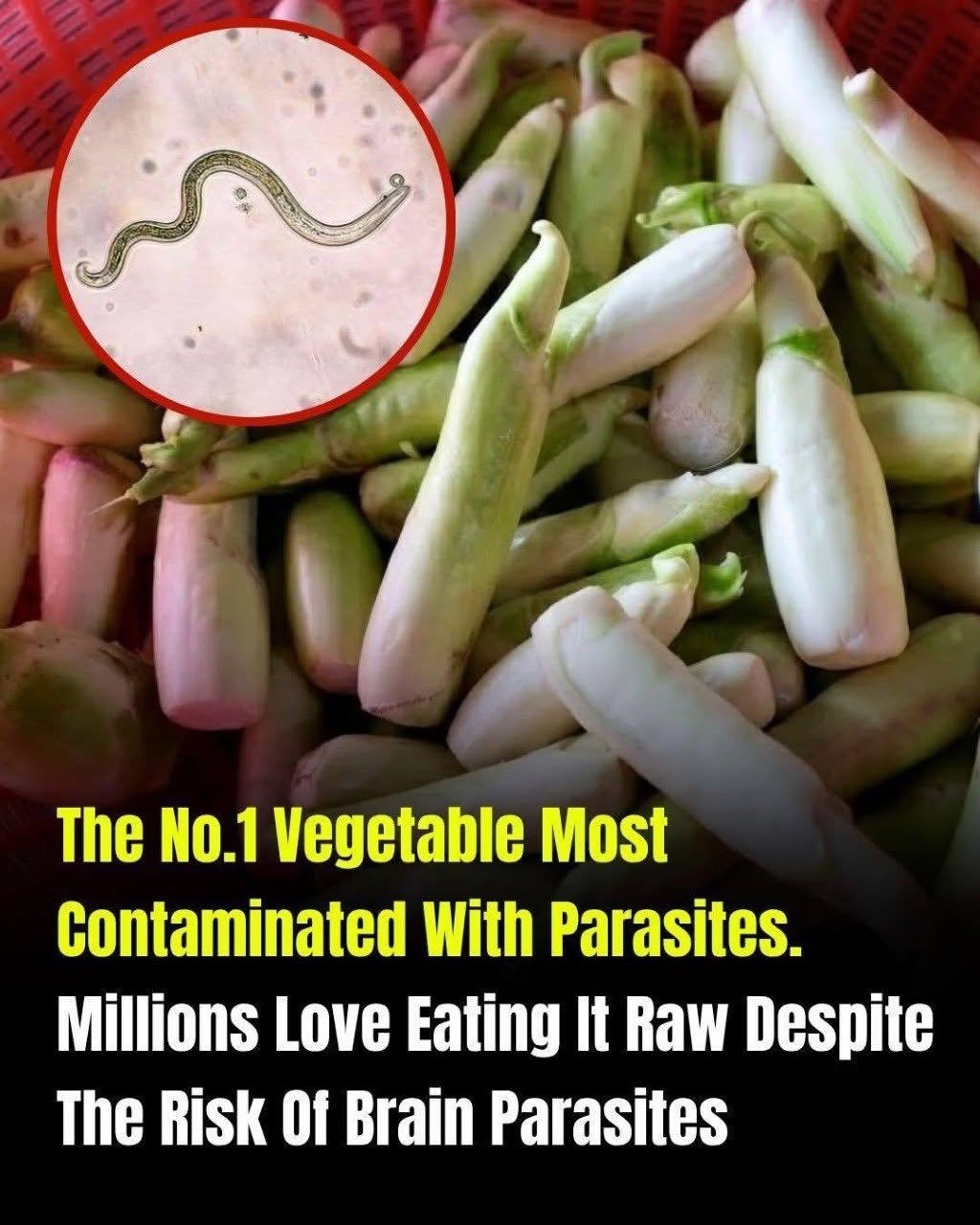
The Most Parasite-Contaminated Vegetable? Experts Warn About Hidden Risks
You may have seen alarming claims that one particular vegetable is “the most contaminated with parasites.” The reality is more complicated.
There isn’t a scientifically established single vegetable that can accurately be called “the most parasite-contaminated vegetable” worldwide. Contamination depends on where the food was grown, irrigation and soil conditions, farming practices, harvesting, transportation, handling, and whether it is eaten raw or cooked.
However, raw leafy greens deserve particular attention because their complex surfaces can trap soil, water, and microorganisms, and they are frequently eaten without a cooking step. The FDA notes that leafy greens such as lettuce and spinach can be exposed to contaminated soil, fertilizer, irrigation water, and handling during production. U.S. Food and Drug Administration+1
Why Leafy Greens Can Carry Hidden Contaminants
Vegetables don’t have to look dirty to carry microorganisms.
Contamination can occur before the vegetable reaches your kitchen through:
- Contaminated irrigation water
- Soil
- Improperly treated manure or fertilizer
- Animals in growing areas
- Harvesting and processing
- Contaminated hands or equipment
- Cross-contamination during preparation
The CDC specifically lists unwashed fruits and vegetables, including lettuce and other leafy greens, among foods that can carry harmful germs. CDC+1
Some parasites can be particularly difficult to remove because microscopic organisms or their resistant forms may adhere to irregular surfaces.
One Parasite That Has Been Linked to Fresh Produce
One important example is Cyclospora cayetanensis, the parasite responsible for cyclosporiasis.
Produce can become contaminated when it comes into contact with contaminated water or other sources of fecal contamination.
Cyclospora infection can cause symptoms such as:
- Frequent watery diarrhea
- Abdominal cramps
- Bloating
- Nausea
- Loss of appetite
- Fatigue
- Weight loss
Symptoms can persist or recur without appropriate treatment.
The CDC recommends thoroughly washing fresh produce under running water and emphasizes that washing cannot guarantee complete removal of Cyclospora. Cooking produce to an appropriate temperature provides a greater safety margin when cooking is practical. CDC
What About Lettuce?
Lettuce is frequently mentioned in food-safety discussions because it is often eaten raw and its leaves provide numerous folds and surfaces where contamination can persist.
That doesn’t mean lettuce is inherently unsafe.
In fact, lettuce and other leafy greens remain nutritious foods that can absolutely be part of a healthy diet.
The issue is handling and preparation.
Recent food-safety events have also demonstrated that contaminated leafy greens can occasionally be associated with outbreaks. That is why authorities continue to emphasize proper produce handling. AP News+1
What About Spinach and Other Leafy Vegetables?
Spinach, kale, arugula, cabbage, herbs, and other leafy vegetables can also become contaminated.
The important point is that no particular vegetable should be treated as automatically “dirty.”
A vegetable grown under safe conditions and handled properly may present much less risk than the same vegetable exposed to contaminated water or poor handling.
Risk is determined by the entire farm-to-table chain, not simply the name of the vegetable.
Does Washing Remove Parasites?
Washing helps—but it isn’t a guarantee.
The FDA recommends washing fresh fruits and vegetables thoroughly under clean running water. U.S. Food and Drug Administration
For firm produce such as cucumbers or melons, a clean produce brush can help remove contamination from the surface.
For leafy greens, separate the leaves and rinse them thoroughly under running water.
But don’t use soap or bleach
This is important.
Do not wash vegetables with dish soap, laundry detergent, bleach, or other household cleaning chemicals.
The FDA specifically advises against washing produce with soap or detergent because produce is porous and these substances can remain on or be absorbed into the food. U.S. Food and Drug Administration
Is Vinegar a Guaranteed Parasite Killer?
No.
You may see recommendations online to soak vegetables in vinegar, salt water, baking soda, or other mixtures.
These approaches shouldn’t be presented as guaranteed methods for eliminating parasites.
For Cyclospora specifically, the FDA notes that the parasite is resistant to standard chlorine-based sanitizers and that washing alone cannot reliably eliminate it. U.S. Food and Drug Administration
Proper washing is still worthwhile because it can remove dirt and reduce some contamination, but don’t assume that a homemade soaking solution makes raw produce completely risk-free.
Cooking Is the Strongest Safety Step
When a vegetable can be cooked, heat provides an important additional safety measure.
The CDC says cooking can kill Cyclospora, and recommends cooking produce to at least 158°F (70°C) for this parasite. CDC
That doesn’t mean every vegetable needs to be cooked.
It means that if you’re particularly concerned about foodborne parasites—or you’re preparing food for someone at increased risk—cooking can provide an additional level of protection.
Who Should Be Especially Careful?
Foodborne illness can be more serious for certain groups, including:
- Young children
- Older adults
- Pregnant people
- People with weakened immune systems
- People with certain chronic illnesses
The CDC identifies unwashed produce as a riskier choice for people with weakened immune systems and recommends washed produce, with cooked produce being the safer option. CDC
How to Prepare Vegetables More Safely
A few simple habits can make a meaningful difference.
1. Wash your hands first
Wash your hands with soap and water for at least 20 seconds before preparing food. CDC
2. Rinse produce under running water
Wash vegetables thoroughly rather than merely giving them a quick splash.
3. Remove damaged leaves
Discard outer leaves that are damaged, wilted, or visibly dirty.
For certain Cyclospora concerns, the FDA specifically recommends discarding the outer two or three layers of leafy greens when possible. U.S. Food and Drug Administration
4. Keep raw produce away from raw meat
Don’t allow raw meat juices to contact vegetables that will be eaten without cooking.
Use clean cutting boards, knives, counters, and utensils.
5. Refrigerate prepared produce
Cut, peeled, or cooked vegetables should be refrigerated promptly.
6. Cook when appropriate
If the vegetable is normally cooked, thorough cooking provides an additional safety barrier.
What About “Pre-Washed” Salad?
Many packaged salads and vegetables are labeled “ready to eat,” “pre-washed,” or “triple washed.”
These products are intended to be consumed without additional washing.
If you choose to wash them anyway, be careful not to introduce contamination from your sink, hands, cutting board, or utensils.
The FDA notes that washing produce labeled ready-to-eat isn’t necessary and that additional handling can potentially introduce cross-contamination. U.S. Food and Drug Administration
Don’t Let Fear Stop You From Eating Vegetables
This is perhaps the most important message.
The existence of foodborne contamination risks doesn’t mean vegetables are unhealthy.
Vegetables provide:
- Fiber
- Vitamins
- Minerals
- Plant compounds
- Water
- Important nutrients
The goal isn’t to avoid vegetables.
The goal is to handle them safely.
When Should You See a Doctor?
If you develop persistent diarrhea after eating potentially contaminated food, particularly if symptoms continue for several days, contact a healthcare professional.
Seek medical attention promptly for:
- Severe dehydration
- Bloody diarrhea
- High fever
- Severe abdominal pain
- Persistent vomiting
- Confusion or extreme weakness
- Significant or ongoing weight loss
Recent food-safety events have also demonstrated that contaminated leafy greens can occasionally be associated with outbreaks. That is why authorities continue to emphasize proper produce handling. AP News+1
What About Spinach and Other Leafy Vegetables?
Spinach, kale, arugula, cabbage, herbs, and other leafy vegetables can also become contaminated.
Risk is determined by the entire farm-to-table chain, not simply the name of the vegetable.
Does Washing Remove Parasites?
The FDA recommends washing fresh fruits and vegetables thoroughly under clean running water. U.S. Food and Drug Administration
For leafy greens, separate the leaves and rinse them thoroughly under running water.
But don’t use soap or bleach
This is important.
Is Vinegar a Guaranteed Parasite Killer?
You may see recommendations online to soak vegetables in vinegar, salt water, baking soda, or other mixtures.
People with weakened immune systems, older adults, young children, and pregnant individuals should seek medical advice sooner when significant foodborne-illness symptoms occur.
2. Rinse produce under running water
Wash vegetables thoroughly rather than merely giving them a quick splash.
3. Remove damaged leaves
Discard outer leaves that are damaged, wilted, or visibly dirty.
4. Keep raw produce away from raw meat
The Bottom Line
There is no credible universal ranking proving that one vegetable is “the most parasite-contaminated.”
However, raw leafy greens—including lettuce and spinach—can be vulnerable to contamination because they’re often eaten raw and have complex surfaces that can be difficult to clean completely. U.S. Food and Drug Administration+1
The safest approach is straightforward:
Wash your hands → rinse produce thoroughly under running water → remove damaged outer leaves → prevent cross-contamination → refrigerate properly → cook when appropriate.
And remember: washing reduces contamination but doesn’t guarantee that every parasite or pathogen has been removed. When cooking is practical, it provides an additional safety barrier. CDC+1