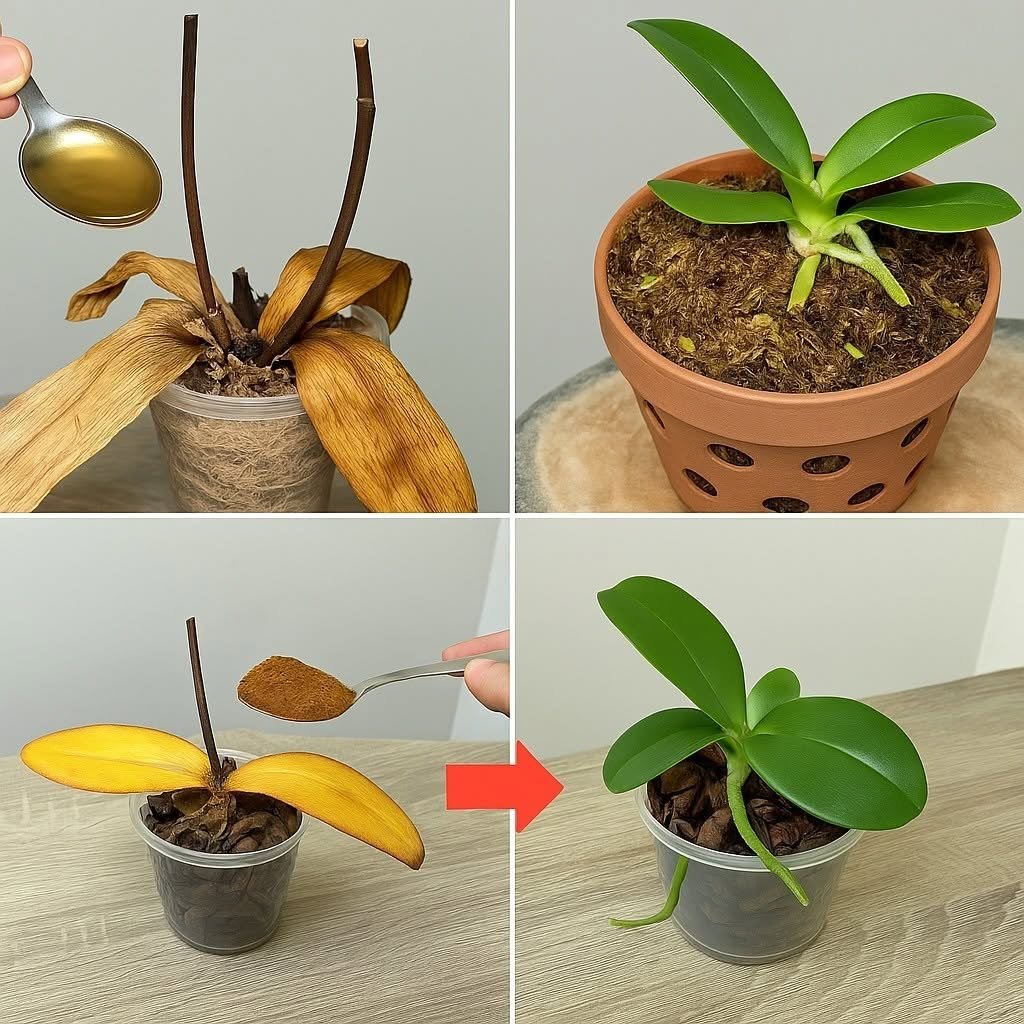
Sprinkle 1 Spoon on “Dead” Orchid Roots and Watch It Revive
There’s no magic powder that can bring truly dead orchid roots back to life. But if an orchid is struggling because of root rot, poor drainage, or dehydration, the right care can sometimes help it recover and produce new roots and flowers.
First, Check Whether the Roots Are Actually Dead
Take the orchid gently out of its pot and inspect the roots.
- Healthy roots: firm and usually green when wet or silvery-white when dry.
- Dead or rotten roots: brown or black, mushy, hollow, or collapsing when squeezed.
- Wrinkled roots: may be dehydrated but aren’t necessarily dead.
Don’t remove a root simply because it looks dry or silver. Orchid roots naturally change color depending on moisture.
What Should You Sprinkle?
Be cautious with viral advice recommending baking soda, cinnamon, fertilizer, or other kitchen powders directly on orchid roots.
More isn’t better.
For damaged roots, the most important steps are removing cinnamon as a traditional antifungal aid, use only a tiny amount on plant has very few functioning roots, it may not be able to use nutrients effectively, and excessive fertilizer can further genuinely rotten tissue, improving drainage, and providing appropriate moisture and light—not covering the roots with a mystery powder.
If you use cinnamon as a traditional antifungal aid, use only a tiny amount on a cut surface, not as a routine root treatment. Cinnamon can also be drying and isn’t a proven cure for established root rot.
How to Give a Struggling Orchid a Better Chance
- Remove the orchid from its pot.
- Gently remove the old growing medium.
- Sterilize your cutting tool.
- Trim away roots that are completely mushy, black, or hollow.
- Keep any firm, viable roots.
- Repot into a fresh, airy orchid medium, such as appropriately sized bark.
- Use a pot with excellent drainage.
- Place the orchid in bright, indirect light.
- Water thoroughly when appropriate, then allow excess water to drain completely.
- Avoid leaving the orchid sitting in water.
Don’t Fertilize a Severely Damaged Orchid
A common mistake is trying to “feed” a dying orchid with concentrated fertilizer.
If the plant has very few functioning roots, it may not be able to use nutrients effectively, and excessive fertilizer can further stress the remaining roots.
Once the plant begins producing healthy new roots and leaves, a diluted orchid fertilizer used according to its label can support growth.
Can It Bloom All Year?
Be skeptical of claims that a single ingredient will make an orchid bloom continuously all year.
Orchids have natural growth and flowering cycles. Ade, but there is no guaranteed kitchen remedy that forces year-round flowersquate light, appropriate watering, temperature, humidity, nutrition, and the particular orchid species or hybrid all influence flowering.
A healthy orchid may bloom repeatedly, but there is no guaranteed kitchen remedy that forces year-round flowers.
The Bottom Line
If your orchid looks “dead,” check the roots before giving up. Firm roots may still support recovery, while mushy and hollow roots should be removed.
The real revival trick isn’t a magic spoonful of powder. It’s proper root care, good drainage, suitable light, and careful watering. A severely damaged orchid may take weeks or months to produce new growth, so patience matters.