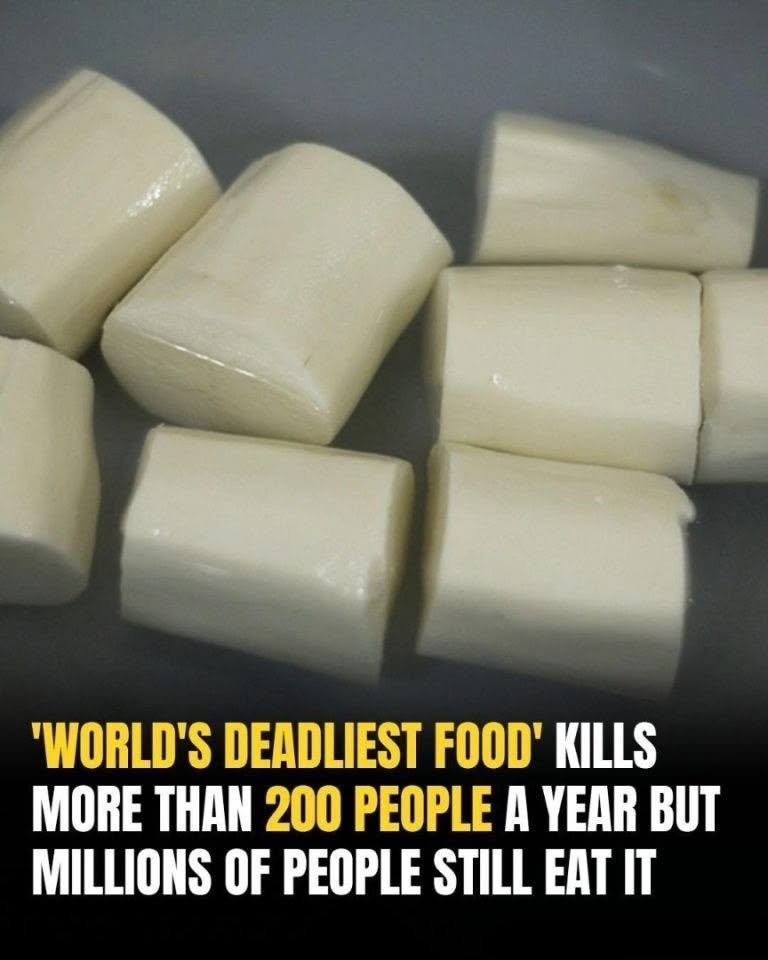
OVER 200 PEOPLE ARE KILLED BY THE “WORLD’S DEADLIEST FOOD” EVERY YEAR — BUT HUNDREDS OF MILLIONS STILL EAT IT
It looks ordinary, grows underground, and is eaten by hundreds of millions of people around the world.
Yet cassava contains naturally occurring compounds that can release cyanide if the plant is not processed correctly.
This is why cassava has sometimes been given sensational labels such as the “world’s deadliest food.”
But there is an important distinction: properly prepared cassava is a staple food for millions of people and can be safely eaten. The danger comes primarily from consuming cassava that has not been adequately processed or cooked, particularly varieties containing higher levels of cyanogenic compounds.
What Is Cassava?
Cassava is a starchy root crop that originated in South America and is now widely cultivated in tropical and subtropical regions.
It is an important source of carbohydrates and calories, particularly in parts of Africa, Asia, and Latin America.
The root can be processed into flour, starch, meals, and other foods.
Cassava is particularly valuable because the plant can tolerate relatively difficult growing conditions and can provide a dependable source of calories where other crops may struggle.
Its importance as a food crop explains why so many people continue to cultivate and eat it despite its natural toxicity.
Why Can Cassava Be Dangerous?
Cassava contains cyanogenic glycosides, naturally occurring plant compounds that can release hydrogen cyanide when the plant tissue is damaged and the compounds are broken down.
Hydrogen cyanide is highly toxic.
The amount of cyanogenic compounds varies according to the cassava variety and growing conditions. Some varieties contain considerably more than others.
This is why cassava shouldn’t simply be treated like a potato that can be eaten after minimal preparation.
Proper processing is an essential part of making many cassava products safe to eat.
The Plant Has Its Own Defense System
The compounds in cassava are part of the plant’s natural chemical defense mechanisms.
When plant tissue is damaged through cutting, crushing, grating, or chewing, chemical reactions can allow cyanide to be released.
From the plant’s perspective, these compounds can discourage animals and other organisms from consuming it.
For humans, however, inadequate processing can allow dangerous amounts of cyanide to remain.
How Is Cassava Made Safer?
Traditional food-processing methods vary around the world.
Depending on the variety and food product, cassava may be peeled, grated, soaked, fermented, dried, or cooked using methods designed to reduce cyanogenic compounds.
Different processing methods have different effects, and the appropriate procedure depends on the type of cassava and the intended food.
Simply assuming that one preparation method works equally well for every cassava product is therefore unsafe.
Commercial cassava products are generally processed according to established food-production methods.
Cooking Matters
Cooking can reduce cyanogenic compounds, but the safety of cassava depends on more than simply putting it in a pot.
Proper preparation, including appropriate peeling and processing, can be important because cyanogenic compounds may be concentrated in different parts of the plant.
For cassava varieties known to have high cyanogenic potential, relying on inadequate cooking alone can be dangerous.
This is one reason people should follow established preparation practices rather than experimenting with unfamiliar cassava varieties.
What Happens During Cyanide Poisoning?
Hydrogen cyanide interferes with the body’s ability to use oxygen at the cellular level.
A significant exposure can therefore become a medical emergency.
Symptoms of acute cyanide poisoning can include headache, dizziness, weakness, confusion, difficulty breathing, vomiting, seizures, loss of consciousness, and cardiovascular collapse.
The severity depends on the amount of cyanide exposure and other factors.
Suspected cyanide poisoning requires immediate emergency medical attention.
Chronic Exposure Is Also a Concern
The risks associated with improperly processed cassava aren’t limited to one large exposure.
Repeated consumption of cassava containing elevated cyanogenic compounds can contribute to chronic health problems.
This is particularly concerning in communities where cassava is a major dietary staple and food-processing practices are inadequate.
Good processing practices are therefore important not only for preventing acute poisoning but also for reducing long-term exposure.
Why Do People Continue Eating It?
The answer is simple: cassava is an extremely useful crop.
It produces large amounts of edible carbohydrate and can grow under conditions that aren’t ideal for some other staple crops.
For millions of people, cassava is an important part of food security.
Calling it “deadly” without explaining the preparation process is therefore misleading.
The same plant can be an important food source when properly processed and a serious poisoning hazard when consumed improperly.
Is Cassava Actually the “World’s Deadliest Food”?
That title is largely a sensational description rather than a formal scientific classification.
Many foods can become dangerous depending on preparation, quantity, contamination, or individual circumstances.
Cassava is unusual because it naturally contains compounds capable of producing cyanide, but this does not mean properly prepared cassava is inherently poisonous.
The phrase “world’s deadliest food” makes for a dramatic headline, but the real story is more interesting: a potentially toxic plant has been transformed into a major food source through generations of agricultural knowledge and food processing.
What About Cassava Flour and Tapioca?
Cassava is used to produce products such as cassava flour and tapioca starch.
Properly manufactured commercial products undergo processing designed to make them suitable for consumption.
However, consumers should still purchase cassava products from reputable sources and follow preparation instructions.
Home processing of cassava requires particular care because different varieties can contain substantially different levels of cyanogenic compounds.
The Most Important Safety Lesson
Never assume that because a food is traditional or natural, it is automatically safe in every form.
Cassava demonstrates why food preparation matters.
Properly processed cassava can be a nutritious and valuable staple. Improperly processed cassava can expose people to dangerous cyanide.
If you’re unfamiliar with a particular cassava variety or traditional preparation method, don’t improvise. Use established food-safety guidance.
Final Thoughts
Cassava is a fascinating example of how humans have learned to safely use plants that contain natural toxins.
Its cyanogenic compounds can make improperly processed cassava dangerous, but appropriate processing dramatically changes the risk.
So the real lesson isn’t that millions of people are recklessly eating a deadly food.
It’s that one of the world’s most important staple crops requires the right preparation to be safe.
Cassava deserves respect—not fear.
And if someone experiences symptoms consistent with possible poisoning after eating improperly prepared cassava, they should seek emergency medical care immediately rather than waiting for the symptoms to disappear.