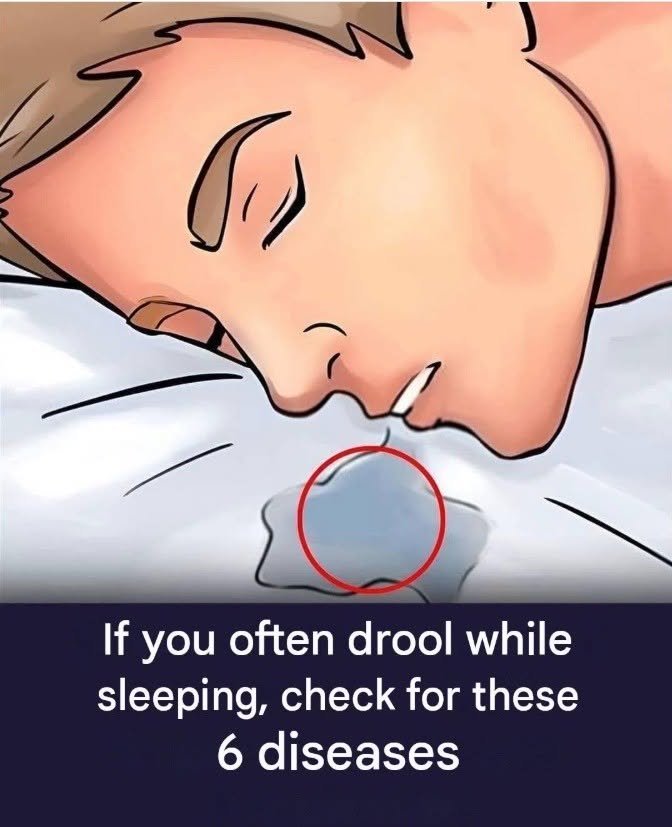
Nighttime Revelation: Why Does Your Mouth Run While You Sleep?
Waking up with a wet pillow can be embarrassing, but drooling during sleep is extremely common. It usually happens because saliva continues to be produced while you’re asleep, while swallowing and keeping the mouth closed become less frequent.
Occasional drooling is generally nothing to worry about. However, if it suddenly becomes frequent, is accompanied by choking or breathing problems, or occurs along with other neurological symptoms, it deserves medical attention.
1. Your body keeps making saliva while you sleep
Saliva doesn’t stop just because you’re asleep.
Your salivary glands continue producing fluid to keep your mouth comfortable and protect your teeth and oral tissues. During waking hours, you automatically swallow saliva many times without thinking about it.
During sleep, swallowing becomes less frequent.
If saliva accumulates faster than you’re swallowing it, some can escape from your mouth—especially if you’re sleeping on your side or stomach.
2. Your sleeping position can make a big difference
Gravity matters.
When you’re lying on your side or stomach, saliva can more easily move toward the lips and eventually onto your pillow.
Sleeping on your back may reduce drooling for some people because saliva is more likely to remain in the mouth and be swallowed.
That doesn’t mean you have to force yourself to sleep on your back, though. Your preferred sleeping position may be influenced by comfort, snoring, reflux, pain, or other factors.
3. A blocked nose can make you breathe through your mouth
This is another very common reason.
If your nose is congested because of:
- Allergies
- A cold
- Sinus problems
- Nasal inflammation
- A deviated nasal septum
you may unconsciously breathe through your mouth while sleeping.
Keeping the mouth open makes it easier for saliva to escape.
If your drooling occurs together with stuffy nose, snoring, dry mouth, or mouth breathing, treating the underlying nasal problem may help.
4. Snoring and sleep apnea can contribute
People who snore heavily may sleep with their mouths open, increasing the chance of drooling.
More importantly, obstructive sleep apnea can cause repeated interruptions in breathing during sleep and is often associated with loud snoring and mouth breathing.
Possible warning signs include:
- Loud, persistent snoring
- Gasping or choking during sleep
- Pauses in breathing noticed by a partner
- Morning headaches
- Excessive daytime sleepiness
- Difficulty concentrating
- Waking with a very dry mouth
If these symptoms are present, talk with a healthcare professional about whether a sleep evaluation is appropriate.
5. Allergies and reflux may play a role
Allergies can increase nasal congestion and mouth breathing.
Acid reflux may also irritate the throat and, in some people, trigger increased saliva production—a response sometimes called water brash.
If nighttime drooling is accompanied by heartburn, sour fluid in the mouth, coughing, throat irritation, or a sensation of acid coming up, reflux could be worth discussing with a clinician.
6. Certain medications can increase saliva
Some medications can affect saliva production or swallowing.
If you started drooling noticeably after beginning a new medication, don’t stop it on your own. Ask your doctor or pharmacist whether the medication could be contributing.
7. Less commonly, swallowing or neurological problems are involved
Persistent excessive drooling can occasionally occur when a person has difficulty controlling facial muscles or swallowing saliva.
This can happen with certain neurological disorders or after neurological injuries.
This is particularly important if drooling is accompanied by:
- Difficulty swallowing
- Speech changes
- Facial weakness
- New weakness or numbness
- Trouble controlling facial movements
- Repeated choking
Sudden facial weakness, speech difficulty, or weakness/numbness on one side of the body is an emergency and requires immediate medical attention.
How Can You Reduce Nighttime Drooling?
The best solution depends on the cause.
Try these simple measures:
- Keep your nose clear if congestion is contributing.
- Manage known allergies appropriately.
- Consider whether your sleeping position affects the problem.
- Stay adequately hydrated during the day.
- Maintain good oral hygiene.
- Review new medications with a healthcare professional if the problem started after taking them.
- If you snore loudly or frequently wake gasping, ask about evaluation for sleep apnea.
Avoid relying on mouth taping, particularly if you have nasal congestion, significant snoring, or possible sleep apnea. Blocking your mouth can be unsafe when you’re unable to breathe comfortably through your nose.
When Is Drooling Worth Getting Checked?
Occasional drooling is usually harmless.
Make an appointment with a healthcare professional if it is:
- New and persistent
- Suddenly much worse than usual
- Happening together with difficulty swallowing
- Associated with frequent choking
- Accompanied by significant snoring or gasping
- Causing recurrent skin irritation or infections around the mouth
- Occurring alongside new neurological symptoms
The Bottom Line
A wet pillow doesn’t necessarily mean something is wrong with you. Your body continues making saliva during sleep, while swallowing decreases, and sleeping with your mouth open can allow saliva to escape.
For many people, the culprit is simply sleeping position, nasal congestion, mouth breathing, or snoring.
But if drooling is new, severe, or accompanied by swallowing, breathing, or neurological problems, it’s worth finding the underlying cause rather than treating the wet pillow as merely a nuisance.