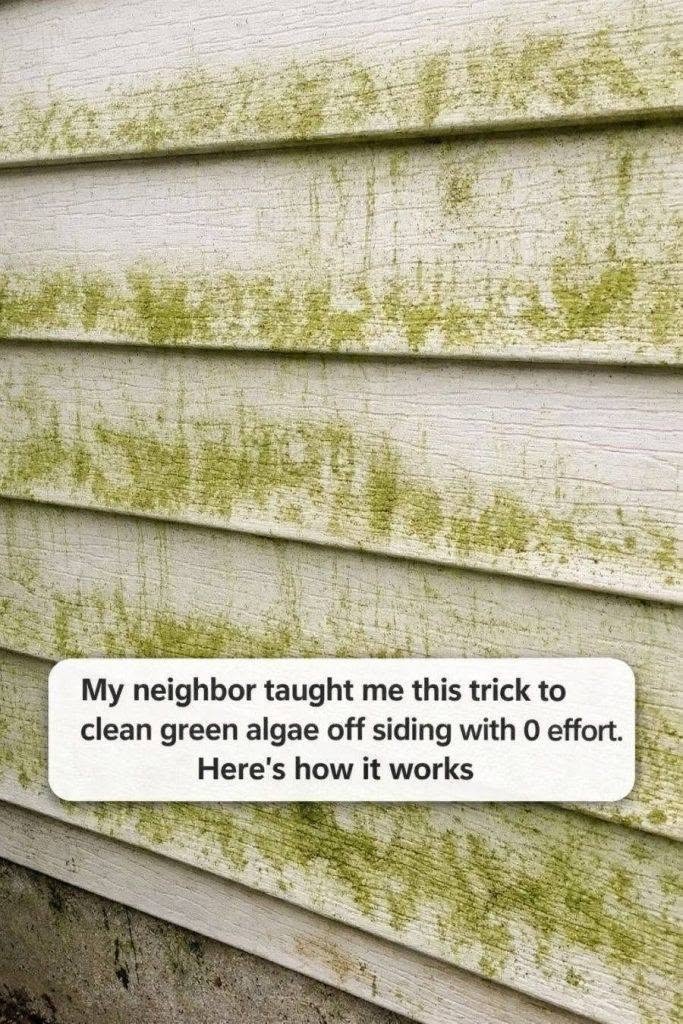
My Neighbor Taught Me This Trick to Clean Green Algae Off Siding With Almost No Scrubbing
If green algae has started taking over the siding of your house, you don’t necessarily need to spend hours scrubbing every square inch.
A simple cleaning solution, some patience, and the right technique can make the job much easier.
The secret is to let the cleaning solution do the work instead of attacking the siding with a stiff brush.
What You’ll Need
- A garden hose
- A bucket or pump sprayer
- Water
- A suitable exterior siding cleaner
- A soft-bristled brush for stubborn areas
- Protective gloves
- Eye protection
- A ladder only if absolutely necessary
For many types of siding, a commercially formulated exterior house-wash product is a convenient option because the label will specify where it can safely be used.
Step 1: Remove Loose Dirt
Before applying any cleaner, gently rinse the siding with a garden hose.
Work from the top downward so dirty water doesn’t run over areas you’ve already cleaned.
Avoid blasting the siding with excessive pressure.
High-pressure washing can force water behind siding, damage finishes, or loosen caulking, depending on the material and condition of the wall.
Step 2: Apply Your Cleaning Solution
Follow the dilution and application instructions on the siding-cleaner label.
Apply the solution to a manageable section of the wall rather than trying to cover the entire house at once.
The goal is to thoroughly wet the algae-covered surface.
Step 3: Let It Sit
This is the part that saves your arms.
Don’t immediately start scrubbing.
Give the product the amount of contact time specified on its label so it can loosen the organic growth.
Don’t allow the cleaner to dry on the siding.
If the weather is hot or windy, work in smaller sections so the surface stays appropriately wet.
Step 4: Gently Agitate Stubborn Areas
Once the algae has loosened, use a soft brush only where necessary.
You shouldn’t need to aggressively scrub the siding.
For lightly affected areas, rinsing may remove much of the loosened growth.
Step 5: Rinse Thoroughly
Rinse the siding from the top downward with clean water.
Make sure no cleaning residue remains.
Pay particular attention to areas around windows, doors, plants, and other surfaces that may have been exposed to the solution.
What About Bleach?
Bleach-based solutions are sometimes used for removing algae and mildew from exterior surfaces, but strong homemade bleach mixtures aren’t automatically safe.
The wrong concentration can damage siding, plants, clothing, or surrounding surfaces.
If you use a bleach-containing product, follow the manufacturer’s instructions carefully.
Never mix bleach with ammonia, acids, vinegar, or other household cleaners. Dangerous gases can be produced.
Protect nearby plants and rinse them with water as appropriate for the product you’re using.
What About Pressure Washing?
A pressure washer can be effective, but more pressure isn’t necessarily better.
The appropriate pressure depends on the siding material and its condition.
Too much pressure can:
- Damage the surface
- Remove paint or finish
- Force water behind panels
- Damage caulking
- Break or loosen older siding
If you’re unsure, start with a garden hose and a gentle cleaning method.
Why Does Green Algae Keep Coming Back?
Cleaning removes the existing growth, but it doesn’t necessarily eliminate the conditions that allow it to return.
Algae tends to thrive where there’s:
- Persistent moisture
- Shade
- Poor airflow
- Dirt buildup
- Nearby vegetation
If one section of your siding repeatedly turns green, look for the source of the moisture.
A leaking gutter, downspout, sprinkler, or dripping outdoor faucet may be keeping the siding damp.
Trim Back Overhanging Vegetation
Trees, bushes, and vines can shade the siding and reduce airflow.
Carefully trimming vegetation away from the house can help the surface dry faster after rain.
Don’t remove healthy vegetation unnecessarily, but creating some space around the wall can reduce persistent dampness.
Keep Gutters and Downspouts Working Properly
A clogged or leaking gutter can repeatedly soak the siding.
Check that water is being directed away from the house rather than running down the exterior wall.
Fixing the moisture problem can be just as important as cleaning the algae.
Test a Small Area First
Before applying any cleaning solution to the entire house, test it on a small, inconspicuous section.
This is particularly important with painted, older, or specialty siding.
Check for:
- Discoloration
- Streaking
- Surface damage
- Changes in the finish
If anything looks unusual, stop and check the manufacturer’s cleaning recommendations.
Different Siding Needs Different Care
Don’t assume that every exterior surface can be cleaned the same way.
Vinyl, aluminum, fiber-cement, wood, stucco, and painted surfaces can have different cleaning requirements.
Always check the siding manufacturer’s recommendations when possible.
Wood siding, in particular, may require more careful treatment to avoid damaging the finish or driving moisture into the material.
A Simple Routine
If you want to keep algae from becoming a major problem, inspect the siding periodically.
Look especially at:
- North-facing walls
- Shaded areas
- Areas beneath trees
- Around downspouts
- Near sprinklers
- Areas that remain damp after rain
Catching a small amount of growth early is much easier than waiting until an entire wall is covered.
The “Zero-Effort” Part
The trick isn’t really that algae disappears without any work.
It’s that you don’t have to do all the work with a scrub brush.
A suitable cleaner + proper contact time + gentle rinsing can do much of the heavy lifting.
The biggest mistake is usually applying a cleaner and immediately scrubbing before it has had time to work—or using excessive pressure because the first attempt didn’t seem effective.
Final Thoughts
Green algae on siding is usually more of a maintenance problem than a mystery.
Start gently.
Rinse away loose dirt, use a siding-safe cleaner according to its instructions, allow the recommended contact time, gently brush stubborn areas, and rinse thoroughly.
Then look for the reason the algae appeared in the first place.
Less moisture and better airflow can help keep your siding cleaner for longer.
And remember: the safest cleaning method depends on your siding material, so don’t use a viral DIY recipe simply because it promises “zero effort.” A little preparation can prevent a lot of damage.