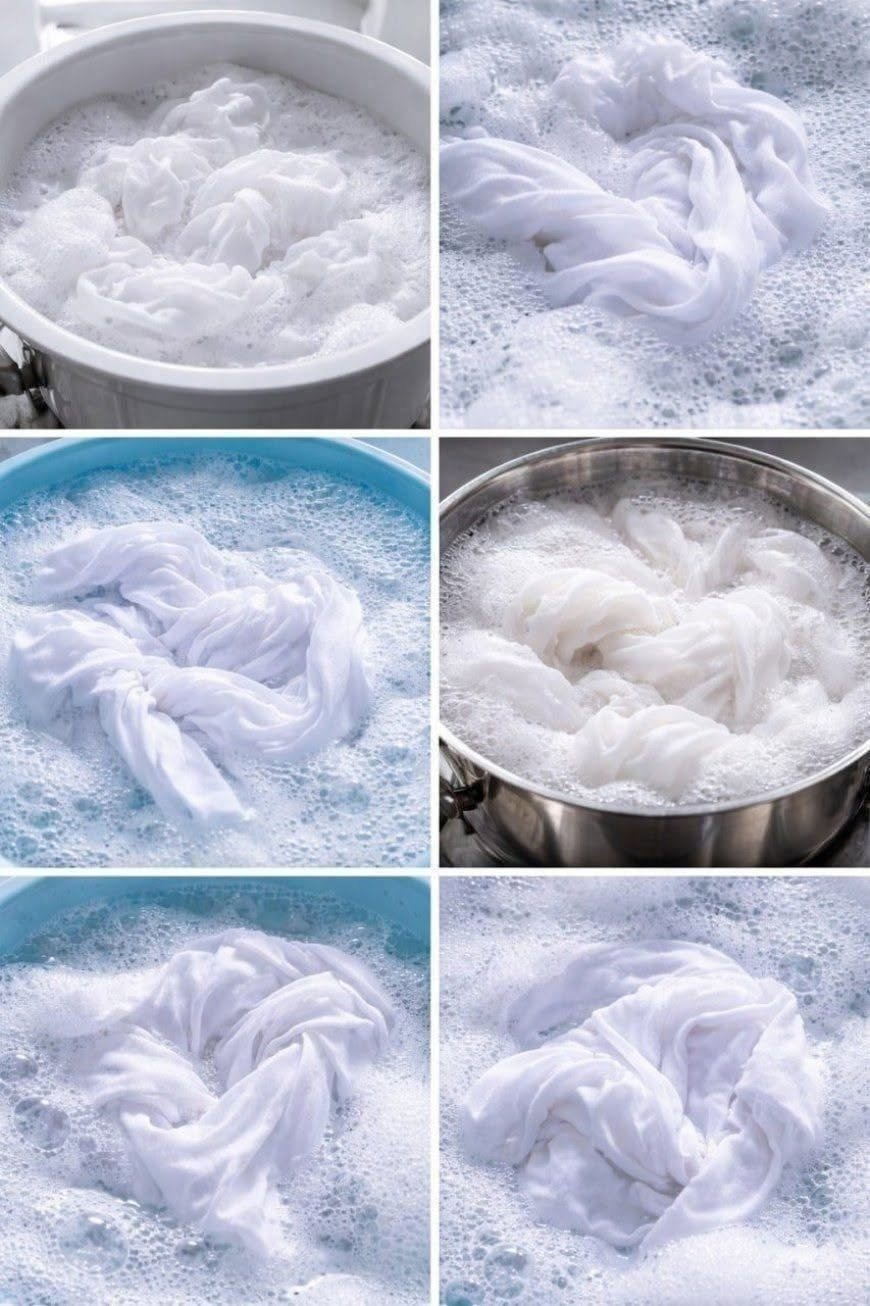
Milky-White Laundry: All You Need Is This One Ingredient
If your white clothes have started looking gray, yellow, or dull, you don’t necessarily need an expensive specialty whitening product. A simple household ingredient that can help with some laundry odors and buildup is washing soda (sodium carbonate).
Washing soda is an alkaline laundry booster that can help loosen certain types of dirt and improve the effectiveness of detergent. However, it isn’t a magical whitening treatment, and the right method depends on the fabric and the cause of the discoloration.
1. What Washing Soda Actually Does
Washing soda is different from baking soda.
Baking soda = sodium bicarbonate.
Washing soda = sodium carbonate.
Washing soda is more alkaline and is commonly used as a laundry booster. It can help detergent work more effectively, particularly in hard water, by reducing the impact of minerals that interfere with cleaning.
That can help clothes look cleaner and brighter over repeated washes.
2. How to Use It With White Laundry
For washable, colorfast fabrics, you can add a modest amount of washing soda to the washing machine along with your normal detergent, following the product’s package directions.
Don’t assume that adding more will produce whiter clothes. Excessive amounts can leave residue or be unnecessarily harsh on some materials.
For heavily soiled laundry, pretreating stains and using the appropriate wash temperature can be more important than adding extra booster.
3. Warm or Hot Water Can Make a Difference
If the garment’s care label allows it, washing whites in warm or hot water can improve removal of body oils and some types of grime.
But always check the care instructions first.
Some modern fabrics, elastic materials, delicate garments, wool, and certain blends can be damaged by high temperatures.
4. Don’t Use Washing Soda on Everything
Washing soda is relatively alkaline and isn’t appropriate for every fabric.
Be particularly cautious with:
- Wool
- Silk
- Delicate fabrics
- Garments with special finishes
- Materials with specific manufacturer cleaning requirements
For anything delicate or expensive, follow the care label rather than relying on a viral laundry recipe.
5. Don’t Confuse Washing Soda With Baking Soda
This is a very common mistake.
If a recipe specifically calls for washing soda, don’t automatically substitute baking soda and expect the same result.
Baking soda is milder and has different chemical properties. It can still be useful in laundry, but it isn’t equivalent to washing soda as a detergent booster.
6. For Yellow Underarms, Treat the Cause
White shirts often become yellow around the collar, armpits, and cuffs because of a combination of sweat, body oils, deodorant or antiperspirant residue, and repeated washing.
Simply adding a laundry booster may not remove an established stain.
A better approach is to pretreat the affected area with a suitable laundry stain treatment, allow it to work according to the product instructions, and then wash normally.
7. Avoid Chlorine Bleach Unless It’s Appropriate
Chlorine bleach can whiten certain white fabrics, but more bleach isn’t always better.
It can damage fibers, weaken fabrics, cause yellowing under some circumstances, and react dangerously with certain other cleaning products.
Never mix bleach with ammonia, acids, vinegar, or other incompatible cleaners.
If you use bleach, follow the product label and the garment’s care instructions exactly.
8. Oxygen Bleach Can Be Another Option
For many washable white and colorfast garments, an oxygen-based bleach can be useful for stains and dinginess.
Unlike chlorine bleach, oxygen bleach products generally rely on peroxide chemistry and are often marketed as color-safe, although you should still check the specific product and fabric-care instructions.
It’s a particularly useful option when whites have accumulated organic stains over time.
9. Hard Water Could Be the Hidden Problem
If your laundry repeatedly comes out looking dull despite using enough detergent, hard water may be contributing.
Calcium and magnesium minerals in hard water can interfere with detergents and contribute to residue and dull-looking fabrics.
A laundry booster designed for hard water can sometimes help more than simply increasing the amount of detergent.
10. Don’t Overload the Washing Machine
A washing machine packed completely full may not provide enough room for clothes to move freely.
That can reduce cleaning performance and leave detergent and soil behind.
Give garments enough space to circulate according to your machine’s instructions.
11. Don’t Use Too Much Detergent
It sounds logical that more detergent should produce cleaner whites, but excessive detergent can actually leave residue on fabric.
Follow the detergent manufacturer’s recommended amount and adjust according to load size and water hardness when the product instructions allow.
If your clothes feel coated or look dull after washing, detergent buildup may be part of the problem.
12. Dry Whites Properly
Drying also affects how laundry looks and smells.
If the care label permits it, sunlight can naturally brighten some white fabrics while they dry, although prolonged intense sunlight can fade or damage some materials.
Don’t leave delicate fabrics exposed to harsh sunlight for extended periods.
A Simple Bright-White Laundry Routine
For ordinary washable white cotton clothing:
- Separate whites from colors.
- Check the care labels.
- Pretreat visible stains.
- Use the recommended amount of detergent.
- Add washing soda according to its package directions if appropriate.
- Select the warmest suitable water temperature.
- Avoid overloading the machine.
- Rinse thoroughly.
- Dry according to the garment’s care instructions.
One Important Safety Rule
Never mix random laundry ingredients together.
Especially avoid combining chlorine bleach with vinegar, acids, ammonia, or other incompatible cleaners. Dangerous chemical reactions can occur.
If you’re using multiple products, read the labels and use them separately unless the manufacturer explicitly says they can be combined.
Final Takeaway
If you’re looking for the “one ingredient” behind brighter laundry, washing soda can be a useful laundry booster, particularly for improving cleaning performance and dealing with hard-water-related dullness.
But it won’t magically turn every gray or yellow garment into milky white in one wash. For the best results, combine the right booster with proper detergent dosing, stain pretreatment, suitable water temperature, and good washing habits.
And remember: always check the fabric-care label before using washing soda or any whitening product.
