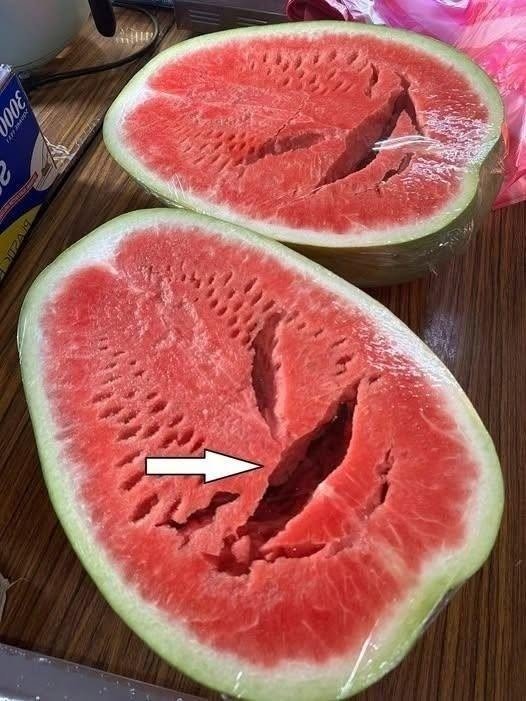
If You Open a Watermelon and See This
If you cut open a watermelon and notice yellowish streaks, hollow spaces, white patches, cracks, or unusual flesh, don’t automatically assume the fruit is spoiled. Some changes are harmless variations caused by growing conditions, while others can indicate poor quality or spoilage.
1. Yellow or Pale Streaks Inside
Occasionally, watermelon flesh can contain pale yellow or whitish areas.
This may be related to the fruit’s development and doesn’t necessarily mean it’s unsafe. If the watermelon otherwise looks fresh, smells normal, and has firm flesh, the discoloration alone isn’t enough to conclude that it has gone bad.
However, an unusual appearance combined with a bad smell, slimy texture, or extensive deterioration is a different matter.
2. Hollow Areas Inside the Flesh
You may sometimes find hollow spaces or gaps running through the watermelon.
This can happen because of irregular fruit development and is sometimes referred to as hollow heart.
The watermelon may still be perfectly edible. The texture around the hollow area may simply be less appealing.
3. White or Pale Flesh
If the inside is unusually pale rather than the expected red or pink, it may indicate that the watermelon was harvested before it was fully mature.
An underripe watermelon can have a firm texture and relatively bland or less sweet flavor.
This isn’t necessarily a safety problem, but it may not be a very enjoyable watermelon.
4. Hard White Strings or Areas
White fibrous material can occur naturally in watermelon.
Some fibrous strands are simply part of the fruit’s structure. If the flesh is otherwise fresh and juicy, a few white fibers aren’t necessarily a reason to throw it away.
If the interior has extensive discoloration along with an unpleasant odor or sliminess, however, don’t eat it.
5. Brown or Black Areas
Brown, dark, or blackened areas deserve more attention.
Small localized areas can sometimes result from bruising or damage, but soft, deteriorating, moldy, or foul-smelling flesh should be discarded.
Don’t simply cut away a small portion if the watermelon appears broadly spoiled.
6. A Strange Smell
Your nose can be a useful warning sign.
Fresh watermelon should have a mild, fresh, fruity smell.
If the cut fruit smells sour, fermented, rotten, or otherwise unpleasant, it’s safer not to eat it.
Don’t taste questionable watermelon to determine whether it’s safe.
7. Slimy or Mushy Flesh
Fresh watermelon should be juicy and relatively firm.
A slimy surface, excessively mushy flesh, or liquid that looks unusual can indicate deterioration.
When multiple spoilage signs occur together, discard the fruit.
8. Visible Mold
If you see fuzzy mold on the flesh, don’t assume that removing the visible spot makes the entire cut watermelon safe.
Watermelon has a high moisture content, allowing contamination to potentially extend beyond what you can see.
The safest choice is to discard visibly moldy cut watermelon.
9. Tiny Cracks or Internal Splitting
Internal cracks can occur during growth and don’t automatically indicate that the fruit is unsafe.
If the flesh surrounding the cracks is normal in color, smell, and texture, the watermelon may still be edible.
But cracks can also make the fruit more susceptible to deterioration, so inspect it carefully and store cut watermelon properly.
10. Seeds or Seedless “White Seeds”
If you bought a seedless watermelon, you may still find small, soft, white seed remnants.
These are normal and are generally harmless to eat.
They are immature seed structures rather than evidence that something has been injected or genetically altered in a dangerous way.
What About a Yellow Watermelon?
Some watermelon varieties naturally have yellow, orange, or even cream-colored flesh.
If the whole watermelon has an unusual flesh color but otherwise looks and smells fresh, it may simply be a different variety.
Color alone isn’t a reliable way to determine whether a watermelon is spoiled.
How to Tell if It’s Still Good
After cutting a watermelon, check several things together:
Fresh smell + firm flesh + normal appearance = generally reassuring.
Bad odor + sliminess + extensive discoloration or mold = discard it.
Also keep cut watermelon refrigerated and avoid leaving it at room temperature for extended periods.
Final Takeaway
If you open a watermelon and see white fibers, hollow spaces, pale areas, or unusual coloration, don’t panic. Many internal abnormalities are related to the fruit’s variety or growing conditions and don’t automatically make it unsafe.
What should concern you more is a combination of mold, foul odor, slimy texture, significant softening, or obvious decomposition.
When in doubt, especially with a fruit that has been cut and stored improperly, it’s better to throw it away than risk eating spoiled food.