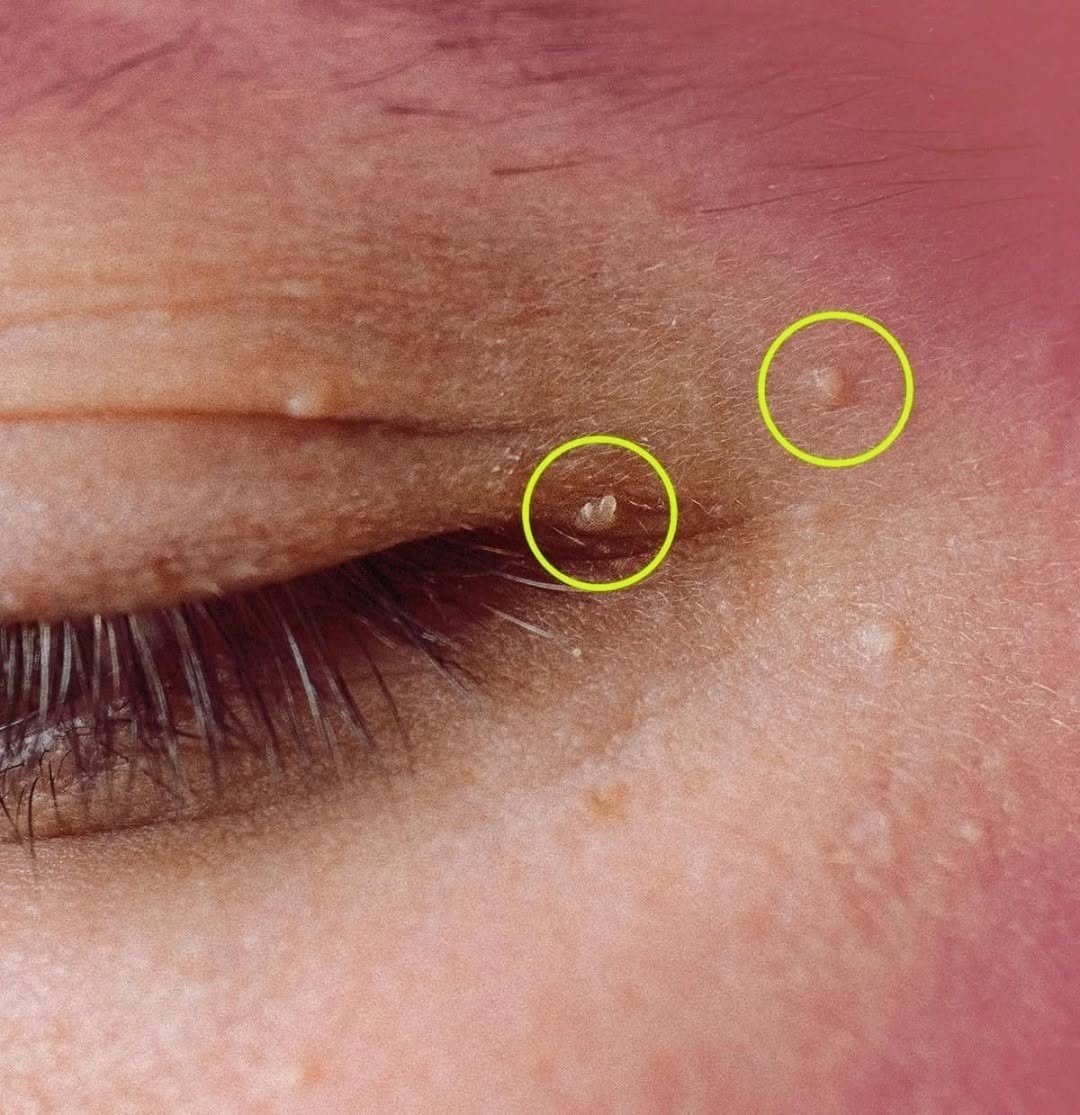
How to Get Rid of Milia: Those Tiny White Bumps Around the Skin
Milia are not fat cysts. They are tiny, firm, white or yellowish cysts filled with keratin, a protein found in the outer layer of skin. They commonly appear around the eyes, cheeks, nose, and forehead and are usually harmless.
1. Don’t Squeeze Them
Trying to pop or squeeze milia can cause scarring, infection, or skin damage, especially around the delicate eye area.
2. Keep Your Skin Clean
Wash your face gently with a mild cleanser. Avoid harsh scrubbing, which can irritate the skin without removing the milia.
3. Try Gentle Exfoliation
For some adults, products containing salicylic acid or alpha-hydroxy acids (AHAs) may help improve skin-cell turnover over time.
Start slowly, particularly if you have sensitive skin, and avoid getting these products in your eyes.
4. Consider a Retinoid
A topical retinoid such as adapalene may help prevent new milia and encourage skin-cell turnover in some people. It should be introduced gradually because irritation and dryness can occur.
Retinoids aren’t appropriate for everyone, and pregnant people should avoid topical retinoids unless specifically advised otherwise by a healthcare professional.
5. Choose Skin Products Carefully
Heavy creams and oily products may contribute to clogged pores in some people. If you frequently develop milia, consider lightweight, non-comedogenic skincare products.
6. Professional Removal Is Often Fastest
A dermatologist can safely remove an individual milium using a sterile technique. Other treatments, such as cryotherapy, chemical peels, or laser treatment, may sometimes be used depending on the location and number of lesions.
7. Give Them Time
Milia in babies often disappear naturally. In adults, they can also persist for months or longer, so professional removal may be preferable if they’re bothersome.
When to See a Dermatologist
See a healthcare professional if the bumps are new, spreading, painful, red, inflamed, or don’t look like typical milia. Not every small white bump is milia, and a dermatologist can confirm the diagnosis.
Bottom Line
Milia are generally harmless and aren’t caused by trapped fat. Don’t try to cut, puncture, or squeeze them at home. Gentle skincare may help prevent them, while a dermatologist can remove persistent milia safely and quickly.