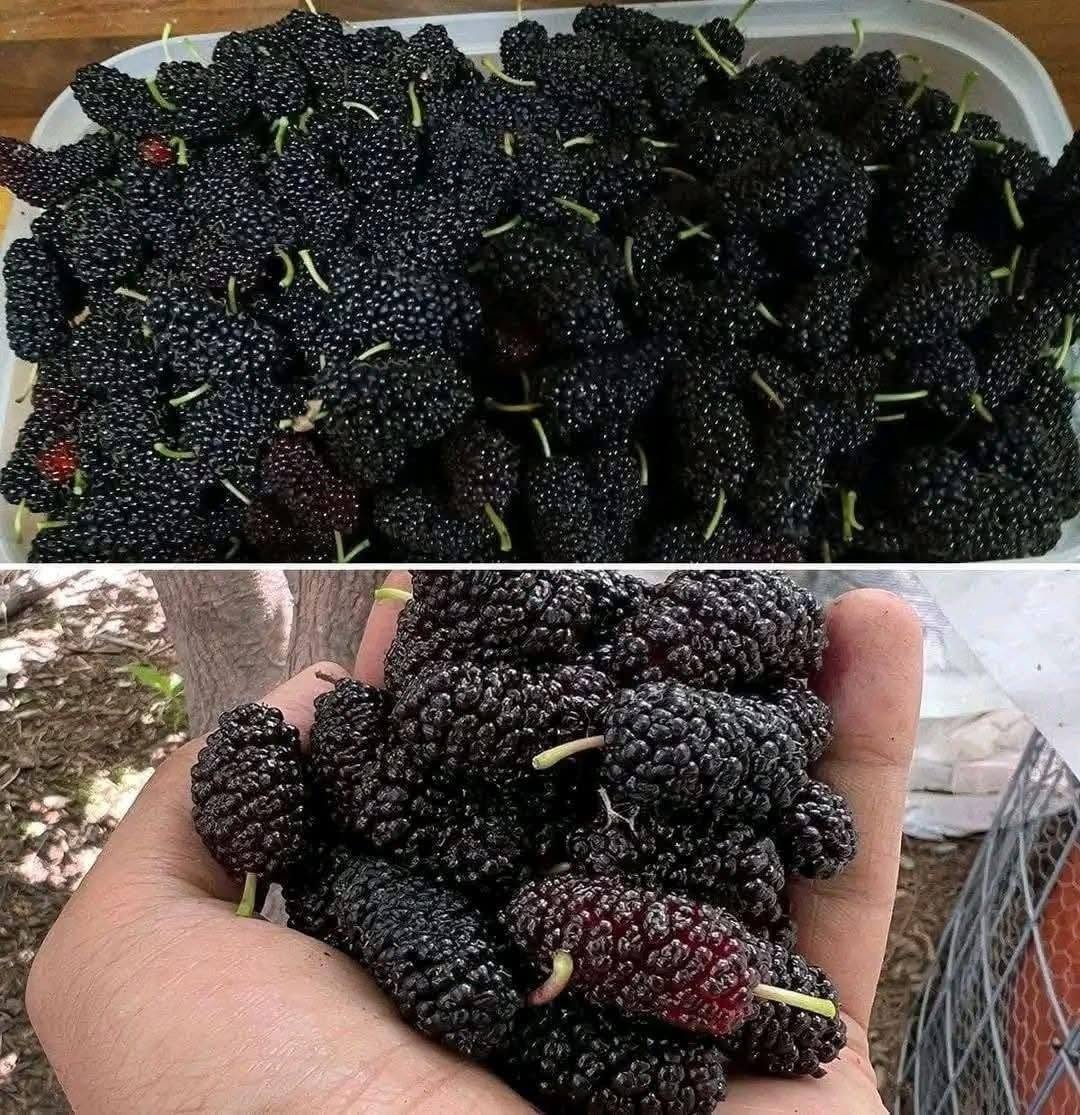
🫐 Have You Ever Tasted It? Do You Know What It’s Called? — Mulberry
Have you ever tasted a mulberry? These small, juicy fruits may look a little like elongated blackberries, but they have their own distinctive flavor. Mulberries come in several colors, including black, red, and white, and their taste can range from mildly sweet to intensely sweet depending on the variety and ripeness.
🌿 What Is a Mulberry?
Mulberries are the fruits of trees belonging to the Morus genus. They have been cultivated for centuries in different parts of Asia, Europe, Africa, and North America.
When ripe, mulberries are soft and delicate. Their color can change as they mature, depending on the variety. Black and red mulberries are often deep purple or reddish-black when fully ripe, while white mulberries can remain pale even when sweet.
😋 What Does a Mulberry Taste Like?
A ripe mulberry is usually sweet, juicy, and mildly tart.
The flavor can remind you of a combination of:
- Blackberries
- Raspberries
- Grapes
- A mild fig-like sweetness
Black mulberries tend to have a richer, sweeter flavor, while some red varieties have more noticeable tartness. White mulberries are often particularly sweet and can have a delicate honey-like flavor.
🫐 How Do You Know When It’s Ripe?
A ripe mulberry should generally be soft and juicy, rather than hard and dry.
Depending on the variety, look for:
- Deep purple, red, or black coloration
- A soft texture
- A sweet aroma
- Easy separation from the stem
Handle them gently because ripe mulberries can bruise very easily.
🍽️ How Can You Eat Mulberries?
Fresh mulberries can be eaten straight from the tree after being washed thoroughly.
You can also add them to:
- Breakfast cereals
- Oatmeal
- Yogurt
- Smoothies
- Fruit salads
- Pancakes
- Muffins
- Homemade jams and preserves
Dried mulberries are another popular option. They become considerably sweeter and chewier as their water content is removed.
💜 What Nutrients Do They Provide?
Mulberries contain fiber, vitamin C, vitamin K, and various plant compounds, including anthocyanins in darker varieties.
Their deep colors are partly associated with naturally occurring pigments that have antioxidant properties.
Like other fruits, however, mulberries should be viewed as one part of a varied diet, rather than a miracle food.
🌱 Fresh vs. Dried Mulberries
Fresh mulberries contain a lot of water and are relatively light and refreshing.
Dried mulberries are more concentrated, meaning you can consume much more fruit—and therefore more calories and natural sugar—in a small handful.
If you’re watching your calorie or carbohydrate intake, portion size matters more with dried fruit.
⚠️ A Few Things to Remember
Always wash fresh berries before eating them, particularly when they’re picked outdoors.
Also, don’t assume that every berry growing on a tree is a mulberry. If you’re harvesting wild fruit, make sure the plant has been correctly identified before eating it.
🌟 The Bottom Line
Mulberries are delicious, naturally sweet fruits with a juicy texture and a flavor somewhere between berries and grapes. Black, red, and white varieties can all taste somewhat different.
If you’ve never tried one, a perfectly ripe fresh mulberry is worth tasting—especially when it’s soft, fragrant, and naturally sweet. 🫐