Don’t Get Fooled by the Supermarkets: What You’re Really Buying With Packaged Meat
Supermarket meat can sometimes be confusing. Labels, packaging, dates, discounts, and different cuts can make it difficult to know exactly what you’re getting. But viral claims that supermarkets are secretly selling “old,” “fake,” or unsafe meat should be treated cautiously.
Here are the things worth checking before you buy.
1. 🥩 Check the Use-By or Sell-By Date
The date on meat packaging matters, but different labels mean different things depending on the country and product.
For highly perishable fresh meat, pay particular attention to the use-by date and storage instructions.
Don’t purchase packages that are past their safety date or that have clearly been stored improperly.
2. 🧊 Look at How Cold the Meat Is
Fresh meat should be kept properly refrigerated or frozen.
When shopping, avoid packages that appear to have been sitting in an improperly chilled display. After purchasing, refrigerate or freeze meat promptly rather than leaving it at room temperature for extended periods.
3. 📦 Examine the Packaging
Avoid packages that are:
- Torn or leaking
- Punctured
- Swollen or unusually bloated
- Covered in excessive liquid
- Missing important labeling
Damaged packaging can compromise food safety.
4. 👃 Don’t Rely on Smell Alone
A bad smell can indicate spoilage, but smell isn’t a reliable safety test.
Some harmful bacteria don’t necessarily produce an obvious odor.
Likewise, a slightly different smell doesn’t automatically mean meat is dangerous. Follow the product’s storage instructions and expiration/use-by information.
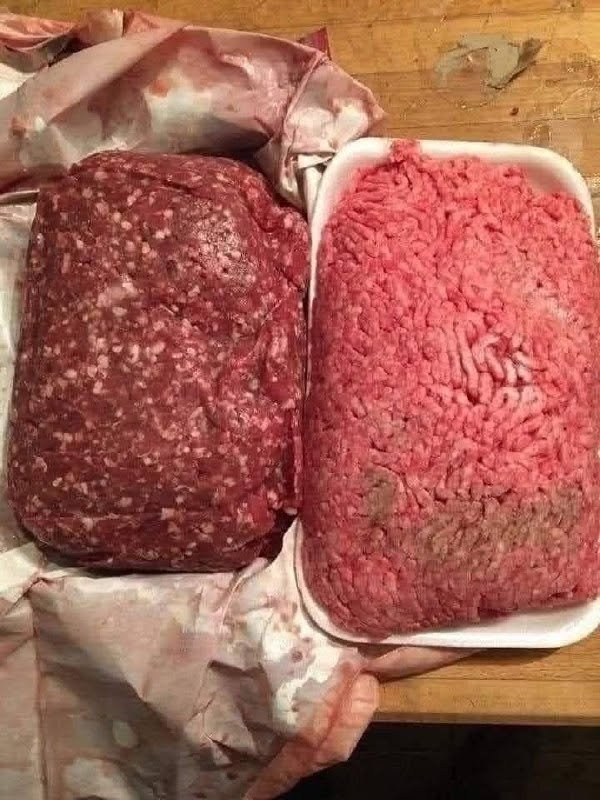
5. 🎨 Don’t Assume Color Alone Tells You Whether Meat Is Safe
Fresh meat can naturally change color because of exposure to oxygen.
For example, beef can appear bright red on the surface while portions underneath look darker or purplish.
Color by itself isn’t enough to determine whether meat is safe to eat.
6. 🧾 Read the Label
The label can tell you important information such as:
- Type and cut of meat
- Weight
- Country or place of origin, where required
- Packaging or processing information
- Storage instructions
- Use-by/sell-by date
- Ingredients, if the product has been processed
If a product is described as ground, minced, seasoned, marinated, formed, or processed, it may contain additional ingredients or have undergone additional processing.
7. 💧 Be Careful With Excessive Liquid
A little liquid inside a package isn’t necessarily a sign of bad meat. However, unusually large amounts of liquid can affect quality and may indicate that the product has lost moisture.
Don’t confuse ordinary meat juices with evidence that the meat is “fake.”
8. 🔥 Cook Meat Properly
One of the most important protections against foodborne illness is proper cooking.
Use a food thermometer rather than relying solely on color. Different types of meat require different safe internal temperatures.
Ground meat deserves particular attention because bacteria on the surface can become distributed throughout the meat during grinding.
9. 🧼 Prevent Cross-Contamination
Keep raw meat separate from foods that won’t be temperature, and storage instructions—and don’t rely on viral tricks involving color, smell, or appearance to cooked.
After handling raw meat:
- Wash your hands thoroughly.
- Clean cutting boards and utensils.
- Don’t place cooked meat back onto the plate that held raw meat.
- Store raw meat in a sealed container or package to prevent juices from contaminating other foods.
10. 🚫 Don’t Believe Every Viral “Supermarket Meat” Claim
Claims such as “supermarkets sell rotten meat,” “this color proves the meat is fake,” or “this white liquid means the meat has been chemically treated” often lack context.
Food safety should be judged using reliable indicators: proper refrigeration, intact packaging, accurate labeling, storage dates, hygiene, and appropriate cooking.
What Should Make You Walk Away?
Don’t buy meat if the package is damaged or leaking, the product is past its applicable safety date, or it has clearly been kept outside proper refrigeration.
If you already purchased meat and are unsure about its safety, it’s better to discard questionable food than risk food poisoning.
Bottom Line
You don’t need to be afraid of supermarket meat, but you should be an informed shopper.
Check the label, dates, packaging, temperature, and storage instructions—and don’t rely on viral tricks involving color, smell, or appearance to determine whether meat is safe.
When in doubt about potentially spoiled meat, don’t taste it to “test” it.