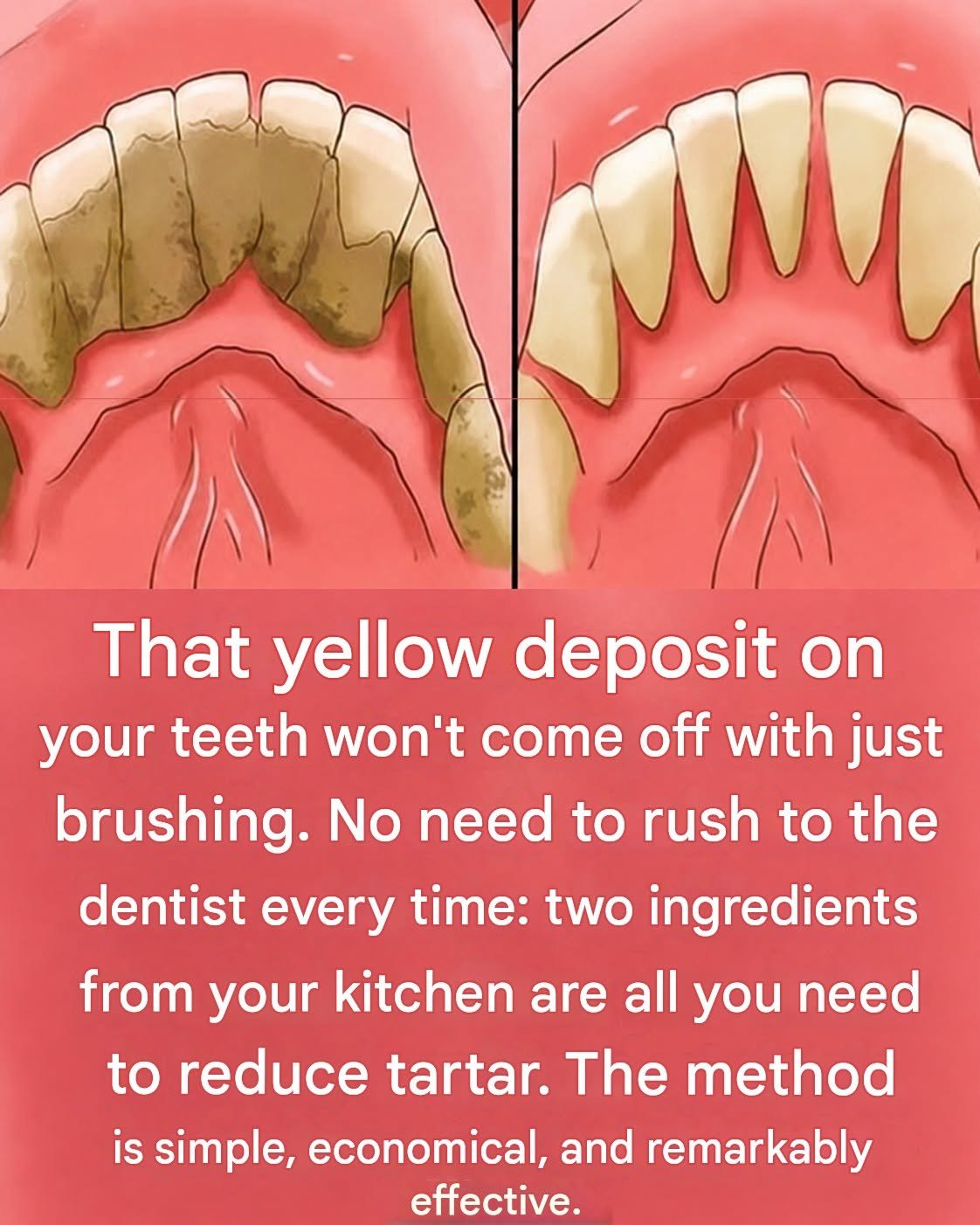
Be Your Own Dentist? Here’sSeeing a yellow, brown, or hard buildup around your teeth can be alarming. You may brush regularly and still notice deposits collecting near the gumline. Many What You Can—and Can’t—Do About Tartar at Home
Seeing a yellow, brown, or hard buildup around your teeth can be alarming. You may brush regularly and still notice deposits collecting near the gumline. Many people call this “tartar,” and it’s tempting to search for a way to scrape it away at home.
But there is an important distinction: you can do a lot at home to prevent plaque from hardening into tartar, but hardened tartar usually cannot be safely removed with ordinary brushing. Trying to scrape it off yourself with sharp objects can injure your gums, damage tooth enamel, or cause bleeding.
The good news is that you don’t need complicated tricks to keep buildup under control.
1. Understand the Difference Between Plaque and Tartar
Plaque is a soft, sticky film of bacteria that continually forms on your teeth.
If you remove plaque regularly through brushing and cleaning between your teeth, you can greatly reduce the amount that remains on your teeth.
But when plaque isn’t removed adequately, minerals in saliva can cause it to harden. This hardened material is called tartar or dental calculus.
Unlike soft plaque, calculus is firmly attached to the tooth surface and generally requires professional instruments to remove completely.
That’s why you might brush harder and harder without seeing the hard deposit disappear.
2. Brush Twice a Day With Fluoride Toothpaste
One of the most effective things you can do at home is also one of the simplest.
Brush your teeth twice a day for about two minutes using fluoride toothpaste.
Use gentle pressure rather than aggressively scrubbing. Hard brushing doesn’t necessarily clean better and can contribute to gum irritation or tooth wear.
Pay particular attention to the gumline, where plaque commonly accumulates.
A soft-bristled toothbrush is usually a good choice.
3. Clean Between Your Teeth Every Day
A toothbrush can’t effectively reach every surface between your teeth.
That is where plaque can remain hidden and eventually contribute to gum disease and calculus formation.
Use dental floss, interdental brushes, or another dentist-recommended method to clean between your teeth each day.
If your gums bleed when you first begin cleaning between your teeth, don’t automatically assume that flossing is damaging them. Inflamed gums can bleed easily. However, persistent or heavy bleeding should be evaluated by a dental professional.
4. Consider an Electric Toothbrush
An electric toothbrush can make it easier for some people to clean their teeth thoroughly and consistently.
It isn’t mandatory—you can maintain excellent oral hygiene with a manual toothbrush—but powered brushes can be particularly useful if you have difficulty using proper brushing technique.
The important factor is consistency.
A very expensive toothbrush used incorrectly is less useful than a basic toothbrush used carefully twice every day.
5. Don’t Try to Scrape Tartar With Sharp Objects
This is one of the most important warnings.
You may find videos showing people using needles, metal picks, knives, fingernails, or dental-scraping tools to remove tartar.
Don’t do this yourself.
Even if you manage to remove a piece of calculus, you can accidentally:
- Cut the gums
- Cause bleeding
- Damage the tooth surface
- Push bacteria beneath the gumline
- Injure the soft tissues
- Make an existing dental problem worse
Professional dental instruments are used by trained professionals who can see what they are doing and understand the anatomy around the tooth.
Your bathroom mirror isn’t a dental clinic.
6. What About Baking Soda?
Baking soda can be useful as an ingredient in some toothpastes because it can help clean and neutralize acids.
But that doesn’t mean you should aggressively scrub your teeth with homemade mixtures every day.
Baking soda cannot dissolve established tartar.
If you use a fluoride toothpaste containing baking soda, that’s a different situation. The product is formulated for oral use.
Avoid turning DIY recipes involving baking soda, acids, or abrasive powders into an aggressive whitening or “tartar removal” routine.
7. Be Careful With Vinegar and Lemon
This is another popular internet suggestion that can backfire.
Acidic substances such as lemon juice or vinegar may make a tooth surface temporarily feel different, but acids can erode tooth enamel.
Once enamel is lost, your body cannot simply grow it back.
Using acidic substances repeatedly in an attempt to dissolve tartar is therefore a poor trade-off.
You may end up damaging healthy tooth structure while failing to remove the calculus you were trying to eliminate.
8. Oil Pulling Isn’t a Tartar Removal Treatment
Swishing oil around your mouth has become a popular home remedy.
While oil pulling may alter some oral bacteria or leave your mouth feeling cleaner, there isn’t good evidence that it can remove hardened tartar.
If you enjoy it as an optional part of your routine, don’t let it replace brushing with fluoride toothpaste and cleaning between your teeth.
And never swallow large amounts of oil.
9. Mouthwash Can Help—but It Isn’t a Substitute for Cleaning
A therapeutic mouthwash may help with certain oral-health problems depending on its ingredients.
But mouthwash doesn’t physically remove established tartar.
Think of it as an additional tool, not a replacement for brushing and interdental cleaning.
If you have persistent bad breath, bleeding gums, or gum inflammation, don’t simply mask the problem with mouthwash. Find out what’s causing it.
10. The Real Home “Tartar Treatment” Is Prevention
Once calculus has formed, the smartest home strategy is to prevent additional plaque from accumulating around it.
Brush twice daily.
Clean between your teeth every day.
Avoid smoking or tobacco products.
Limit frequent sugary snacks and drinks.
Drink water regularly.
Keep up with dental checkups.
These habits won’t magically dissolve existing tartar, but they can help prevent new buildup and protect the gums and teeth surrounding it.
11. Why Tartar Matters
Tartar isn’t just a cosmetic problem.
Calculus provides a rough surface where additional plaque can accumulate. That can contribute to inflammation of the gums.
Early gum disease may cause:
- Red or swollen gums
- Bleeding while brushing
- Persistent bad breath
- Tender gums
If gum disease progresses, it can damage the tissues and bone supporting the teeth.
That’s why dealing with buildup early is much easier than waiting until you have loose teeth or significant gum problems.
12. When You Really Need a Dentist
If you already have hard deposits firmly attached to your teeth, professional cleaning is usually the safest and most effective solution.
A dental professional can remove calculus using appropriate instruments without relying on dangerous household scraping.
You should especially arrange a dental examination if you have:
- Frequent gum bleeding
- Swollen or painful gums
- Persistent bad breath
- Loose teeth
- Receding gums
- Tooth sensitivity
- Significant visible tartar
- Pain when chewing
- Pus around the gums
These symptoms can indicate a problem that requires more than home care.
The Bottom Line
You can be your own first line of defense—but you shouldn’t try to be your own dentist.
The best way to deal with tartar at home is actually to stop plaque from accumulating in the first place: brush twice daily with fluoride toothpaste, clean between your teeth every day, and maintain regular professional dental care.
If you already have hard, crusty deposits on your teeth, don’t attack them with needles, metal tools, lemon juice, vinegar, or abrasive homemade mixtures.
Plaque can be removed at home. Hardened tartar generally needs professional removal.
A few minutes of careful oral hygiene every day can protect your teeth and gums far more effectively than a risky viral “tartar removal” hack.