Ants Can’t Stand It! What Actually Helps Keep Them Away windows, it can feel as though they are everywhere. Online remedies often promise that one strong-smelling household ingredient will make for Good
If ants suddenly appear in your kitchen, bathroom, or around windows, it can feel as though they are everywhere. Online remedies often promise that one strong-smelling household ingredient will make ants disappear permanently.
The truth is a little less dramatic—but much more useful.
There is no single household ingredient that reliably keeps every species of ant away forever. Strong smells may temporarily discourage ants from an area, but if you want lasting control, you need to address the reason they’re coming inside in the first place.
1. Why Ants Keep Coming Back
Ants usually enter homes looking for one or more basic resources:
- Food
- Water
- Shelter
- A suitable place to establish a nest
Once a worker ant discovers a useful food source, it can leave a chemical trail that helps other ants find the same location.
That’s why wiping away visible ants may not solve the problem.
You may remove 20 ants today and see 100 tomorrow because the underlying trail and food source remain.
2. Vinegar Can Help Clean Ant Trails
One commonly suggested household remedy is diluted white vinegar.
Vinegar isn’t a guaranteed ant killer, but food and water they need; the goal is simply to prevent unnecessary food residue from cleaning areas where ants have been traveling can help remove the scent trails they use to navigate.
You can use an ordinary household cleaner appropriate for the surface, or a diluted vinegar solution where vinegar is safe for that material.
Never mix vinegar with bleach or other cleaning chemicals.
And don’t assume that making the vinegar stronger will make it a better insect repellent.
3. Cinnamon and Strong Scents May Only Be Temporary
Cinnamon, peppermint, citrus peels, and other strongly scented substances are often described as natural ant repellents.
Some strong odors may discourage ants from particular areas temporarily.
But they generally don’t eliminate the colony.
If ants are repeatedly returning, relying solely on a scent may simply cause them to find another route into your home.
4. The Most Important Step: Remove Food Sources
If ants have discovered food, make your home less attractive to them.
Pay particular attention to:
- Sugar
- Honey
- Syrup
- Fruit
- Crumbs
- Pet food
- Greasy food residues
- Spilled drinks
Clean counters and floors regularly, and store food in sealed containers.
Don’t forget seemingly tiny spills. To an ant, a small amount of sugary residue can be a valuable food source.
5. Don’t Leave Pet Food Out Indefinitely
Pet food can attract insects just as readily as human food.
If ants are appearing around your pet’s bowl, clean the feeding area regularly and avoid leaving uneaten food available for long periods.
Make sure your pet still has access to the food and water they need; the goal is simply to prevent unnecessary food residue from accumulating.
6. Fix Leaks and Excess Moisture
Some ants are attracted to moisture.
Check areas around:
- Sinks
- Pipes
- Bathrooms
- Air-conditioning equipment
- Windows
- Leaking appliances
Repair leaks and dry damp areas when possible.
Reducing moisture can make your home less attractive to a variety of household pests.
7. Seal Their Entry Points
If ants repeatedly appear near windows, doors, baseboards, or cracks, inspect those areas carefully.
Seal appropriate gaps around:
- Window frames
- Doors
- Pipes
- Utility openings
- Cracks in walls
- Baseboards
This is far more likely to provide lasting improvement than repeatedly spraying a strong-smelling substance on the floor.
8. Don’t Spray Random Chemicals Around Food
Kitchen pest problems can tempt people to use whatever pesticide happens to be available.
That’s risky.
Never apply an insecticide to food, dishes, countertops, or other surfaces unless the product label specifically permits that use.
Follow the label carefully, keep pesticides away from children and pets, and don’t mix different pesticide products.
“More” does not mean “more effective.”
9. Ant Baits Can Be More Useful Than Sprays
When ants are persistent, bait products can be particularly useful because worker ants may carry the bait back toward the colony.
This is different from simply killing the ants you can see.
However, the correct bait depends on the ant species and what food source the colony prefers.
If you’re using a commercial ant bait, follow the label instructions carefully.
Avoid spraying insecticide directly around a bait if doing so prevents ants from reaching it.
10. Don’t Expect Instant Results
One reason people become frustrated with ant control is that they expect immediate disappearance.
Effective colony control may take time.
You may continue seeing ants after placing bait because workers need to encounter and transport it.
Constantly changing products or destroying the baiting ants can interfere with the process.
Patience and consistent sanitation are often more effective than repeatedly attacking visible ants.
What About Borax or Boric Acid?
Borax and boric-acid-based ant products are commonly discussed online.
They can be effective in appropriately formulated ant baits, but that doesn’t mean you should scatter household powders around your kitchen or create concentrated homemade mixtures.
Commercial products are formulated and labeled for particular uses.
If you use an ant bait containing boric acid or another active ingredient, follow the label and keep it inaccessible to children and pets.
What If You Have Children or Pets?
Be especially cautious with homemade pest-control mixtures.
“Natural” doesn’t automatically mean harmless.
Essential oils, concentrated cleaning products, boric acid, and many other substances can cause problems if swallowed, inhaled, or applied incorrectly.
Use products according to their labels and place baits where children and pets cannot access them.
When Should You Call a Pest Professional?
Consider professional help if:
- Ants keep returning despite sanitation and sealing.
- You see large numbers of ants indoors.
- You suspect a nest is inside the structure.
- You see winged ants repeatedly.
- You notice wood damage or moisture problems.
- You can’t identify where the ants are coming from.
Different ant species require different approaches.
A professional can identify the species and determine whether the colony is inside or outside the building.
A Simple Ant-Control Routine
If you want a practical plan, start here:
Step 1: Clean up food and drink spills immediately.
Step 2: Store sweets and other attractive foods in sealed containers.
Step 3: Wipe down established ant trails.
Step 4: Fix leaks and reduce unnecessary moisture.
Step 5: Seal obvious cracks and entry points.
Step 6: If ants persist, consider a properly labeled commercial ant bait.
Step 7: If the infestation continues, get professional identification and treatment.
The Bottom Line
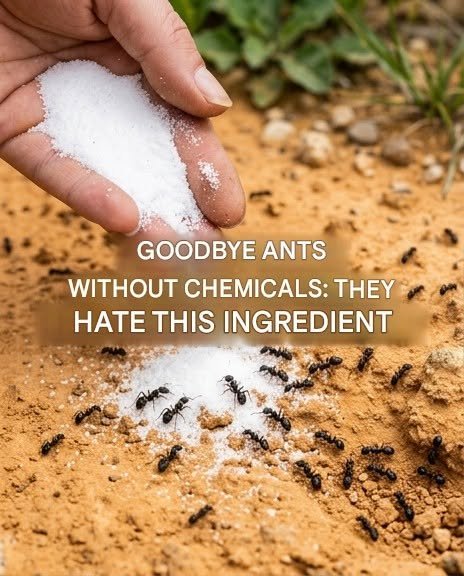
The viral promise that “ants can’t stand this one ingredient” is usually an oversimplification.
Strong scents such as vinegar, cinnamon, or peppermint may temporarily discourage ants, but they generally won’t eliminate an established colony.
For lasting control, think beyond the ants you can see:
remove food + reduce moisture + clean trails + seal entry points + use appropriate bait when necessary.
That approach is much more likely to keep ants out than relying on a single kitchen ingredient.
And if you have children or pets, skip risky homemade pesticide recipes altogether. Safe, targeted pest control is better than turning your kitchen into a chemistry experiment.