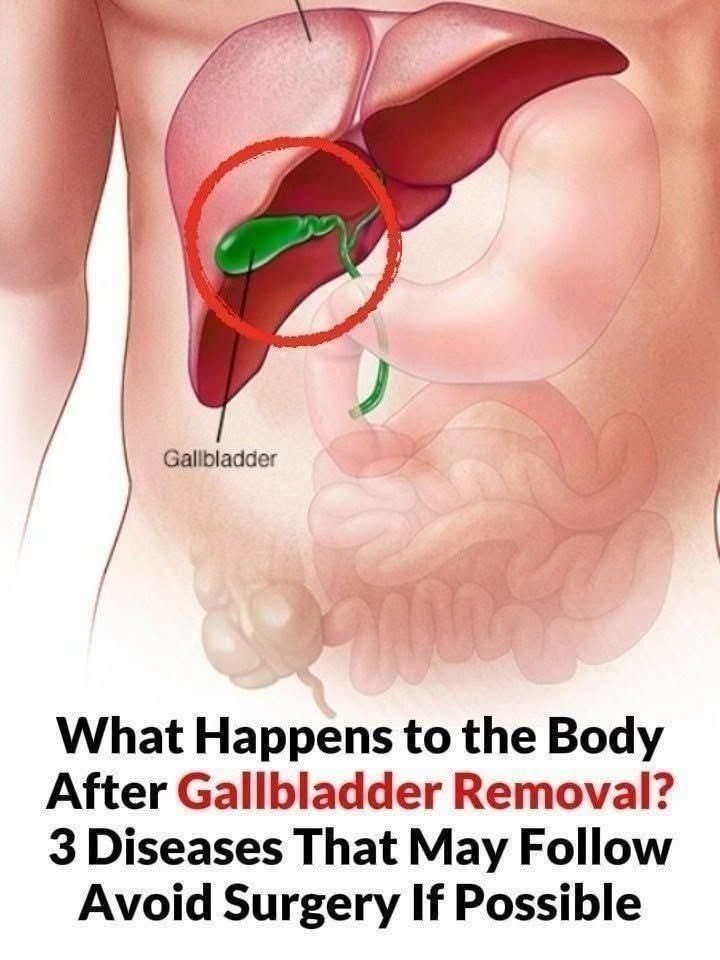
After Gallbladder Removal: 3 Conditions You Could Develop — What You Should Know Before Surgery
Gallbladder removal, or cholecystectomy, is one of the most commonly performed abdominal surgeries. It is often recommended for people with symptomatic gallstones, repeated gallbladder attacks, inflammation, or certain other gallbladder problems.
You may see claims that gallbladder removal should be avoided whenever possible because it causes serious health problems later. That is too broad. For someone who has a clear medical reason for surgery, delaying or avoiding an appropriately recommended cholecystectomy can sometimes be more dangerous than having the operation.
However, gallbladder removal can produce changes in digestion, and a small number of people develop ongoing symptoms afterward.
Here are three issues worth knowing about.
1. Diarrhea or More Frequent Bowel Movements
After gallbladder removal, bile no longer collects and concentrates in the gallbladder between meals.
Instead, bile flows more continuously from the liver into the intestine.
For most people, the digestive system adapts without major difficulty. But some people develop looser or more frequent stools, particularly after meals.
This may happen because more bile acids reach the colon, where they can stimulate water secretion and bowel movement.
The condition is sometimes called bile acid diarrhea.
If diarrhea begins after surgery, don’t assume you simply have to live with it.
A healthcare professional can evaluate other possible causes and, when appropriate, prescribe treatments that bind bile acids and reduce symptoms.
2. Bloating, Gas, or Abdominal Discomfort
Some people experience digestive symptoms after gallbladder removal, including:
- Bloating
- Gas
- Indigestion
- Abdominal discomfort
- Nausea
- Changes in bowel habits
These symptoms are sometimes grouped under the term postcholecystectomy syndrome, although that label doesn’t describe one single disease.
Importantly, these symptoms don’t necessarily mean that removing the gallbladder was a mistake.
People who undergo surgery already have gallstones or another gallbladder disorder, and some symptoms can persist because another digestive condition was present in the first place.
Persistent pain deserves evaluation rather than automatically being blamed on the absence of a gallbladder.
3. Bile Duct or Biliary Problems Can Still Occur
Removing the gallbladder doesn’t eliminate every possible problem involving the biliary system.
For example, a stone can occasionally remain in or later develop within the bile ducts.
This can cause symptoms such as:
- Upper abdominal pain
- Jaundice
- Dark urine
- Pale stools
- Fever
- Nausea or vomiting
A blockage of a bile duct can become serious and may require urgent treatment.
Fortunately, these complications are not the expected outcome for most people after an uncomplicated gallbladder removal.
Does Gallbladder Removal Cause Liver Damage?
A common online claim is that removing the gallbladder somehow causes the liver to become damaged because bile can no longer be stored.
That’s not how the procedure works.
The liver continues producing bile after the gallbladder is removed.
The gallbladder is primarily a storage and concentrating organ. It isn’t responsible for producing bile.
After surgery, bile simply travels more continuously from the liver through the bile ducts into the intestine.
For most people, this is sufficient for normal digestion.
Do You Need Your Gallbladder?
You can live without a gallbladder.
That doesn’t mean the organ is useless—it has an important role in storing and concentrating bile—but it isn’t essential for survival.
Many people return to a normal diet and normal activities after recovery.
The important question isn’t whether you can live without a gallbladder.
You can.
The question is whether your particular gallbladder problem is best managed with surgery or another approach.
When Is Surgery Usually Recommended?
Cholecystectomy may be recommended when gallstones are causing significant symptoms or complications.
Examples include:
- Repeated painful gallstone attacks
- Acute cholecystitis, or inflammation of the gallbladder
- Certain complications involving the bile ducts
- Gallstone-related pancreatitis
- Some gallbladder polyps or other conditions requiring removal
In these situations, simply keeping the gallbladder because you’re worried about future digestive symptoms may not be the safest choice.
Untreated gallbladder disease can sometimes lead to infection, obstruction, pancreatitis, or other serious complications.
What If You Have Gallstones but No Symptoms?
This is an important distinction.
Gallstones don’t automatically mean you need surgery.
Many people have gallstones that never cause symptoms and are discovered incidentally during an ultrasound or another imaging test.
In many such cases, immediate surgery isn’t necessary.
Your doctor considers factors such as your symptoms, complications, medical history, and the characteristics of the gallstones before recommending treatment.
So if you’ve been told you have gallstones but aren’t having symptoms, ask whether observation is appropriate rather than assuming surgery is inevitable.
Can You Prevent Gallbladder Surgery?
Sometimes, depending on the reason surgery has been recommended.
For people with symptomatic gallstones, however, lifestyle changes generally cannot dissolve ordinary cholesterol gallstones reliably.
Eating a balanced diet and maintaining a healthy weight can support overall gallbladder and metabolic health, but they shouldn’t be presented as a guaranteed way to eliminate existing gallstones.
Rapid weight loss can actually increase the risk of gallstones.
If you’re trying to lose weight, gradual and sustainable weight reduction is generally preferable.
What About “Gallbladder Cleanses”?
Be cautious with internet remedies promising to flush gallstones out of the gallbladder using olive oil, lemon juice, herbs, or other mixtures.
There is no reliable evidence that these cleanses safely remove gallstones.
What people sometimes see in their stool afterward may be clumps formed from the ingredients rather than actual gallstones.
Trying an unproven cleanse instead of appropriate medical treatment could delay care for a potentially dangerous obstruction or infection.
Eating After Gallbladder Removal
Immediately after surgery, some people find that fatty or greasy meals are harder to tolerate.
You may do better initially with:
- Smaller meals
- Moderate amounts of fat
- Gradually returning to your usual diet
- Adequate fiber, introduced gradually
Many people eventually tolerate a broad range of foods.
There is no universal lifelong “gallbladder removal diet.”
If particular foods consistently trigger diarrhea, cramping, or bloating, discuss those symptoms with your healthcare professional or a registered dietitian.
When Should You Seek Medical Attention After Surgery?
Contact your healthcare team if symptoms persist or worsen after the operation.
Seek urgent medical attention for symptoms such as:
- Severe or worsening abdominal pain
- Fever or chills
- Yellowing of the skin or eyes
- Persistent vomiting
- Significant abdominal swelling
- Confusion or severe weakness
- Heavy bleeding
- Difficulty breathing
Jaundice, fever, and significant abdominal pain can sometimes indicate a complication involving the bile ducts or another postoperative problem.
The Bottom Line
Gallbladder removal can be followed by digestive problems in some people, including:
- Diarrhea or more frequent bowel movements
- Bloating, gas, or abdominal discomfort
- Ongoing or occasional biliary problems, including bile-duct stones
But these possibilities don’t mean gallbladder removal should generally be avoided.
If you have symptomatic or complicated gallbladder disease, avoiding medically indicated surgery can carry its own risks. On the other hand, if you have incidentally discovered gallstones without symptoms, surgery may not necessarily be required.
The safest approach is not to follow a blanket rule of “always remove it” or “never remove it.”
Instead, ask your doctor:
- Why exactly is surgery being recommended?
- What happens if I wait?
- Do I have symptoms or complications?
- Are there reasonable alternatives?
- What are my individual surgical risks?
- What symptoms should make me seek urgent care?
Gallbladder surgery is neither something everyone needs nor something everyone should fear. The right decision depends on why the surgery is being considered in the first place.